THE ADVENTURE COLLECTIVE® · Independent discovery and booking for outdoor travel

Ride long Atlantic beaches and Saharan-tumbled dunes from Diabat to Sidi Kaouki, then spend a night in a coastal Berber tent. This accessible quad tour blends off-road thrills with a simple campfire dinner and morning return to Essaouira.
Ride long Atlantic beaches and Saharan-tumbled dunes from Diabat to Sidi Kaouki, then spend a night in a coastal Berber tent. This accessible quad tour blends off-road thrills with a simple campfire dinner and morning return to Essaouira.
The Atlantic wind first announces itself as you set off from Diabat, spray on your lips and the Sultan's half-buried palace sliding past like a rumor in the sand. Quad tires bite into a long, hard-packed shoreline then climb into Omar's dunes where sand lifts and falls beneath you, daring you to pick a line. By midday you arrive at Sidi Kaouki — a low-slung fishing village where the day's catch steams in a simple kitchen and kite sails dot the horizon.
Verified experiences and guided adventures in the surrounding area.
Operated by Ranch De Diabat S.A.R.L · Essaouira, Marrakesh-Safi
The Atlantic wind first announces itself as you set off from Diabat, spray on your lips and the Sultan's half-buried palace sliding past like a rumor in the sand. Quad tires bite into a long, hard-packed shoreline then climb into Omar's dunes where sand lifts and falls beneath you, daring you to pick a line. By midday you arrive at Sidi Kaouki — a low-slung fishing village where the day's catch steams in a simple kitchen and kite sails dot the horizon.
Essaouira's coast is shaped by Atlantic swell and Saharan grains pushed north by seasonal winds; the result is long beaches, rolling dunes and occasional freshwater springs whispered into being by subsurface channels. The region carries layers of history — Portuguese ramparts in Essaouira proper, Berber fishing traditions, and a coastline that has drawn sailors and surfers for centuries.
Practically, expect varied terrain: hard-packed beach, soft dune sand and short stretches of rocky shore. Elevation is minimal (sea level to dune crests around 20–40 m) but riding soft sand demands focus and a steady throttle. Guides supply helmets and a brief test ride; bring a copy of your passport if you're staying in the bivouac (required for registration). Dress in windproof layers, protect exposed skin from sun and salt, and time your ride outside high tides for the widest beach.
The night at the Berber tent is low-tech and convivial — mint tea, a campfire, and a simple Moroccan dinner — then a brisk breakfast before a short drive back to Essaouira the next morning. It's an accessible, kinetic way to read the Atlantic coast: fast on the sand, slow at the fire.
moderate.
24–30 hours (overnight).
Moderate fitness recommended — you should be comfortable on uneven terrain and able to mount/dismount a quad repeatedly.
No. Guides provide a safety briefing and a short test ride; beginners are welcome but should be comfortable following instructions.
Tents are simple with mattresses and carpets; they are suitable for families but not like hotel rooms—bring sleep layers if you prefer more insulation.
Children must be accompanied by an adult and cannot operate the quad alone; operators set minimum age/size requirements for passengers.
The tour operates in most weather; check with the operator for specific protocols but dress for wind and occasional rain and confirm any changes before departure.
Essaouira (formerly Mogador) has Portuguese and 18th-century fortifications and long-standing Berber fishing traditions that shape coastal culture.
Stick to established tracks where offered and avoid driving on vegetated dune faces; coastal dunes are fragile and recovery from ruts can be slow.
Ranch De Diabat S.A.R.L operates guided outdoor trips and adventures with an emphasis on safety, stewardship, and memorable experiences.
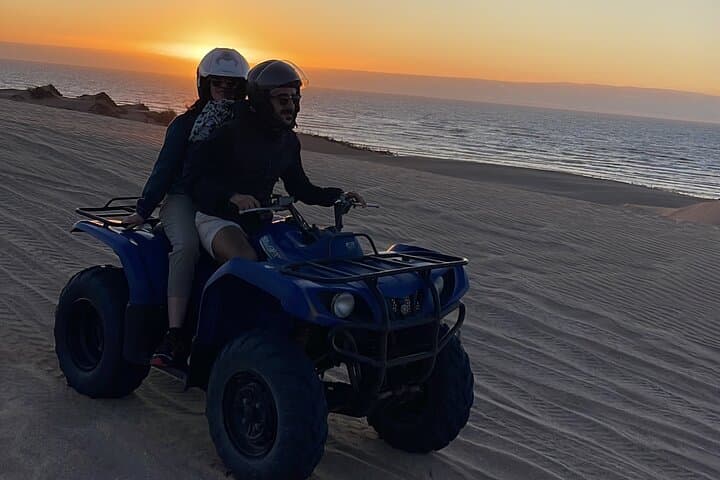
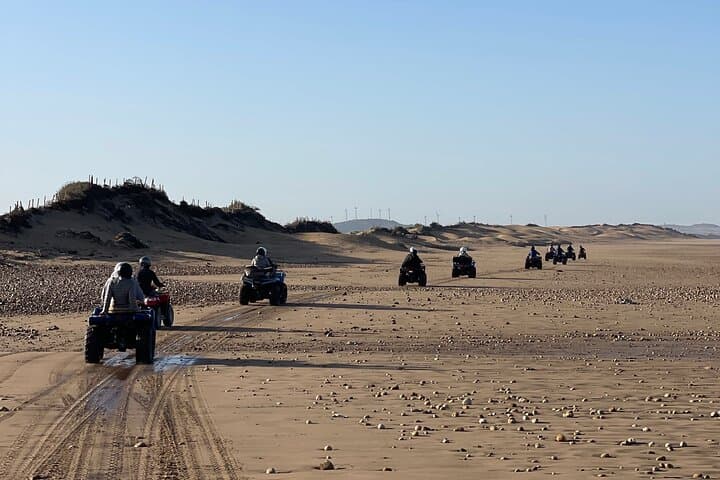
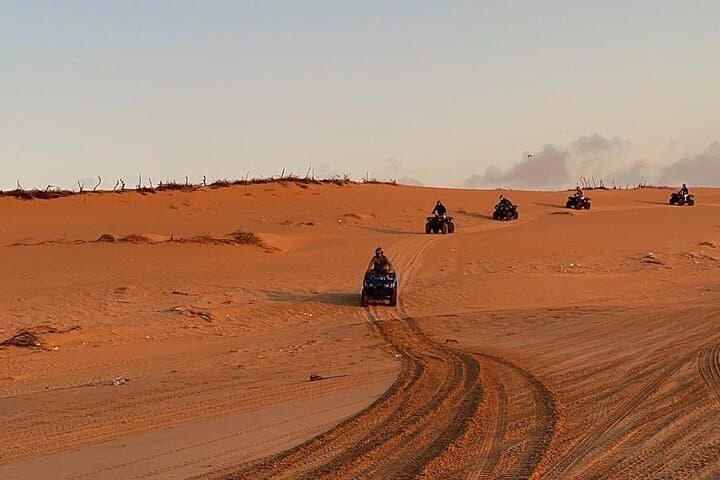
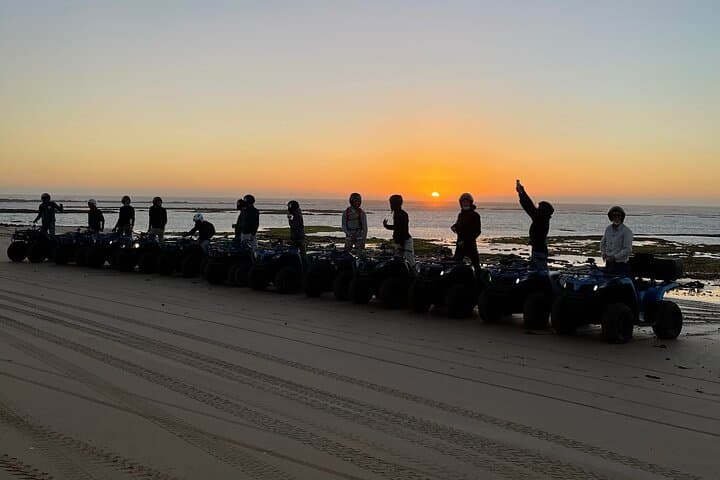
The Atlantic wind first announces itself as you set off from Diabat, spray on your lips and the Sultan's half-buried palace sliding past like a rumor in the sand. Quad tires bite into a long, hard-packed shoreline then climb into Omar's dunes where sand lifts and falls beneath you, daring you to pick a line. By midday you arrive at Sidi Kaouki — a low-slung fishing village where the day's catch steams in a simple kitchen and kite sails dot the horizon.
The Atlantic wind first announces itself as you set off from Diabat, spray on your lips and the Sultan's half-buried palace sliding past like a rumor in the sand. Quad tires bite into a long, hard-packed shoreline then climb into Omar's dunes where sand lifts and falls beneath you, daring you to pick a line. By midday you arrive at Sidi Kaouki — a low-slung fishing village where the day's catch steams in a simple kitchen and kite sails dot the horizon.
Essaouira's coast is shaped by Atlantic swell and Saharan grains pushed north by seasonal winds; the result is long beaches, rolling dunes and occasional freshwater springs whispered into being by subsurface channels. The region carries layers of history — Portuguese ramparts in Essaouira proper, Berber fishing traditions, and a coastline that has drawn sailors and surfers for centuries.
Practically, expect varied terrain: hard-packed beach, soft dune sand and short stretches of rocky shore. Elevation is minimal (sea level to dune crests around 20–40 m) but riding soft sand demands focus and a steady throttle. Guides supply helmets and a brief test ride; bring a copy of your passport if you're staying in the bivouac (required for registration). Dress in windproof layers, protect exposed skin from sun and salt, and time your ride outside high tides for the widest beach.
The night at the Berber tent is low-tech and convivial — mint tea, a campfire, and a simple Moroccan dinner — then a brisk breakfast before a short drive back to Essaouira the next morning. It's an accessible, kinetic way to read the Atlantic coast: fast on the sand, slow at the fire.