THE ADVENTURE COLLECTIVE® · Independent discovery and booking for outdoor travel

A private day trip from Marrakech to Essaouira that pairs coastal scenery with a visit to a traditional argan cooperative. Expect 10–12 hours, windswept ramparts, seafood at the port, and hours of exploring a compact, historic medina.
A private day trip from Marrakech to Essaouira that pairs coastal scenery with a visit to a traditional argan cooperative. Expect 10–12 hours, windswept ramparts, seafood at the port, and hours of exploring a compact, historic medina.
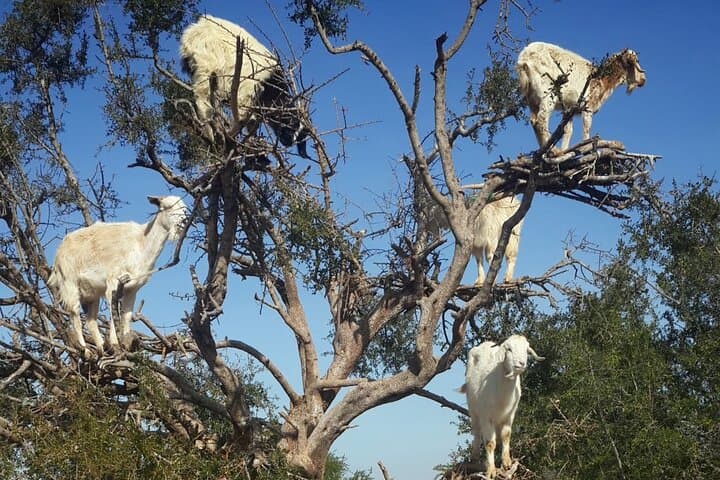
The car eases out of Marrakech at dawn and the landscape unlocks—olive-studded plains give way to low, wind-bent argan trees as the Atlantic horizon appears. By midmorning you arrive in Essaouira, where salt air and steady wind shape everything from fishing nets to kites on the beach.
Verified experiences and guided adventures in the surrounding area.
Operated by Caprice luxury private driver · Essaouira, Marrakesh-Safi
The car eases out of Marrakech at dawn and the landscape unlocks—olive-studded plains give way to low, wind-bent argan trees as the Atlantic horizon appears. By midmorning you arrive in Essaouira, where salt air and steady wind shape everything from fishing nets to kites on the beach.
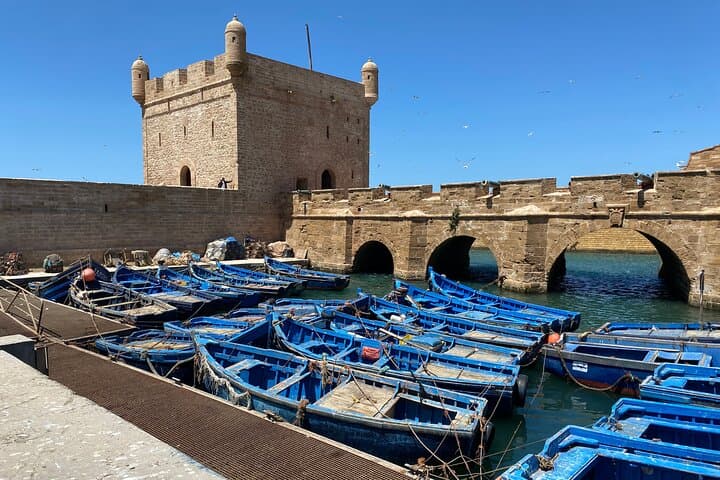
Essaouira’s compact medina sits behind 18th-century ramparts originally fortified in the age of Portuguese and later Moroccan maritime trade; the Skala de la Ville guns still stare out over the sea. Geologically the town occupies a rocky promontory and sandy bays carved by Atlantic swell, and the surrounding argan forests are part of the UNESCO Arganeraie biosphere—argan cooperatives here combine local craftsmanship with conservation work.
Culture is tactile: fishermen hauling nets at the port, Gnawa rhythms spilling from cafés, and women’s cooperatives pressing argan kernels by hand. Practicalities shape the day—expect 10–12 hours total, roughly 2.5–3 hours driving each way, and several hours of walking on cobbles and ramps. Plan for gusts: windproof layers matter, as does sturdy footwear for uneven lanes and the ramparts’ stone steps.
Visits usually include an argan cooperative stop and free time to explore the medina, the seafront restaurants, and the Skala. Bring cash for small purchases and tipping, schedule an early start to beat afternoon crowds, and consider booking a local guide if you want deeper history or a tailored food crawl. Essaouira rewards slow exploration: follow the alleys, listen for the sea, and let the wind set the pace.
easy.
10–12 hours.
Light to moderate fitness; able to walk on uneven cobbles for several hours and climb short staircases.
Expect about 2.5–3 hours each way by private vehicle depending on traffic; total trip time is commonly 10–12 hours including time on site.
Yes—most itineraries include several hours of independent exploration in the medina, the seafront, and the fishing port.
Standard private transfers usually include transport and basic stops; admissions and local guide fees are typically arranged and paid locally if requested.
Many cooperatives are community-run and support local women; ask in advance about their practices and consider supporting verified cooperatives that prioritize fair wages and sustainable harvesting.
Essaouira (formerly Mogador) was fortified in the 16th–18th centuries with Portuguese and later Moroccan influence shaping its ramparts, trade links, and multicultural heritage.
The surrounding argan groves are part of a UNESCO biosphere; support local cooperatives and avoid single-use plastics to reduce tourism impacts.
Caprice luxury private driver operates guided outdoor trips and adventures with an emphasis on safety, stewardship, and memorable experiences.
The car eases out of Marrakech at dawn and the landscape unlocks—olive-studded plains give way to low, wind-bent argan trees as the Atlantic horizon appears. By midmorning you arrive in Essaouira, where salt air and steady wind shape everything from fishing nets to kites on the beach.
The car eases out of Marrakech at dawn and the landscape unlocks—olive-studded plains give way to low, wind-bent argan trees as the Atlantic horizon appears. By midmorning you arrive in Essaouira, where salt air and steady wind shape everything from fishing nets to kites on the beach.
Essaouira’s compact medina sits behind 18th-century ramparts originally fortified in the age of Portuguese and later Moroccan maritime trade; the Skala de la Ville guns still stare out over the sea. Geologically the town occupies a rocky promontory and sandy bays carved by Atlantic swell, and the surrounding argan forests are part of the UNESCO Arganeraie biosphere—argan cooperatives here combine local craftsmanship with conservation work.
Culture is tactile: fishermen hauling nets at the port, Gnawa rhythms spilling from cafés, and women’s cooperatives pressing argan kernels by hand. Practicalities shape the day—expect 10–12 hours total, roughly 2.5–3 hours driving each way, and several hours of walking on cobbles and ramps. Plan for gusts: windproof layers matter, as does sturdy footwear for uneven lanes and the ramparts’ stone steps.
Visits usually include an argan cooperative stop and free time to explore the medina, the seafront restaurants, and the Skala. Bring cash for small purchases and tipping, schedule an early start to beat afternoon crowds, and consider booking a local guide if you want deeper history or a tailored food crawl. Essaouira rewards slow exploration: follow the alleys, listen for the sea, and let the wind set the pace.