THE ADVENTURE COLLECTIVE® · Independent discovery and booking for outdoor travel

A full‑day private transfer from Marrakech delivers Essaouira’s fortified medina, argan cooperatives, fishing port and calm Atlantic beaches. This guided itinerary blends short cultural visits with free time to explore the ramparts, souks and seaside.
A full‑day private transfer from Marrakech delivers Essaouira’s fortified medina, argan cooperatives, fishing port and calm Atlantic beaches. This guided itinerary blends short cultural visits with free time to explore the ramparts, souks and seaside.
The Atlantic wind tugs at your scarf as the car spills out onto the low hills between Marrakech and the sea—olive and argan trees sliding past like punctuation. By mid‑morning the road opens to a panoramic approach: Essaouira’s ochre ramparts and the blue Atlantic beyond, a compact town whose walls still dare the ocean.
Verified experiences and guided adventures in the surrounding area.
Operated by Morocco Trips Services · Essaouira, Marrakesh-Safi
The Atlantic wind tugs at your scarf as the car spills out onto the low hills between Marrakech and the sea—olive and argan trees sliding past like punctuation. By mid‑morning the road opens to a panoramic approach: Essaouira’s ochre ramparts and the blue Atlantic beyond, a compact town whose walls still dare the ocean.
Essaouira’s Skala de la Kasbah dates to 18th‑century coastal defenses designed by European engineers; its bronze cannons face outward toward shipping lanes while the medina inside preserves a working port culture and UNESCO‑listed heritage. Geologically the coastline is a broad sandy shelf and wind‑sculpted dune fields; culturally the city carries a strong Gnawa music tradition and visible Berber craftwork—cedar carving in wooden shops and argan oil produced by women’s cooperatives.
This private day trip typically runs 9–11 hours, with a 2.5–3 hour drive each way from Marrakech. Expect photo stops at the goats-in-argan-trees, a short cooperative visit to learn about argan oil pressing, a guided walk around the medina and Skala, free time at the port and souks, and a relaxed lunch by the beach. The itinerary is accessible for all fitness levels but involves uneven cobbles, steps on the ramparts, and stretches of sand.
Practical guidance: travel early to avoid afternoon winds, carry cash for small purchases, wear sturdy shoes for the medina, and pack a windproof layer and sun protection. If you want quieter corners, head to the north ramparts or the small art galleries tucked down side alleys when crowds thin after lunch.
easy.
9–11 hours.
Suitable for average fitness; requires walking on uneven cobbles and short stair climbs.
Expect about 2.5–3 hours each way depending on traffic and stops, with the whole trip lasting roughly 9–11 hours.
Visits to an argan women’s cooperative are included for a demonstration; purchases are optional and typically paid for in cash or card at the cooperative.
You can access the beach for a quick dip, but currents and wind can be strong—check local conditions and swim at your own risk.
Yes—this private tour is rated easy and suitable for most ages, though it involves walking on uneven surfaces and a long day in the vehicle.
Founded as a fortified Atlantic trading town, Essaouira’s 18th‑century ramparts were built under Sultan Mohammed ben Abdallah with European military input; the medina reflects Portuguese, Moroccan and Berber influences.
Argan cooperatives support local livelihoods and sustainable argan harvesting; visitors can help by buying directly from certified women’s cooperatives and avoiding single‑use plastics.
Morocco Trips Services operates guided outdoor trips and adventures with an emphasis on safety, stewardship, and memorable experiences.
The Atlantic wind tugs at your scarf as the car spills out onto the low hills between Marrakech and the sea—olive and argan trees sliding past like punctuation. By mid‑morning the road opens to a panoramic approach: Essaouira’s ochre ramparts and the blue Atlantic beyond, a compact town whose walls still dare the ocean.
The Atlantic wind tugs at your scarf as the car spills out onto the low hills between Marrakech and the sea—olive and argan trees sliding past like punctuation. By mid‑morning the road opens to a panoramic approach: Essaouira’s ochre ramparts and the blue Atlantic beyond, a compact town whose walls still dare the ocean.
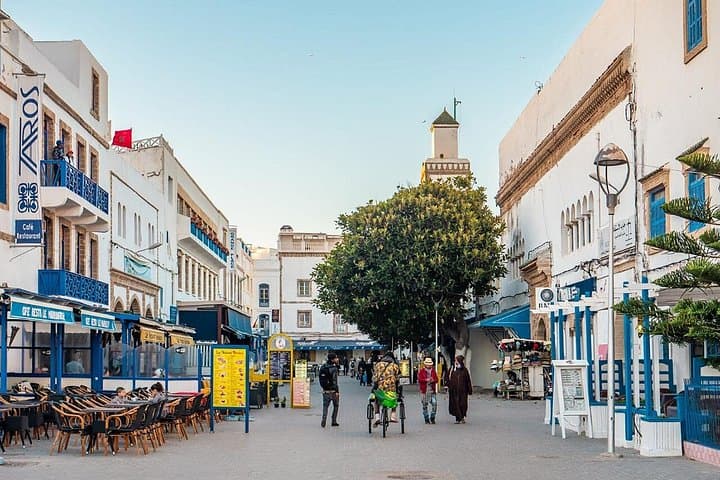
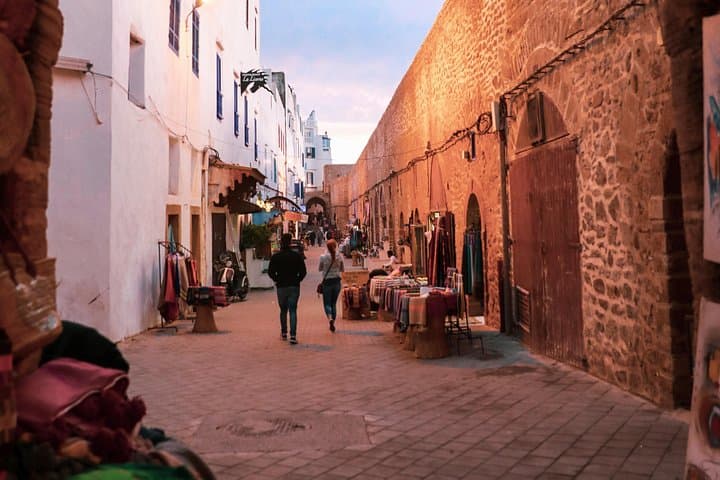
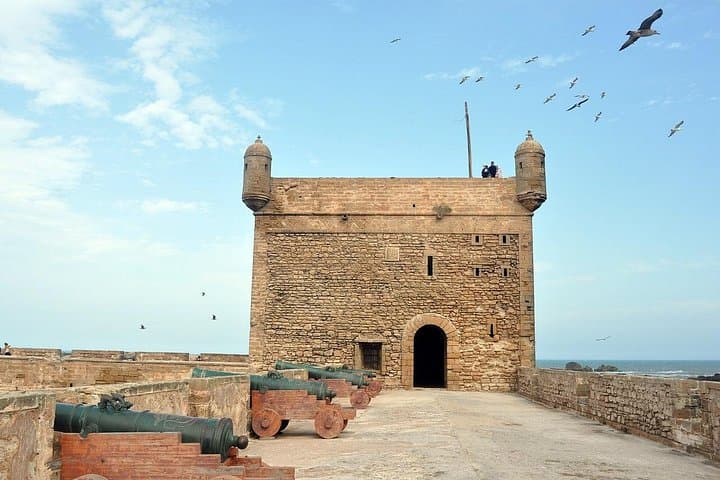
Essaouira’s Skala de la Kasbah dates to 18th‑century coastal defenses designed by European engineers; its bronze cannons face outward toward shipping lanes while the medina inside preserves a working port culture and UNESCO‑listed heritage. Geologically the coastline is a broad sandy shelf and wind‑sculpted dune fields; culturally the city carries a strong Gnawa music tradition and visible Berber craftwork—cedar carving in wooden shops and argan oil produced by women’s cooperatives.
This private day trip typically runs 9–11 hours, with a 2.5–3 hour drive each way from Marrakech. Expect photo stops at the goats-in-argan-trees, a short cooperative visit to learn about argan oil pressing, a guided walk around the medina and Skala, free time at the port and souks, and a relaxed lunch by the beach. The itinerary is accessible for all fitness levels but involves uneven cobbles, steps on the ramparts, and stretches of sand.
Practical guidance: travel early to avoid afternoon winds, carry cash for small purchases, wear sturdy shoes for the medina, and pack a windproof layer and sun protection. If you want quieter corners, head to the north ramparts or the small art galleries tucked down side alleys when crowds thin after lunch.