THE ADVENTURE COLLECTIVE® · Independent discovery and booking for outdoor travel

Swap Marrakech’s ochre heat for Atlantic wind on a full-day trip to Essaouira. Explore the Skala du Port, wander the medina, sample fresh seafood, and watch thuya wood artisans at work on this accessible coastal outing.
Swap Marrakech’s ochre heat for Atlantic wind on a full-day trip to Essaouira. Explore the Skala du Port, wander the medina, sample fresh seafood, and watch thuya wood artisans at work on this accessible coastal outing.
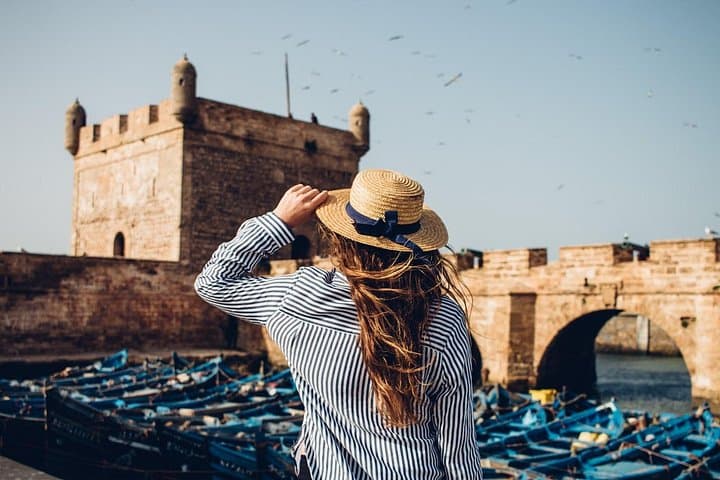
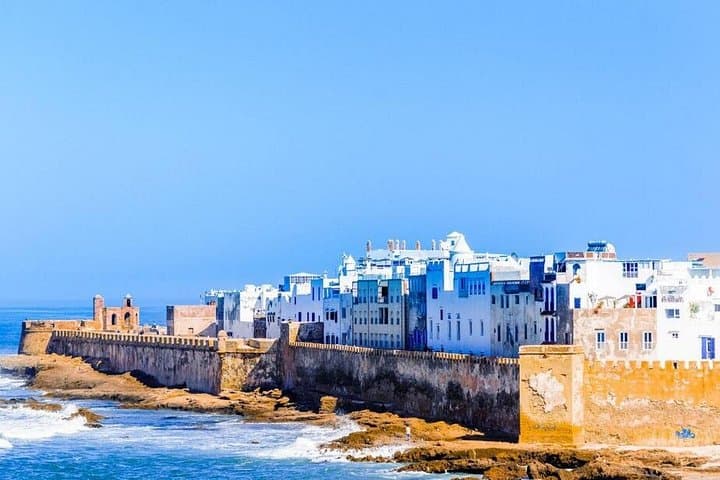
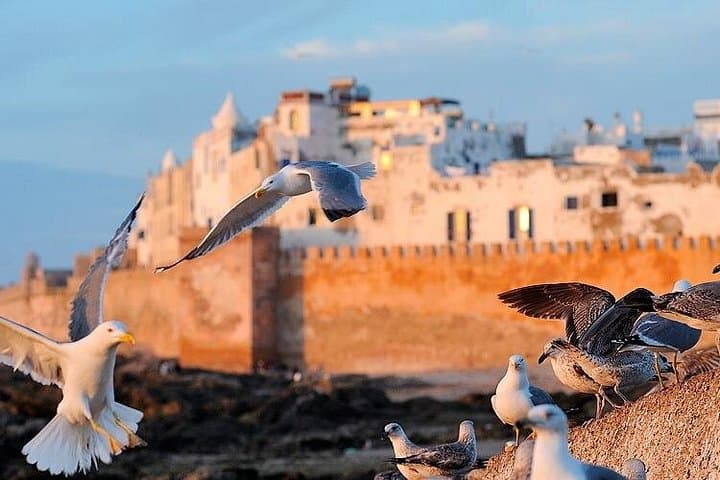
You leave Marrakech before dawn and the road unfurls west across low argan-studded hills. The air sharpens with Atlantic salt as the minibus descends toward whitewashed ramparts; by late morning you’re standing on the Skala du Port, waves punching at the sea wall and gulls wheeling overhead.
Verified experiences and guided adventures in the surrounding area.
Operated by Marrakech Tours · Essaouira, Marrakesh-Safi
You leave Marrakech before dawn and the road unfurls west across low argan-studded hills. The air sharpens with Atlantic salt as the minibus descends toward whitewashed ramparts; by late morning you’re standing on the Skala du Port, waves punching at the sea wall and gulls wheeling overhead.
Essaouira’s compact medina wears its history on its face: 18th-century Portuguese bastions, blue shutters, and rows of thuya-wood workshops where artisans carve geometric patterns by hand. Geology here is blunt — broad sandy beaches backed by wind-swept escarpments — and the city’s exposure to the Atlantic has shaped life around fishing, trade, and wind-driven crafts like kitesurfing. The Gnawa music tradition threads through market alleys, a cultural echo of West African and Berber roots.
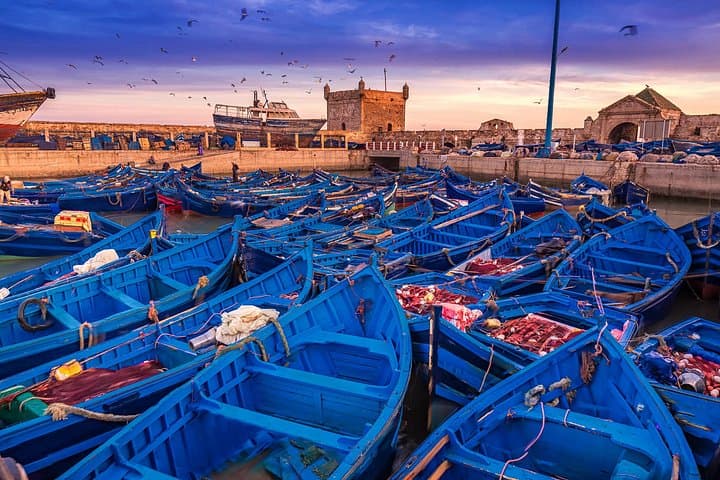
A typical full-day tour pairs free time in the medina with an optional guided walk of the Skala (about 1–1.5 hours), a visit to the working fishing port, and lunch of grilled sardines or tajine on the waterfront. Expect narrow cobbled lanes, steps, and active boatyards; the wind is a constant player, so dress in layers.
Practical notes: bring cash for small purchases, wear sturdy shoes for uneven paving, and allow 3.5–4 hours each way for round-trip transfer from Marrakech. If you want a quieter visit, arrive early before tour groups and linger at the ramparts at golden hour. Respect local vendors when photographing stalls and support co‑operatives when sampling argan oil demonstrations.
easy.
8 hours.
Light fitness; able to walk 2–4 miles on uneven surfaces and stand for guided sections
Expect about 3.5–4 hours each way by air-conditioned minibus depending on traffic and stops.
Lunch is typically not included except bottled water; most itineraries stop at the fishing port where you can buy fresh seafood.
Yes — many tours offer an optional 1–1.5 hour guided visit of the Skala du Port and ramparts once you arrive.
The trip is family-friendly but the medina has narrow, uneven lanes and steps; those with limited mobility may find access challenging in parts.
Essaouira’s modern walls and harbor were rebuilt in the 18th century under Sultan Mohammed ben Abdallah and show strong Portuguese and European military influences.
Argan woodlands around the road to Essaouira are ecologically sensitive; support women-led argan co‑operatives and avoid single-use plastics to reduce local impact.
Marrakech Tours operates guided outdoor trips and adventures with an emphasis on safety, stewardship, and memorable experiences.
You leave Marrakech before dawn and the road unfurls west across low argan-studded hills. The air sharpens with Atlantic salt as the minibus descends toward whitewashed ramparts; by late morning you’re standing on the Skala du Port, waves punching at the sea wall and gulls wheeling overhead.
You leave Marrakech before dawn and the road unfurls west across low argan-studded hills. The air sharpens with Atlantic salt as the minibus descends toward whitewashed ramparts; by late morning you’re standing on the Skala du Port, waves punching at the sea wall and gulls wheeling overhead.
Essaouira’s compact medina wears its history on its face: 18th-century Portuguese bastions, blue shutters, and rows of thuya-wood workshops where artisans carve geometric patterns by hand. Geology here is blunt — broad sandy beaches backed by wind-swept escarpments — and the city’s exposure to the Atlantic has shaped life around fishing, trade, and wind-driven crafts like kitesurfing. The Gnawa music tradition threads through market alleys, a cultural echo of West African and Berber roots.
A typical full-day tour pairs free time in the medina with an optional guided walk of the Skala (about 1–1.5 hours), a visit to the working fishing port, and lunch of grilled sardines or tajine on the waterfront. Expect narrow cobbled lanes, steps, and active boatyards; the wind is a constant player, so dress in layers.
Practical notes: bring cash for small purchases, wear sturdy shoes for uneven paving, and allow 3.5–4 hours each way for round-trip transfer from Marrakech. If you want a quieter visit, arrive early before tour groups and linger at the ramparts at golden hour. Respect local vendors when photographing stalls and support co‑operatives when sampling argan oil demonstrations.