THE ADVENTURE COLLECTIVE® · Independent discovery and booking for outdoor travel

Escape Marrakech for a wind-swept day on Morocco’s Atlantic coast. Explore Essaouira’s UNESCO-listed medina, the Skala fortress, an argan cooperative, and a harbor-side seafood lunch on this full-day guided tour.
Escape Marrakech for a wind-swept day on Morocco’s Atlantic coast. Explore Essaouira’s UNESCO-listed medina, the Skala fortress, an argan cooperative, and a harbor-side seafood lunch on this full-day guided tour.
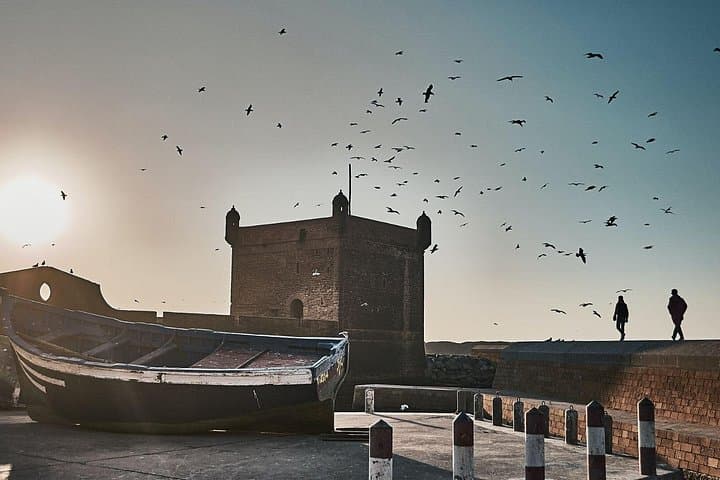
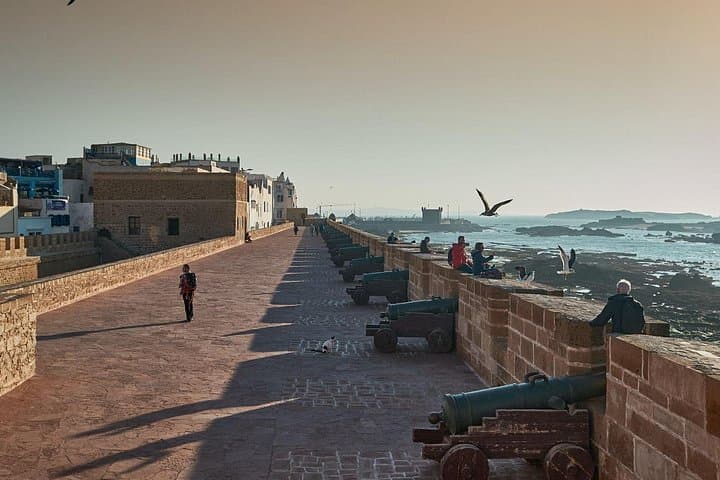
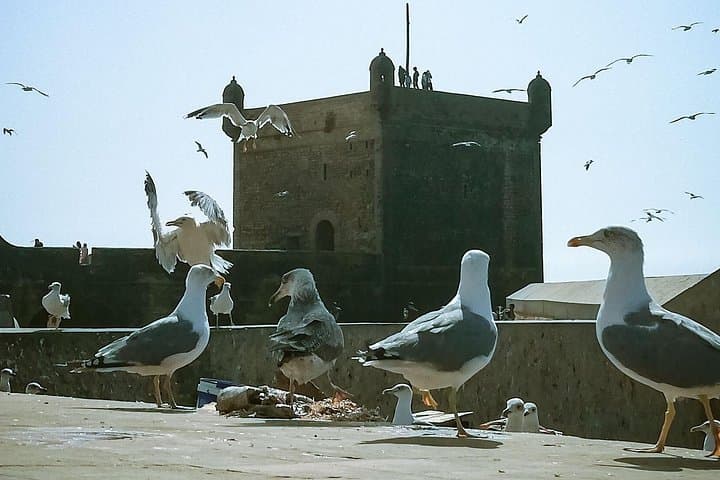
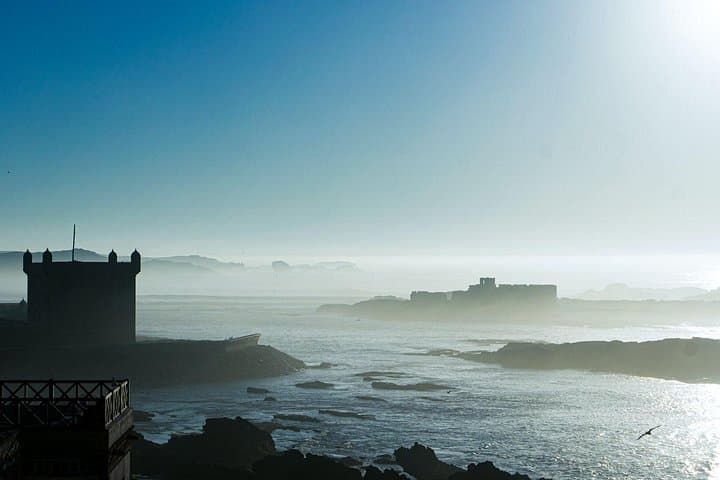
The Atlantic breeze arrives before the town does: salt on the air, a ribbon of blue at the horizon, gulls arguing over the morning catch. As the road drops from the ochre hills into coastal light, Essaouira appears as a low-walled town where wind shapes everything — sails, dunes, and the pace of life.
Verified experiences and guided adventures in the surrounding area.
Operated by JB concierge · Essaouira, Marrakesh-Safi
The Atlantic breeze arrives before the town does: salt on the air, a ribbon of blue at the horizon, gulls arguing over the morning catch. As the road drops from the ochre hills into coastal light, Essaouira appears as a low-walled town where wind shapes everything — sails, dunes, and the pace of life.
Essaouira’s medina is a UNESCO site born of maritime trade and 18th-century fortification. The Skala sea wall, with its iron cannon embrasures, watches the Atlantic like an old guard; nearby, whitewashed houses and cobalt doors reflect Portuguese, Berber and Jewish influences. The coastal geology is simple and blunt: sandy beaches backed by wind-sculpted dunes and a rocky headland that channels waves and wind into the harbor.
Culture here moves at market pace — fishmongers shout their prices, artisans carve thuya wood, and argan cooperatives extract oil by hand, a tradition that supports rural women and local economies.
Practical guidance: expect a long day (roughly nine hours round-trip from Marrakech). Comfortable, grippy shoes are essential for cobbled streets and fortress ramps; layers are mandatory because the morning drive from Marrakech can be warm but the sea wind is consistently cool. Bring cash for small purchases and a lightweight daypack for water, sunscreen and a camera. Lunch is available at harbor restaurants but isn’t included; reserve time to walk the ramparts at golden hour when the town’s blue-and-white facades glow.
This trip suits travelers who want a compact taste of Moroccan coast culture without overnight logistics — a tidy, scenic exchange of Marrakech’s inland intensity for Atlantic calm.
easy.
9 hours.
Basic fitness for walking short distances, standing on tours, and navigating uneven surfaces.
Yes — pick-up and drop-off at your Marrakech hotel or a central meeting point are included and provided in an air-conditioned vehicle.
No — the tour includes free time in Essaouira to buy lunch; harbor restaurants and cafés let you sample fresh seafood at varying price points.
Yes — cooperatives offer demonstrations and sell argan products; bring cash and be prepared to politely negotiate prices.
The tour is generally suitable for most ages, but the medina has narrow cobbled streets and some steps; travelers with limited mobility should contact the operator ahead to discuss accessibility.
Essaouira’s medina and Skala were shaped by 18th-century port planning and earlier Portuguese coastal fortifications, producing a compact European-style grid inside North African architecture.
Argan cooperatives support sustainable harvesting of argan trees, but coastal erosion and tourism pressure require mindful behavior—avoid trampling dunes and respect local fishing operations.
JB concierge operates guided outdoor trips and adventures with an emphasis on safety, stewardship, and memorable experiences.
The Atlantic breeze arrives before the town does: salt on the air, a ribbon of blue at the horizon, gulls arguing over the morning catch. As the road drops from the ochre hills into coastal light, Essaouira appears as a low-walled town where wind shapes everything — sails, dunes, and the pace of life.
The Atlantic breeze arrives before the town does: salt on the air, a ribbon of blue at the horizon, gulls arguing over the morning catch. As the road drops from the ochre hills into coastal light, Essaouira appears as a low-walled town where wind shapes everything — sails, dunes, and the pace of life.
Essaouira’s medina is a UNESCO site born of maritime trade and 18th-century fortification. The Skala sea wall, with its iron cannon embrasures, watches the Atlantic like an old guard; nearby, whitewashed houses and cobalt doors reflect Portuguese, Berber and Jewish influences. The coastal geology is simple and blunt: sandy beaches backed by wind-sculpted dunes and a rocky headland that channels waves and wind into the harbor.
Culture here moves at market pace — fishmongers shout their prices, artisans carve thuya wood, and argan cooperatives extract oil by hand, a tradition that supports rural women and local economies.
Practical guidance: expect a long day (roughly nine hours round-trip from Marrakech). Comfortable, grippy shoes are essential for cobbled streets and fortress ramps; layers are mandatory because the morning drive from Marrakech can be warm but the sea wind is consistently cool. Bring cash for small purchases and a lightweight daypack for water, sunscreen and a camera. Lunch is available at harbor restaurants but isn’t included; reserve time to walk the ramparts at golden hour when the town’s blue-and-white facades glow.
This trip suits travelers who want a compact taste of Moroccan coast culture without overnight logistics — a tidy, scenic exchange of Marrakech’s inland intensity for Atlantic calm.