THE ADVENTURE COLLECTIVE® · Independent discovery and booking for outdoor travel

Trade Marrakech’s heat for Essaouira’s Atlantic breeze on a shared small-group day trip. Explore the port, medina and ramparts, visit an argan cooperative, and enjoy fresh seafood by the quay.
Trade Marrakech’s heat for Essaouira’s Atlantic breeze on a shared small-group day trip. Explore the port, medina and ramparts, visit an argan cooperative, and enjoy fresh seafood by the quay.
The wind hits first — a cool Atlantic breath that clears Marrakech dust from your throat as the minivan eases into Essaouira’s harbor. Whitewashed walls and splashes of cobalt announce the old port before the narrow streets do; gulls call overhead, fishing boats clatter to the quay, and the ramparts run like weathered teeth into the sea.
Verified experiences and guided adventures in the surrounding area.
Operated by Marrakech Tours · Essaouira, Marrakech-Safi
The wind hits first — a cool Atlantic breath that clears Marrakech dust from your throat as the minivan eases into Essaouira’s harbor. Whitewashed walls and splashes of cobalt announce the old port before the narrow streets do; gulls call overhead, fishing boats clatter to the quay, and the ramparts run like weathered teeth into the sea.
Historically called Mogador, Essaouira’s stonework and waterfront reflect Portuguese, French and Berber layers: 18th-century defenses, Thuya wood marquetry workshops and a medina that grew from salt, fish and trade. Geologically the coastline is soft sandstone and sandy beaches backed by argan-studded scrub — argan trees are a relic species protected in the region and visible on the route from Marrakech.
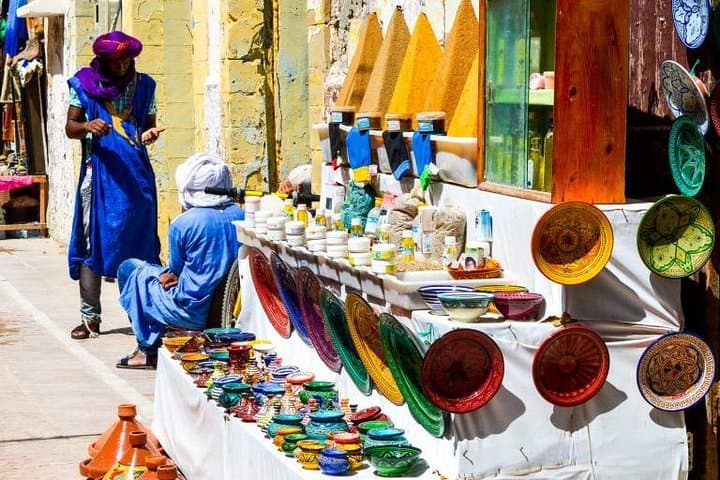
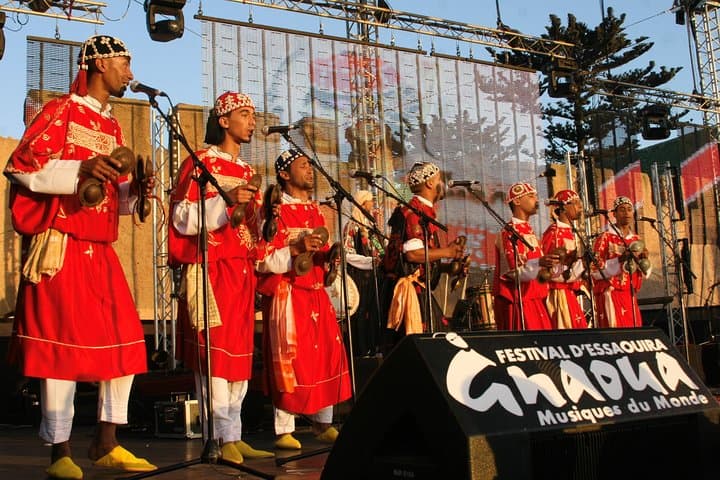
Culturally the town has a slow, creative pulse: artisans carve Thuya, fishermen barter the day’s catch, and the relaxed café culture invites long mid-day pauses. You’ll likely stop at an argan cooperative to see how oil is pressed and at the ramparts to watch waves throwing themselves at the fortress.
Practically, expect a full day: roughly 9–10 hours door-to-door from Marrakech, mostly level walking on cobbles and packed sand with short stair sections in the medina. Comfortable shoes, sun protection and a light wind layer are the difference between a pleasant stroll and a chilled, windy walk. Lunch at the port is the best time to sample fresh seafood; plan cash for small purchases and modest bargaining in market lanes. Return travel arrives as light softens, the coast shrinking behind you while the smell of argan and sea lingers.
easy.
9–10 hours.
Light fitness required — mostly short walks and standing; suitable for most travelers.
Yes — hotel pickup and drop-off in Marrakech are included; pick-up point will be confirmed at booking.
Expect several short walks on uneven cobbles and steps while exploring the medina, ramparts and port; the pace is relaxed.
The tour notes stroller accessibility for short stretches, but narrow medina lanes and steps can make full stroller access difficult.
Yes — the itinerary typically includes a stop at an argan cooperative and time in the medina for Thuya wood and local crafts.
Once called Mogador, Essaouira was reshaped by 18th-century European fortifications and long served as a trading port linking North Africa with Europe.
The surrounding argan landscape is protected and recognized by UNESCO; support local cooperatives that practice sustainable harvesting and responsible fishing stalls at the port.
Marrakech Tours operates guided outdoor trips and adventures with an emphasis on safety, stewardship, and memorable experiences.
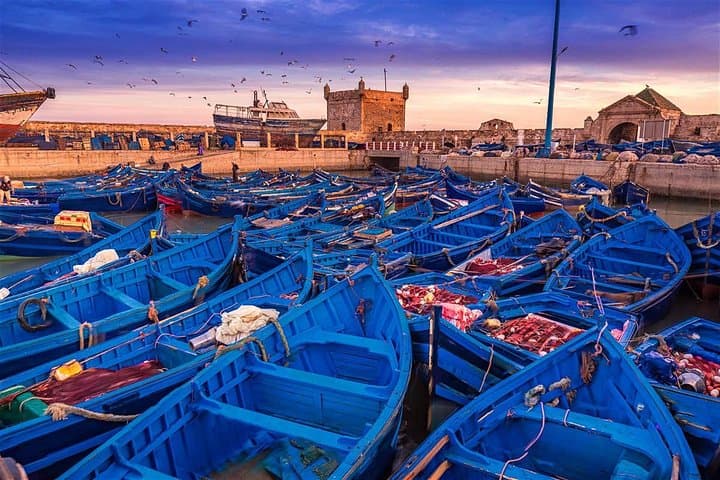
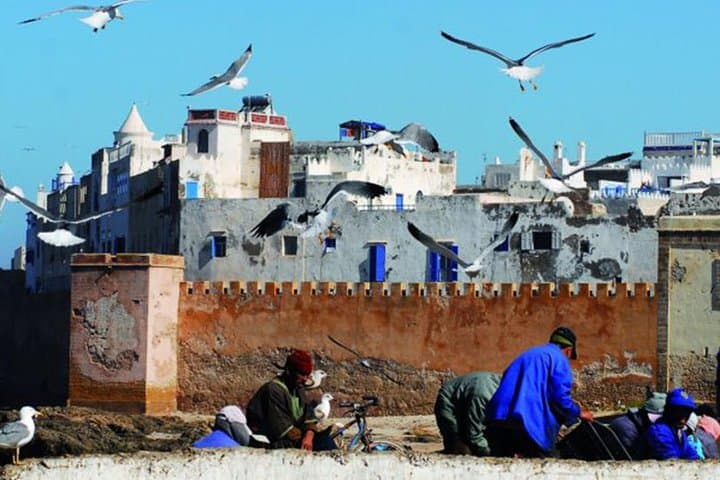
The wind hits first — a cool Atlantic breath that clears Marrakech dust from your throat as the minivan eases into Essaouira’s harbor. Whitewashed walls and splashes of cobalt announce the old port before the narrow streets do; gulls call overhead, fishing boats clatter to the quay, and the ramparts run like weathered teeth into the sea.
The wind hits first — a cool Atlantic breath that clears Marrakech dust from your throat as the minivan eases into Essaouira’s harbor. Whitewashed walls and splashes of cobalt announce the old port before the narrow streets do; gulls call overhead, fishing boats clatter to the quay, and the ramparts run like weathered teeth into the sea.
Historically called Mogador, Essaouira’s stonework and waterfront reflect Portuguese, French and Berber layers: 18th-century defenses, Thuya wood marquetry workshops and a medina that grew from salt, fish and trade. Geologically the coastline is soft sandstone and sandy beaches backed by argan-studded scrub — argan trees are a relic species protected in the region and visible on the route from Marrakech.
Culturally the town has a slow, creative pulse: artisans carve Thuya, fishermen barter the day’s catch, and the relaxed café culture invites long mid-day pauses. You’ll likely stop at an argan cooperative to see how oil is pressed and at the ramparts to watch waves throwing themselves at the fortress.
Practically, expect a full day: roughly 9–10 hours door-to-door from Marrakech, mostly level walking on cobbles and packed sand with short stair sections in the medina. Comfortable shoes, sun protection and a light wind layer are the difference between a pleasant stroll and a chilled, windy walk. Lunch at the port is the best time to sample fresh seafood; plan cash for small purchases and modest bargaining in market lanes. Return travel arrives as light softens, the coast shrinking behind you while the smell of argan and sea lingers.