THE ADVENTURE COLLECTIVE® · Independent discovery and booking for outdoor travel

Trade Marrakech’s ochre alleys for Essaouira’s salt-laced wind on a private full-day trip. Explore the UNESCO medina, tour the fishing harbor and argan cooperatives, then relax on the Atlantic shore with time to wander at your own pace.
Trade Marrakech’s ochre alleys for Essaouira’s salt-laced wind on a private full-day trip. Explore the UNESCO medina, tour the fishing harbor and argan cooperatives, then relax on the Atlantic shore with time to wander at your own pace.
Dawn leaves Marrakech behind as the road unfurls west toward the Atlantic; olive groves and low hills slide past the window while the air cools and the sea begins to assert itself. By midmorning the fortified walls of Essaouira appear—whitewashed ramparts punctuated by brass cannons—and the Atlantic breeze tugs at your jacket, promising a different tempo from the city.
Verified experiences and guided adventures in the surrounding area.
Operated by Smart Morocco Tours Excursions · Essaouira, Marrakesh-Safi
Dawn leaves Marrakech behind as the road unfurls west toward the Atlantic; olive groves and low hills slide past the window while the air cools and the sea begins to assert itself. By midmorning the fortified walls of Essaouira appear—whitewashed ramparts punctuated by brass cannons—and the Atlantic breeze tugs at your jacket, promising a different tempo from the city.
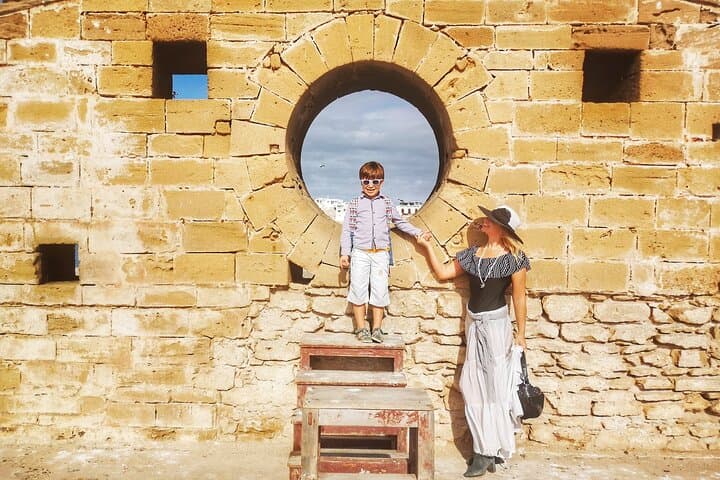
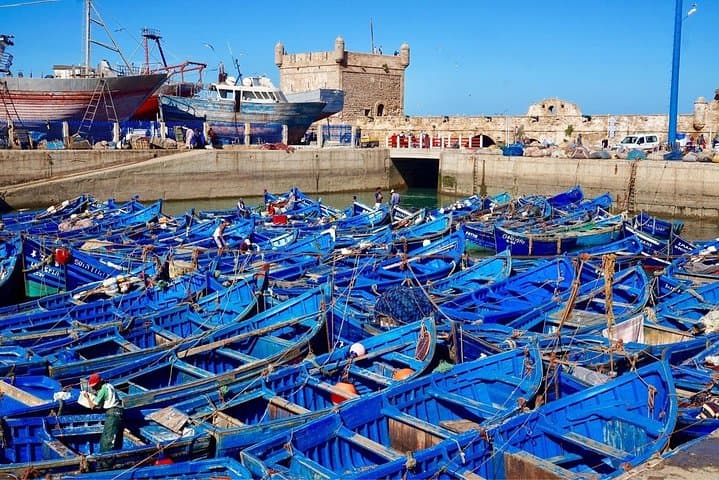
Essaouira’s medina (a UNESCO World Heritage Site) reflects 18th-century urban planning: straight, walkable lanes, wind-swept squares and a layered history of Portuguese, Berber and French influence. Geologically, the coast is a meeting of basaltic outcrops, sandy beaches and shallow continental shelf that invites seabirds and, on good days, glimpses of dolphins offshore. Culture here is maritime and craft-driven: blue fishing boats crowd the port, women’s cooperatives press argan kernels into oil, and vendors sell carved thuya wood and woven textiles.
On a private day trip you’ll split time between a guided harbor walkthrough, a paced exploration of the medina’s alleys, a visit to an argan cooperative and leisure time on the beach. Expect cobbled streets and stairs, strong coastal winds (the alizés), and friendly bargaining in souks.
Practical guidance: set out early to avoid afternoon heat and onshore gusts, bring sturdy shoes for uneven stones, carry cash for small purchases, and keep sunscreen and a wind layer handy. This is a full 9–10 hour day with roughly 2.5–3 hours each way of scenic driving—rewarded by sea air, fresh seafood and the compact, historic pulse of Essaouira.
easy.
9–10 hours.
Light walking ability required; comfortable moving on cobbles and short stair sections for several hours.
Expect about 2.5–3 hours each way on a comfortable private transfer over roughly 170 kilometers, depending on traffic.
Lunch is typically not included; guides usually recommend local seafood restaurants in the medina where you can choose dishes and pay separately.
Yes—this private transfer is family-friendly, but note that medina alleys have uneven cobbles and some stairs; brief walking is required.
Yes; cooperatives sell locally produced oil. Bring cash, compare prices, and watch the pressing process to verify production methods.
Founded as Mogador, Essaouira’s current layout dates to 18th-century planning under Sultan Mohammed III, blending European and North African coastal fortification styles.
Support local argan cooperatives and avoid packaged souvenirs that harm native vegetation; take litter off beaches and respect fishing zones during low tide.
Smart Morocco Tours Excursions operates guided outdoor trips and adventures with an emphasis on safety, stewardship, and memorable experiences.
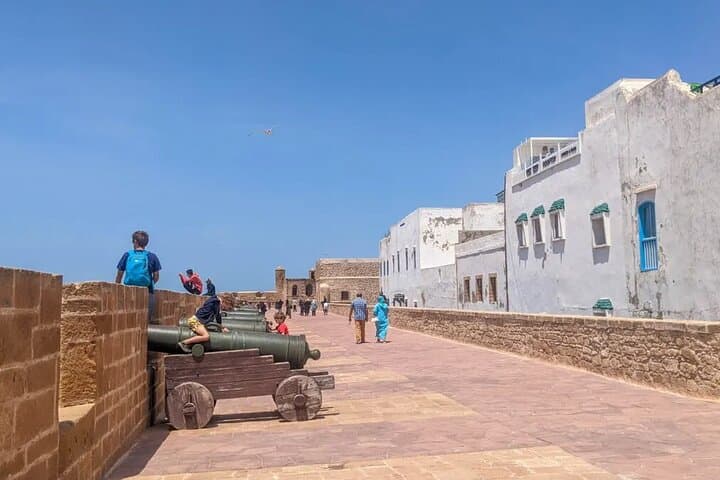
Dawn leaves Marrakech behind as the road unfurls west toward the Atlantic; olive groves and low hills slide past the window while the air cools and the sea begins to assert itself. By midmorning the fortified walls of Essaouira appear—whitewashed ramparts punctuated by brass cannons—and the Atlantic breeze tugs at your jacket, promising a different tempo from the city.
Dawn leaves Marrakech behind as the road unfurls west toward the Atlantic; olive groves and low hills slide past the window while the air cools and the sea begins to assert itself. By midmorning the fortified walls of Essaouira appear—whitewashed ramparts punctuated by brass cannons—and the Atlantic breeze tugs at your jacket, promising a different tempo from the city.
Essaouira’s medina (a UNESCO World Heritage Site) reflects 18th-century urban planning: straight, walkable lanes, wind-swept squares and a layered history of Portuguese, Berber and French influence. Geologically, the coast is a meeting of basaltic outcrops, sandy beaches and shallow continental shelf that invites seabirds and, on good days, glimpses of dolphins offshore. Culture here is maritime and craft-driven: blue fishing boats crowd the port, women’s cooperatives press argan kernels into oil, and vendors sell carved thuya wood and woven textiles.
On a private day trip you’ll split time between a guided harbor walkthrough, a paced exploration of the medina’s alleys, a visit to an argan cooperative and leisure time on the beach. Expect cobbled streets and stairs, strong coastal winds (the alizés), and friendly bargaining in souks.
Practical guidance: set out early to avoid afternoon heat and onshore gusts, bring sturdy shoes for uneven stones, carry cash for small purchases, and keep sunscreen and a wind layer handy. This is a full 9–10 hour day with roughly 2.5–3 hours each way of scenic driving—rewarded by sea air, fresh seafood and the compact, historic pulse of Essaouira.