THE ADVENTURE COLLECTIVE® · Independent discovery and booking for outdoor travel

Escape Marrakech for a day to Essaouira’s windswept harbor, UNESCO medina, and sprawling beach. This full-day trip blends coastal scenery, Portuguese-era ramparts, and a visit to an Argan women’s cooperative.
Escape Marrakech for a day to Essaouira’s windswept harbor, UNESCO medina, and sprawling beach. This full-day trip blends coastal scenery, Portuguese-era ramparts, and a visit to an Argan women’s cooperative.
You arrive as the road flattens and the Atlantic air replaces Marrakech's dry heat—salt rides the breeze, gulls wheel above whitewashed ramparts, and fishermen haul nets at the Skala. Essaouira’s harbor speaks in a low, practical rhythm: boats creak, seagulls argue, and the sea pushes light spray against the Portuguese bastions.
Verified experiences and guided adventures in the surrounding area.
Operated by DESERT MOROCCO ADVENTURE · Essaouira, Marrakech-Safi
You arrive as the road flattens and the Atlantic air replaces Marrakech's dry heat—salt rides the breeze, gulls wheel above whitewashed ramparts, and fishermen haul nets at the Skala. Essaouira’s harbor speaks in a low, practical rhythm: boats creak, seagulls argue, and the sea pushes light spray against the Portuguese bastions.
The town’s stone walls and grid-like medina reflect 16th-century Portuguese military engineering, later shaped by Moroccan trade and Atlantic winds. Geologically, Essaouira sits on a sheltered bay carved by millennia of waves; the long sandy beach is backed by dunes and argan-studded scrub. Culturally, the medina is a working port—woodworkers, fishmongers, and cooperatives producing argan oil keep daily rhythm alive. The argan tree is both economic resource and ecological keystone for this semi-arid coast.
On a full-day tour from Marrakech expect a 2.5–3 hour drive each way, a guided walk through the UNESCO-listed medina, time at Skala du Port, and a stop at an Argan Women’s Cooperative. The beach invites a short swim or a lesson in steady Atlantic surf; vendors offer camel rides and quad rentals along the shore. Practical notes: plan for wind, bring layered sun protection, and give yourself time for the drive back to Marrakech by early evening.
For travelers, this is an easy, sensory day—history underfoot, ocean insisting you slow down, and local crafts that reward curious questions. Pack water, comfortable shoes for cobbled lanes, and a small budget for fresh seafood or a hand-carved souvenir.
easy.
10–11 hours.
Suitable for most fitness levels; requires ability to walk short distances on cobbled streets and climb ramparts.
The drive typically takes 2.5–3 hours each way depending on traffic and stops, making this a full-day outing.
Most packages do not include lunch; you’ll have time to buy fresh seafood or choose a local restaurant in the medina—check your booking for specifics.
Yes—there are safe spots for swimming and reliable surf conditions, but strong currents occur; follow local guidance and use supervised areas where available.
Visits typically include a demonstration of oil production; purchases support local livelihoods, but you should expect polite sales efforts and never feel obligated to buy.
Essaouira’s stone ramparts and grid-pattern medina date to 18th-century redesign influenced by earlier Portuguese fortifications; the town long served Atlantic trade and fishing.
Argan tree conservation and women’s cooperatives are central to local sustainability; visitors should avoid disturbing dune vegetation and support ethical local businesses.
DESERT MOROCCO ADVENTURE operates guided outdoor trips and adventures with an emphasis on safety, stewardship, and memorable experiences.
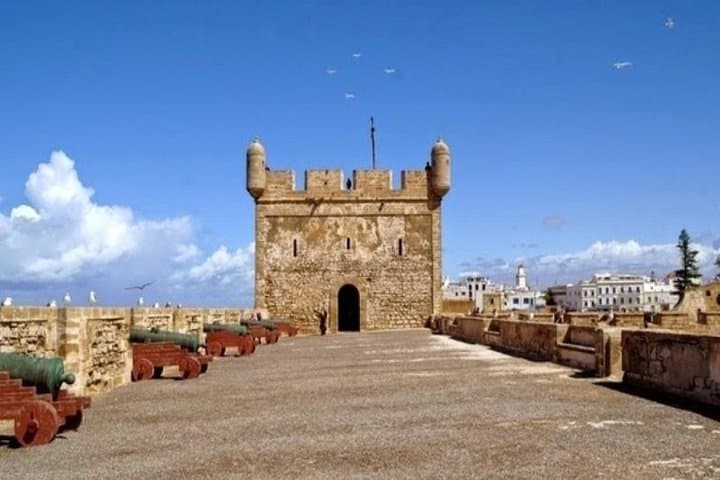
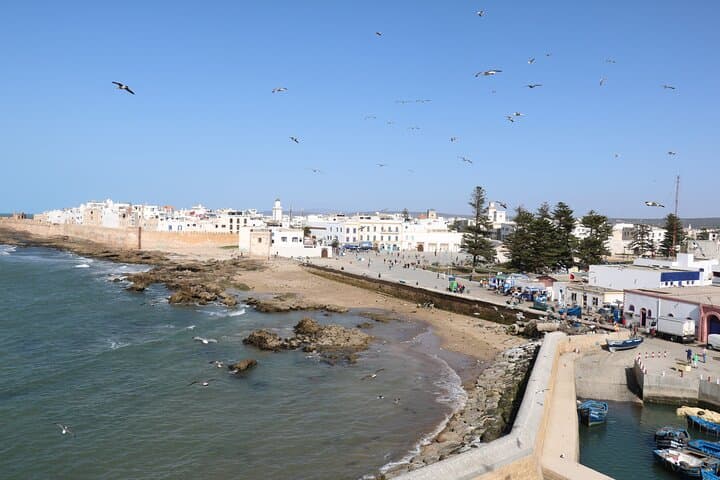
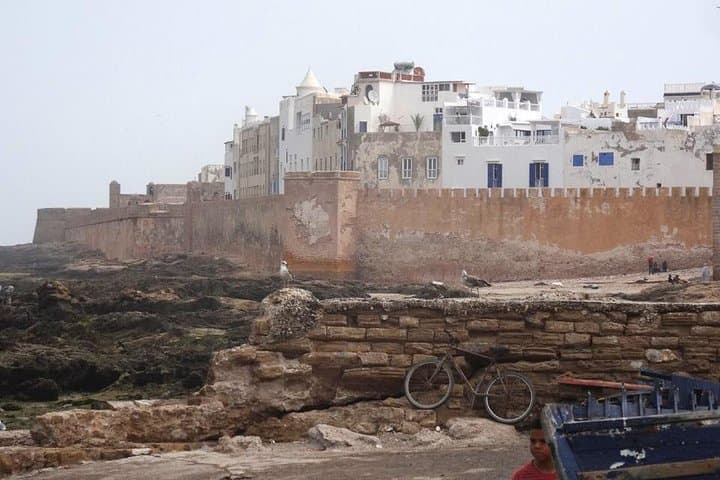
You arrive as the road flattens and the Atlantic air replaces Marrakech's dry heat—salt rides the breeze, gulls wheel above whitewashed ramparts, and fishermen haul nets at the Skala. Essaouira’s harbor speaks in a low, practical rhythm: boats creak, seagulls argue, and the sea pushes light spray against the Portuguese bastions.
You arrive as the road flattens and the Atlantic air replaces Marrakech's dry heat—salt rides the breeze, gulls wheel above whitewashed ramparts, and fishermen haul nets at the Skala. Essaouira’s harbor speaks in a low, practical rhythm: boats creak, seagulls argue, and the sea pushes light spray against the Portuguese bastions.
The town’s stone walls and grid-like medina reflect 16th-century Portuguese military engineering, later shaped by Moroccan trade and Atlantic winds. Geologically, Essaouira sits on a sheltered bay carved by millennia of waves; the long sandy beach is backed by dunes and argan-studded scrub. Culturally, the medina is a working port—woodworkers, fishmongers, and cooperatives producing argan oil keep daily rhythm alive. The argan tree is both economic resource and ecological keystone for this semi-arid coast.
On a full-day tour from Marrakech expect a 2.5–3 hour drive each way, a guided walk through the UNESCO-listed medina, time at Skala du Port, and a stop at an Argan Women’s Cooperative. The beach invites a short swim or a lesson in steady Atlantic surf; vendors offer camel rides and quad rentals along the shore. Practical notes: plan for wind, bring layered sun protection, and give yourself time for the drive back to Marrakech by early evening.
For travelers, this is an easy, sensory day—history underfoot, ocean insisting you slow down, and local crafts that reward curious questions. Pack water, comfortable shoes for cobbled lanes, and a small budget for fresh seafood or a hand-carved souvenir.