THE ADVENTURE COLLECTIVE® · Independent discovery and booking for outdoor travel

Escape Marrakech for a full-day coastal excursion to Essaouira: explore the Old Medina, watch goats in argan trees, taste grilled fish at the harbor and walk wind-carved beaches. This practical guide outlines what to expect and how to prepare.
Escape Marrakech for a full-day coastal excursion to Essaouira: explore the Old Medina, watch goats in argan trees, taste grilled fish at the harbor and walk wind-carved beaches. This practical guide outlines what to expect and how to prepare.
Morning light breaks over the road from Marrakech and the atlas-scarred hills recede as the Atlantic draws nearer. By mid-morning you feel the sea in the air: salt, wind, and gulls calling, and Essaouira’s ramparts come into view like a weathered map of human trade and tides. The city’s low, whitewashed houses and blue shutters reflect a working port that still announces itself with curtained fishing boats and the hush of drying nets.
Verified experiences and guided adventures in the surrounding area.
Operated by Fifthsens · Essaouira, Marrakesh-Safi
Morning light breaks over the road from Marrakech and the atlas-scarred hills recede as the Atlantic draws nearer. By mid-morning you feel the sea in the air: salt, wind, and gulls calling, and Essaouira’s ramparts come into view like a weathered map of human trade and tides. The city’s low, whitewashed houses and blue shutters reflect a working port that still announces itself with curtained fishing boats and the hush of drying nets.
Essaouira’s Old Medina preserves layers: 18th-century Portuguese fortifications sit alongside 20th-century art cafes, while Moulay El Hassan square hums with vendors and conversations. Geologically the coastline is Atlantic-influenced limestone and sand; winds have carved the beach into broad, wind-ready stretches favored by kite surfers. Local culture blends Amazigh (Berber) traditions, Moroccan Andalusian music, and centuries of maritime trade—an economy once called Mogador on European maps.
Expect a sensory day: the argan cooperatives where women press oil and curious goats climb argan trees, the clamorous fish market where fresh catch is grilled on open coals, and a stroll along the ramparts with sea spray daring you closer to the cliff edge.
Practical guidance: wear sturdy walking shoes for cobbled medina lanes, bring sun protection and a reusable water bottle (bottled water is usually provided), and carry small change for markets and tipping. If you’re prone to motion sickness, the 2.5–3 hour transfer each way can be bumpy; choose a window seat, and ask for a later pickup if you prefer quieter travel. Aim to arrive early in the medina to avoid midday crowds and to catch the best light for photos.
easy.
10 hours.
Suitable for most fitness levels; involves walking on uneven cobbles and a few short stair sections
Expect about 2.5 to 3 hours each way depending on traffic; tours typically include round-trip transport with an early departure.
Many operators list general wheelchair accessibility for vehicles and some stops, but cobbled medina streets and ramparts may limit access—check specific pickup and route details ahead of booking.
This tour often includes bottled water and a city guide; lunch at the fish market is typically at your own expense so you can choose dishes and portion size.
Yes—goats in argan trees are common in the region and often visible from roadside viewpoints near argan cooperatives, though sightings depend on time and grazing patterns.
Essaouira (formerly Mogador) was fortified in the 18th century under Sultan Mohammed III to strengthen Atlantic trade; Portuguese and European influences shaped its ramparts and urban grid.
The argan woodlands around Essaouira form part of Morocco's efforts to protect a UNESCO-designated biosphere; support local cooperatives and avoid buying unsustainably-sourced souvenirs.
Fifthsens operates guided outdoor trips and adventures with an emphasis on safety, stewardship, and memorable experiences.
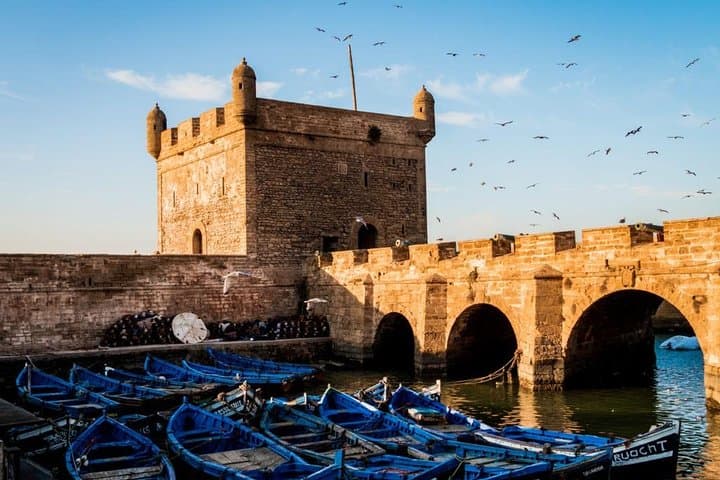
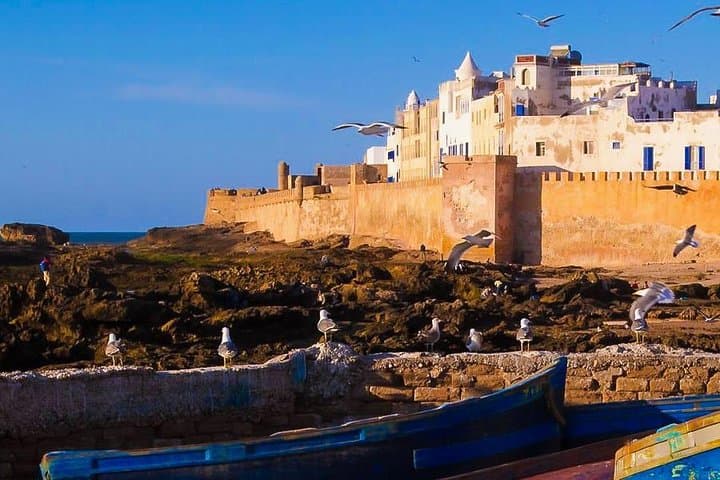
Morning light breaks over the road from Marrakech and the atlas-scarred hills recede as the Atlantic draws nearer. By mid-morning you feel the sea in the air: salt, wind, and gulls calling, and Essaouira’s ramparts come into view like a weathered map of human trade and tides. The city’s low, whitewashed houses and blue shutters reflect a working port that still announces itself with curtained fishing boats and the hush of drying nets.
Morning light breaks over the road from Marrakech and the atlas-scarred hills recede as the Atlantic draws nearer. By mid-morning you feel the sea in the air: salt, wind, and gulls calling, and Essaouira’s ramparts come into view like a weathered map of human trade and tides. The city’s low, whitewashed houses and blue shutters reflect a working port that still announces itself with curtained fishing boats and the hush of drying nets.
Essaouira’s Old Medina preserves layers: 18th-century Portuguese fortifications sit alongside 20th-century art cafes, while Moulay El Hassan square hums with vendors and conversations. Geologically the coastline is Atlantic-influenced limestone and sand; winds have carved the beach into broad, wind-ready stretches favored by kite surfers. Local culture blends Amazigh (Berber) traditions, Moroccan Andalusian music, and centuries of maritime trade—an economy once called Mogador on European maps.
Expect a sensory day: the argan cooperatives where women press oil and curious goats climb argan trees, the clamorous fish market where fresh catch is grilled on open coals, and a stroll along the ramparts with sea spray daring you closer to the cliff edge.
Practical guidance: wear sturdy walking shoes for cobbled medina lanes, bring sun protection and a reusable water bottle (bottled water is usually provided), and carry small change for markets and tipping. If you’re prone to motion sickness, the 2.5–3 hour transfer each way can be bumpy; choose a window seat, and ask for a later pickup if you prefer quieter travel. Aim to arrive early in the medina to avoid midday crowds and to catch the best light for photos.