THE ADVENTURE COLLECTIVE® · Independent discovery and booking for outdoor travel

Escape Marrakech for a full‑day journey to Essaouira, the Atlantic citadel known as Mogador. Expect ramparts, a UNESCO medina, argan cooperatives and strong coastal winds—perfect for explorers who want culture, seafood and seaside walks in a single long day.
Escape Marrakech for a full‑day journey to Essaouira, the Atlantic citadel known as Mogador. Expect ramparts, a UNESCO medina, argan cooperatives and strong coastal winds—perfect for explorers who want culture, seafood and seaside walks in a single long day.
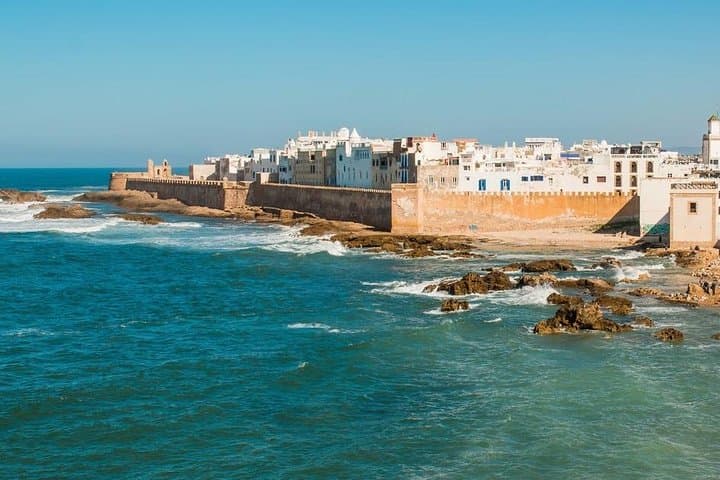
A salty wind meets the road long before the Atlantic appears: the highway unspools west from Marrakech and, after two hours of ochre plains and argan-scrubbed hills, Essaouira opens like a blue-and-white stage set. Cobbled streets slope toward the sea, gulls wheel above the low ramparts, and the clack of fisherfolk bargaining at the port sets the town’s steady tempo.
Verified experiences and guided adventures in the surrounding area.
Operated by Marrakech unique activities · Essaouira, Marrakech-Safi
A salty wind meets the road long before the Atlantic appears: the highway unspools west from Marrakech and, after two hours of ochre plains and argan-scrubbed hills, Essaouira opens like a blue-and-white stage set. Cobbled streets slope toward the sea, gulls wheel above the low ramparts, and the clack of fisherfolk bargaining at the port sets the town’s steady tempo.
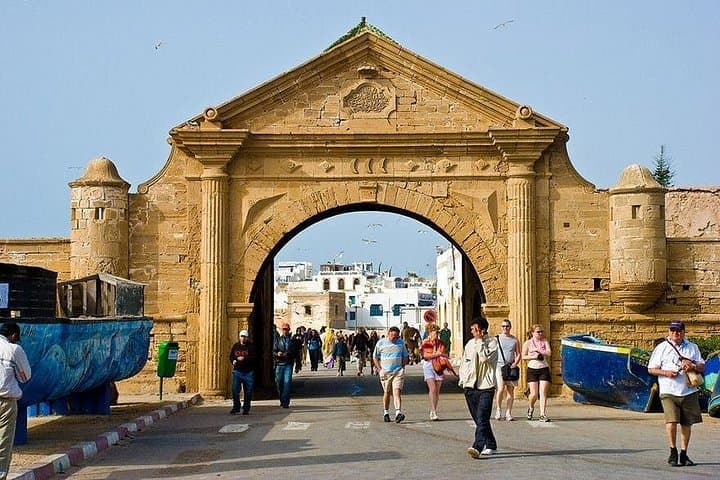
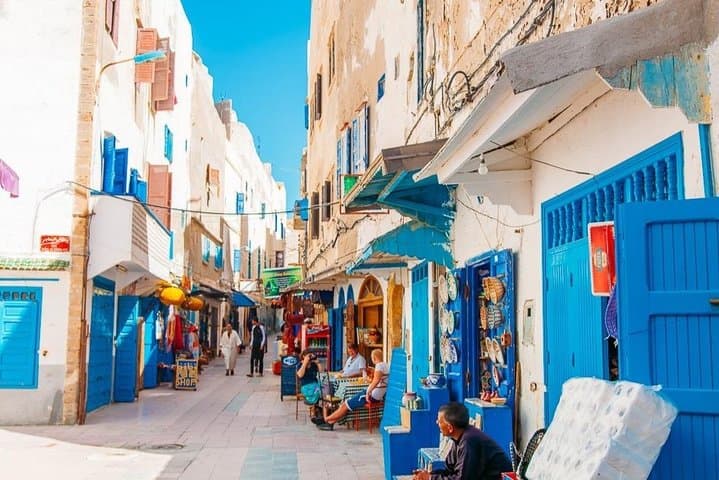
Essaouira’s walls were shaped by centuries of trade and defense — Phoenicians and later the 18th‑century plans of Sultan Mohammed ben Abdallah left a fortified grid that still controls the town. Geologically the coast is Atlantic bluff and wide sand, where upwelling currents make for abundant fish and a brisk, reliable wind that drew sailors, artists and windsurfers. Culturally the city wears its music and crafts plainly: Gnawa rhythms, bluewashed facades, and souk stalls piled with carved thuya wood and argan oil from nearby cooperatives.
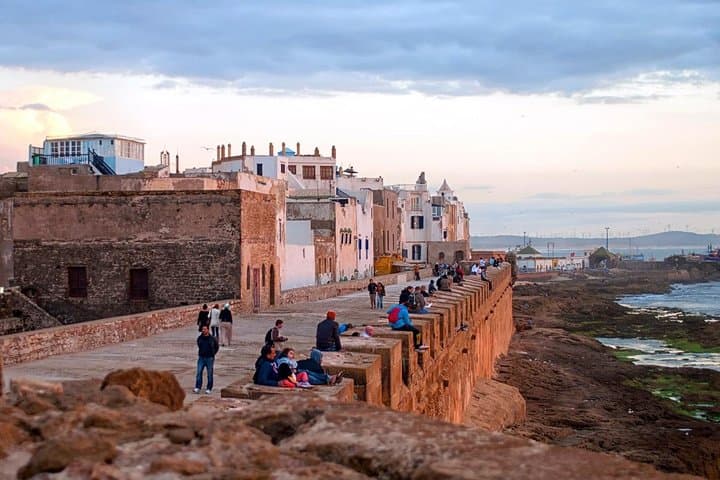
On a day trip expect a guided stroll of the ramparts and medina, visits to a cooperative to see argan extraction, a pause at Moulay Hassan square, and several hours free to browse, eat fresh seafood, or walk the broad beach.
Practicalities: wear sturdy shoes for uneven stones, bring a windproof layer and sun protection, and plan to carry cash for small purchases. If you want surfing or extended exploration, consider staying overnight; otherwise the roundtrip from Marrakech fits a full 10–11 hour day. The town’s scale makes it easy to see the essentials while still leaving space to wander.
easy.
10–11 hours.
Suitable for all fitness levels; involves several hours of walking on uneven surfaces but no sustained climbs.
The drive typically takes about two hours each way, depending on traffic and stops, making this a 10–11 hour roundtrip excursion.
Breakfast is usually provided but lunch is not; you’ll have free time in Essaouira to choose a seaside restaurant or market food.
Yes—many day trips include a stop at a women’s cooperative where you can see argan oil production and buy products directly.
Some main areas and the port are relatively accessible, but narrow, uneven lanes and steps limit full access—ask the operator about specific accessibility needs.
Essaouira grew as a fortified Atlantic port with strategic redesigns in the 18th century by Sultan Mohammed ben Abdallah and has been a crossroads for Berber, European and African trade.
Local argan cooperatives support sustainable argan harvesting and many operators encourage low-impact visits; avoid disturbing nesting birds on cliffs and take litter with you.
Marrakech unique activities operates guided outdoor trips and adventures with an emphasis on safety, stewardship, and memorable experiences.
A salty wind meets the road long before the Atlantic appears: the highway unspools west from Marrakech and, after two hours of ochre plains and argan-scrubbed hills, Essaouira opens like a blue-and-white stage set. Cobbled streets slope toward the sea, gulls wheel above the low ramparts, and the clack of fisherfolk bargaining at the port sets the town’s steady tempo.
A salty wind meets the road long before the Atlantic appears: the highway unspools west from Marrakech and, after two hours of ochre plains and argan-scrubbed hills, Essaouira opens like a blue-and-white stage set. Cobbled streets slope toward the sea, gulls wheel above the low ramparts, and the clack of fisherfolk bargaining at the port sets the town’s steady tempo.
Essaouira’s walls were shaped by centuries of trade and defense — Phoenicians and later the 18th‑century plans of Sultan Mohammed ben Abdallah left a fortified grid that still controls the town. Geologically the coast is Atlantic bluff and wide sand, where upwelling currents make for abundant fish and a brisk, reliable wind that drew sailors, artists and windsurfers. Culturally the city wears its music and crafts plainly: Gnawa rhythms, bluewashed facades, and souk stalls piled with carved thuya wood and argan oil from nearby cooperatives.
On a day trip expect a guided stroll of the ramparts and medina, visits to a cooperative to see argan extraction, a pause at Moulay Hassan square, and several hours free to browse, eat fresh seafood, or walk the broad beach.
Practicalities: wear sturdy shoes for uneven stones, bring a windproof layer and sun protection, and plan to carry cash for small purchases. If you want surfing or extended exploration, consider staying overnight; otherwise the roundtrip from Marrakech fits a full 10–11 hour day. The town’s scale makes it easy to see the essentials while still leaving space to wander.