THE ADVENTURE COLLECTIVE® · Independent discovery and booking for outdoor travel

Escape Marrakech for a full day in Essaouira: fortified ramparts, seafood grills on the harbor, wind-swept beaches and a visit to a cooperative where argan oil is made by hand. This day trip mixes free time with local insight.
Escape Marrakech for a full day in Essaouira: fortified ramparts, seafood grills on the harbor, wind-swept beaches and a visit to a cooperative where argan oil is made by hand. This day trip mixes free time with local insight.
Morning light hits the low stone ramparts and the Atlantic wind pushes you toward a town built for the sea. Essaouira’s blue boats lean at the harbor like old friends and gulls wheel above open-air grills, filling the air with the scent of smoked fish.
Verified experiences and guided adventures in the surrounding area.
Operated by Visit morocco tours · Essaouira, Marrakech-Safi
Morning light hits the low stone ramparts and the Atlantic wind pushes you toward a town built for the sea. Essaouira’s blue boats lean at the harbor like old friends and gulls wheel above open-air grills, filling the air with the scent of smoked fish.
The town’s layout reflects its layered past: 18th-century Portuguese fortifications sit beside a compact medina that UNESCO protects for its intact urban fabric and coastal trading history. Geologically, the coast is a broad sandy shelf carved by Atlantic swells; inland, argan trees scatter across rocky soil, their gnarled roots stabilizing a semi-arid landscape.
Culturally, Essaouira is loud where it needs to be — Gnaoua rhythms in courtyard cafés, cedar woodworkers in tight workshops, and Berber cooperatives producing argan oil by hand. The tour typically includes a stop at an argan cooperative (watch the goats in the trees from a respectful distance) and several hours of unstructured time to walk the Skala’s cannon-lined ramparts and the medina’s alleys.
Practically: expect a 9-hour day with hotel pickup in Marrakech by air-conditioned minivan, free time for lunch, and a 2-hour window for beach or market wandering. Wear sturdy shoes for cobbles and sand, bring sun protection and a wind layer, and have Moroccan dirhams for markets and seafood grills. The trip is wheelchair-accessible in large parts, but medina alleys can be uneven. Plan to move at a relaxed pace, listen for live music in plaza corners, and leave room in your bag for a small jar of freshly pressed argan oil.
easy.
9 hours.
Suitable for travelers comfortable walking several hours on uneven cobbles and some sandy beach sections; minimal elevation gain.
No — the trip provides transport and free time in Essaouira; a local guide can be arranged or met in town but is not included by default.
Expect roughly 2.5 to 3 hours each way depending on traffic and stops, making the full tour about nine hours from hotel pickup to return.
Many cooperatives are women-run and sell directly; choose reputable cooperatives that allow visitors and avoid places that exploit animals or force sales.
The transport and many public areas are accessible, but medina alleys and some viewpoints have uneven surfaces that can limit mobility.
Essaouira was fortified in the 18th century with European-designed ramparts and grew as a strategic Atlantic port, later becoming an artisan and cultural hub.
Argan forests are vulnerable to overgrazing and development; support certified cooperatives and avoid disturbing tree-climbing goats to minimize impact.
Visit morocco tours operates guided outdoor trips and adventures with an emphasis on safety, stewardship, and memorable experiences.


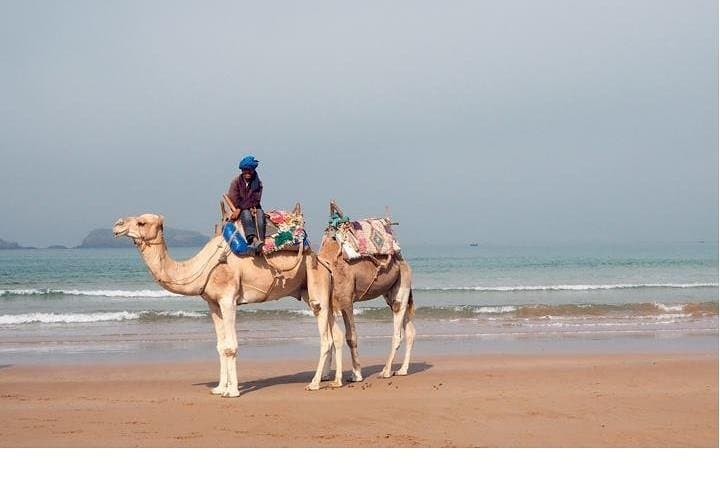
Morning light hits the low stone ramparts and the Atlantic wind pushes you toward a town built for the sea. Essaouira’s blue boats lean at the harbor like old friends and gulls wheel above open-air grills, filling the air with the scent of smoked fish.
Morning light hits the low stone ramparts and the Atlantic wind pushes you toward a town built for the sea. Essaouira’s blue boats lean at the harbor like old friends and gulls wheel above open-air grills, filling the air with the scent of smoked fish.
The town’s layout reflects its layered past: 18th-century Portuguese fortifications sit beside a compact medina that UNESCO protects for its intact urban fabric and coastal trading history. Geologically, the coast is a broad sandy shelf carved by Atlantic swells; inland, argan trees scatter across rocky soil, their gnarled roots stabilizing a semi-arid landscape.
Culturally, Essaouira is loud where it needs to be — Gnaoua rhythms in courtyard cafés, cedar woodworkers in tight workshops, and Berber cooperatives producing argan oil by hand. The tour typically includes a stop at an argan cooperative (watch the goats in the trees from a respectful distance) and several hours of unstructured time to walk the Skala’s cannon-lined ramparts and the medina’s alleys.
Practically: expect a 9-hour day with hotel pickup in Marrakech by air-conditioned minivan, free time for lunch, and a 2-hour window for beach or market wandering. Wear sturdy shoes for cobbles and sand, bring sun protection and a wind layer, and have Moroccan dirhams for markets and seafood grills. The trip is wheelchair-accessible in large parts, but medina alleys can be uneven. Plan to move at a relaxed pace, listen for live music in plaza corners, and leave room in your bag for a small jar of freshly pressed argan oil.