THE ADVENTURE COLLECTIVE® · Independent discovery and booking for outdoor travel

A full‑day outing from Marrakech to Essaouira delivers coastal wind, a historic citadel, artisan workshops, and a lively fishing port. This guide outlines what to expect—travel time, walking conditions, and practical tips to make the most of a day in this Atlantic town.
A full‑day outing from Marrakech to Essaouira delivers coastal wind, a historic citadel, artisan workshops, and a lively fishing port. This guide outlines what to expect—travel time, walking conditions, and practical tips to make the most of a day in this Atlantic town.
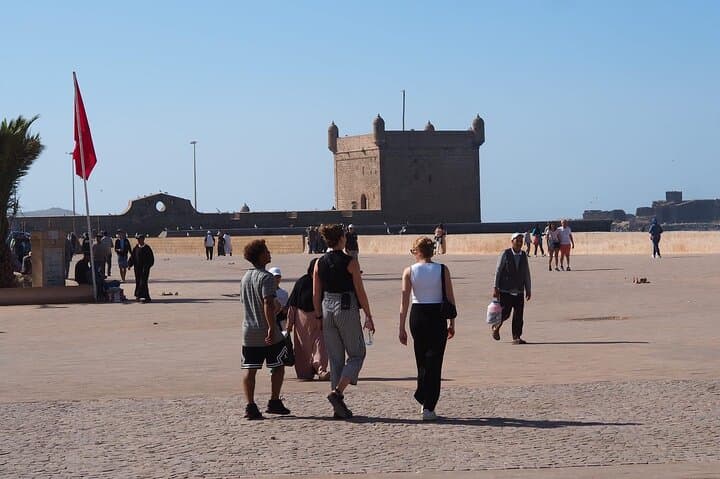
You arrive on the ramparts just as a steady Atlantic wind scours the bay, gulls punctuating the air with sharp calls and the Skala de la Ville’s cannon embrasures framing the ocean.
Verified experiences and guided adventures in the surrounding area.
Operated by Tours Around Morocco · Essaouira, Marrakesh-Safi
You arrive on the ramparts just as a steady Atlantic wind scours the bay, gulls punctuating the air with sharp calls and the Skala de la Ville’s cannon embrasures framing the ocean.
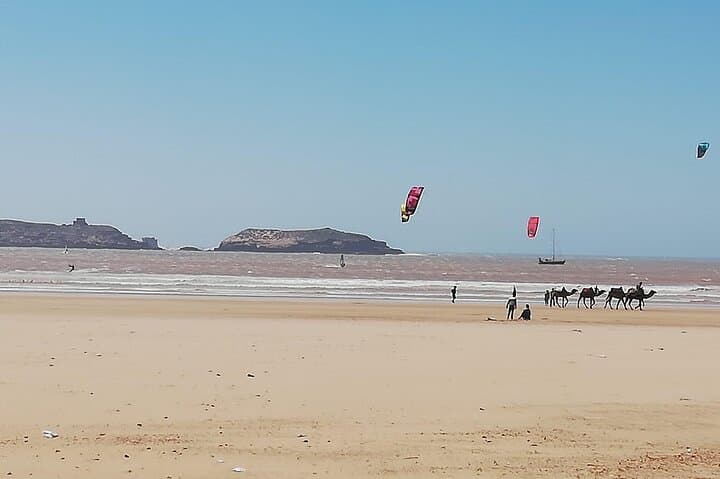
Essaouira (formerly Mogador) wears its history plainly: 18th‑century stone walls, broad wooden doors, and a medina tightened by centuries of trade with Europe and sub-Saharan Africa. The city sits on a rocky spit where wind-carved sand and exposed limestone meet the Atlantic; argan trees scatter across the hillsides behind town, and the coast’s tides shape the wide beach that invites walkers.
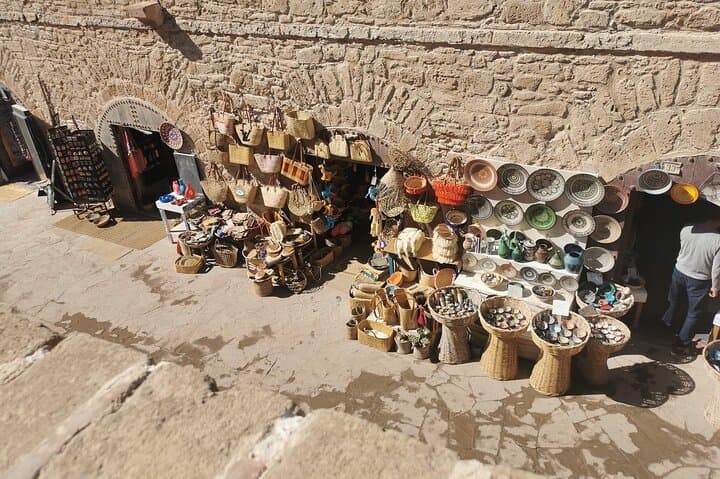
Culturally, Essaouira is an artisan city — woodworkers, metalworkers, and cooperative-run argan presses form a working interior to the medina’s narrow lanes. The fishing port is a live market: boats come in at low tide, and nets, seabirds, and the calls of fishmongers create a rhythmic bustle that defines the waterfront.
Practically, a day trip from Marrakech is a long but straightforward outing: expect roughly 2.5–3 hours each way by road, about 6–7 hours in town, and mostly flat walking on cobbles and sand. Bring layered wind protection, sturdy shoes for uneven lanes, and cash for small workshops and the port stalls. Peak wind runs late morning into afternoon; early arrivals find calmer light for photography and quieter streets for shopping.
If you want more than a snapshot, hire a local guide at the medina edge to explain carving methods, argan production, and the city’s maritime defenses. Leave time for a seafood lunch at the port — the day pairs salty air with hands-on culture and a clear sense of place.
easy.
10–11 hours.
Suitable for travelers with basic mobility—most walking is low‑grade but involves cobbles and some sand
Expect roughly 2.5–3 hours each way by air‑conditioned vehicle, depending on traffic and chosen route.
Yes — the medina and main waterfront attractions are compact and can be explored in 4–6 hours, though artisans and beaches can extend your visit.
Yes — many day trips include a stop at a women’s argan cooperative where you can see production and sample/purchase oils and cosmetics.
Generally yes — the tour is rated easy with minimal elevation; however, cobbles and winds may be uncomfortable for some, so plan rest stops and transport options accordingly.
Originally called Mogador, the city was fortified and rebuilt under Sultan Mohammed ben Abdallah in the 18th century and became a strategic Atlantic port for trade and fishing.
Argan forests are protected and cooperatives support sustainable harvesting; visitors should avoid buying unlicensed wildlife products and stick to cooperative‑sold argan goods.
Tours Around Morocco operates guided outdoor trips and adventures with an emphasis on safety, stewardship, and memorable experiences.
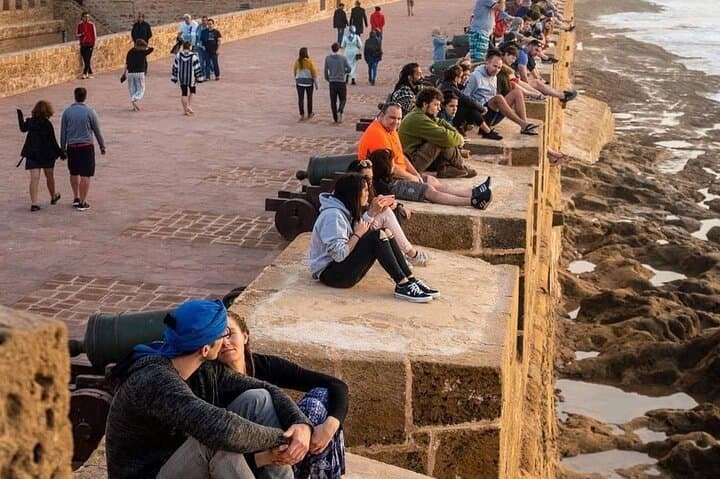
You arrive on the ramparts just as a steady Atlantic wind scours the bay, gulls punctuating the air with sharp calls and the Skala de la Ville’s cannon embrasures framing the ocean.
You arrive on the ramparts just as a steady Atlantic wind scours the bay, gulls punctuating the air with sharp calls and the Skala de la Ville’s cannon embrasures framing the ocean.
Essaouira (formerly Mogador) wears its history plainly: 18th‑century stone walls, broad wooden doors, and a medina tightened by centuries of trade with Europe and sub-Saharan Africa. The city sits on a rocky spit where wind-carved sand and exposed limestone meet the Atlantic; argan trees scatter across the hillsides behind town, and the coast’s tides shape the wide beach that invites walkers.
Culturally, Essaouira is an artisan city — woodworkers, metalworkers, and cooperative-run argan presses form a working interior to the medina’s narrow lanes. The fishing port is a live market: boats come in at low tide, and nets, seabirds, and the calls of fishmongers create a rhythmic bustle that defines the waterfront.
Practically, a day trip from Marrakech is a long but straightforward outing: expect roughly 2.5–3 hours each way by road, about 6–7 hours in town, and mostly flat walking on cobbles and sand. Bring layered wind protection, sturdy shoes for uneven lanes, and cash for small workshops and the port stalls. Peak wind runs late morning into afternoon; early arrivals find calmer light for photography and quieter streets for shopping.
If you want more than a snapshot, hire a local guide at the medina edge to explain carving methods, argan production, and the city’s maritime defenses. Leave time for a seafood lunch at the port — the day pairs salty air with hands-on culture and a clear sense of place.