THE ADVENTURE COLLECTIVE® · Independent discovery and booking for outdoor travel

Escape Marrakech for a day and trade the Atlas foothills for Essaouira’s windy ramparts, artisan souks and Purpuraires-protected beaches. This private day trip gives you time to explore the fortified medina and the working port with practical ease.
Escape Marrakech for a day and trade the Atlas foothills for Essaouira’s windy ramparts, artisan souks and Purpuraires-protected beaches. This private day trip gives you time to explore the fortified medina and the working port with practical ease.
A wind-sanded square, gulls circling above low white houses, and the smell of salt and grilled fish — that’s how a morning in Essaouira begins after a two- to three-hour drive west from Marrakech.
Verified experiences and guided adventures in the surrounding area.
Operated by Marrakech desert tour · Essaouira, Marrakech-Safi
A wind-sanded square, gulls circling above low white houses, and the smell of salt and grilled fish — that’s how a morning in Essaouira begins after a two- to three-hour drive west from Marrakech.
The town, historically called Mogador, wears fortifications laid out by a follower of Vauban; the ramparts still frame the medina and the old port where wooden fishing boats bob behind the Purpuraires islands. Geologically the coastline is Atlantic basalt and sand, and the prevailing trade wind gives Essaouira its cool summers and mild winters, shaping both the town’s pace and its booming kitesurf scene.
Culturally, Essaouira has been a crossroads: Portuguese and French military design, a long tradition of cedar wood inlay and marquetry, and an artist community that fills galleries and alleyways. Artisans sell inlaid furniture and small crafts carved from local thuya (root cedar), while street vendors hawk argan oil and smoked fish near the skala.
Practically, expect cobbled streets, open-air markets, and a fair amount of walking on uneven ground. The trip usually includes hotel pickup in an air-conditioned minivan and about four hours in Essaouira for wandering, shopping, and a beach walk. Bring a windproof jacket, sturdy shoes, cash for souks, and sunscreen — the wind makes shade deceptive.
Timing tip: leave Marrakech early to maximize daylight in Essaouira and avoid traffic. The tour is private, suitable for travelers with moderate fitness, and not recommended for those with significant back or heart problems. Cancellation is typically allowed up to 24 hours prior.
moderate.
8–10 hours.
Moderate — comfortable walking for several hours on uneven surfaces and short climbs up ramparts.
Expect roughly 2.5–3 hours each way by road depending on traffic and your pickup point in Marrakech.
Yes — most itineraries include free time for a seafood lunch by the port or a quick café meal in the medina during the four-hour stop.
Infant seats are available, but the tour involves walking on cobbles and some steps, so it’s not ideal for limited mobility; check when booking for specific needs.
No — artisan purchases and optional museum or site admissions are paid separately; bring local currency for purchases.
Essaouira (Mogador) was fortified in the 18th century with designs influenced by European military engineers; its port and ramparts played roles in trade and strategic control of the Atlantic coast.
Coastal erosion and marine litter are local concerns; support responsible vendors, avoid single-use plastics, and respect protected areas around the Purpuraires islands.
Marrakech desert tour operates guided outdoor trips and adventures with an emphasis on safety, stewardship, and memorable experiences.

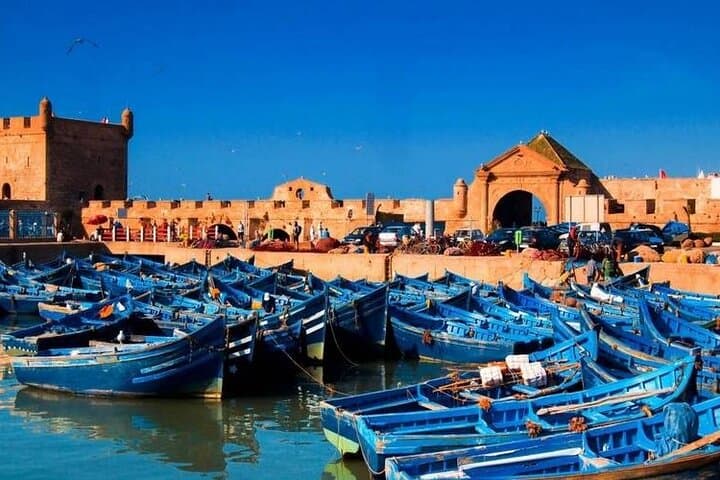


A wind-sanded square, gulls circling above low white houses, and the smell of salt and grilled fish — that’s how a morning in Essaouira begins after a two- to three-hour drive west from Marrakech.
A wind-sanded square, gulls circling above low white houses, and the smell of salt and grilled fish — that’s how a morning in Essaouira begins after a two- to three-hour drive west from Marrakech.
The town, historically called Mogador, wears fortifications laid out by a follower of Vauban; the ramparts still frame the medina and the old port where wooden fishing boats bob behind the Purpuraires islands. Geologically the coastline is Atlantic basalt and sand, and the prevailing trade wind gives Essaouira its cool summers and mild winters, shaping both the town’s pace and its booming kitesurf scene.
Culturally, Essaouira has been a crossroads: Portuguese and French military design, a long tradition of cedar wood inlay and marquetry, and an artist community that fills galleries and alleyways. Artisans sell inlaid furniture and small crafts carved from local thuya (root cedar), while street vendors hawk argan oil and smoked fish near the skala.
Practically, expect cobbled streets, open-air markets, and a fair amount of walking on uneven ground. The trip usually includes hotel pickup in an air-conditioned minivan and about four hours in Essaouira for wandering, shopping, and a beach walk. Bring a windproof jacket, sturdy shoes, cash for souks, and sunscreen — the wind makes shade deceptive.
Timing tip: leave Marrakech early to maximize daylight in Essaouira and avoid traffic. The tour is private, suitable for travelers with moderate fitness, and not recommended for those with significant back or heart problems. Cancellation is typically allowed up to 24 hours prior.