THE ADVENTURE COLLECTIVE® · Independent discovery and booking for outdoor travel

Take a private day trip from Marrakech to Essaouira (Mogador) and trade city heat for Atlantic wind and cobbled medina lanes. Explore fortified ramparts, a lively souk and world-class wind conditions—all in a full-day private transfer.
Take a private day trip from Marrakech to Essaouira (Mogador) and trade city heat for Atlantic wind and cobbled medina lanes. Explore fortified ramparts, a lively souk and world-class wind conditions—all in a full-day private transfer.
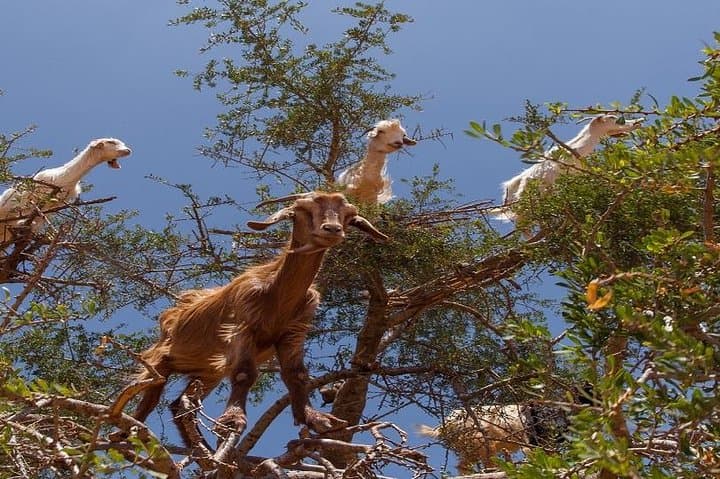
You leave Marrakech at 08:00, the minivan easing onto a two-lane ribbon of road that runs toward the Atlantic. Olive and argan trees blur past; the air shifts from dry heat to a salt-scented breeze. By mid-morning the ramparts of Mogador appear—low, weathered stone walls hugging the sea—and the town’s gulls call like a chorus welcoming you in.
Verified experiences and guided adventures in the surrounding area.
Operated by Morocco today travel · Essaouira, Marrakesh-Safi
You leave Marrakech at 08:00, the minivan easing onto a two-lane ribbon of road that runs toward the Atlantic. Olive and argan trees blur past; the air shifts from dry heat to a salt-scented breeze. By mid-morning the ramparts of Mogador appear—low, weathered stone walls hugging the sea—and the town’s gulls call like a chorus welcoming you in.
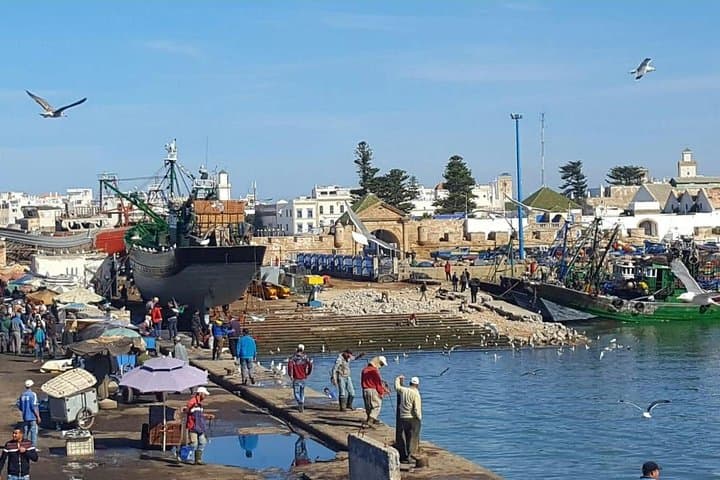
Essaouira’s medina is a lived-in page of history: 18th-century Portuguese bastions, French-era grids, and Berber crafts combining around a working fishing port. Geologically, the coast is compacted sandstone and volcanic outcrops where waves batter and spray, and the steady northeast trade winds—alizés—make the wide beach a world-class playground for windsurfers and kitesurfers. Culturally, Gnawa rhythms and thuya-wood workshops thread through alleyways and the Moulay Hassan square hums with markets and cafes.
Expect a walking visit of roughly three hours within a full 10-hour day trip. You’ll walk narrow streets, climb short staircases on the ramparts, visit the souk and the port, and sample grilled fish at a market stall. Practical notes: dress smart-casual and modestly; bring cash for small purchases; pack sun protection and a wind shell—the coastal wind can bite unexpectedly. The tour is suitable for most fitness levels and is wheelchair- and stroller-accessible in parts, but some alleys are uneven.
If you want surf or a longer cultural stay, consider overnighting; otherwise, return to Marrakech in the evening with sand in your shoes and a clear sense of Mogador’s sea-forged character.
easy.
10 hours.
Suitable for most travelers with basic mobility; expect 2–3 hours of walking over uneven surfaces.
The private transfer takes about three hours each way, depending on traffic and stops along the route.
Yes — the itinerary includes approximately three hours in Essaouira to walk the medina, visit the port, and browse the souk independently.
Yes — the tour notes stroller and wheelchair accessibility in many areas, though some alleys and stairs may be challenging.
Bottled water is provided, but meals and restaurant purchases are typically not included unless specified; bring cash for market food.
Essaouira (historically Mogador) grew as a fortified port in the 18th century with Portuguese and French influences; its medina is a UNESCO World Heritage site for its coastal trading role and preserved urban plan.
Local conservation focuses on sustainable fishing practices and controlling coastal development; visitors are encouraged to avoid plastic waste and support local cooperatives.
Morocco today travel operates guided outdoor trips and adventures with an emphasis on safety, stewardship, and memorable experiences.
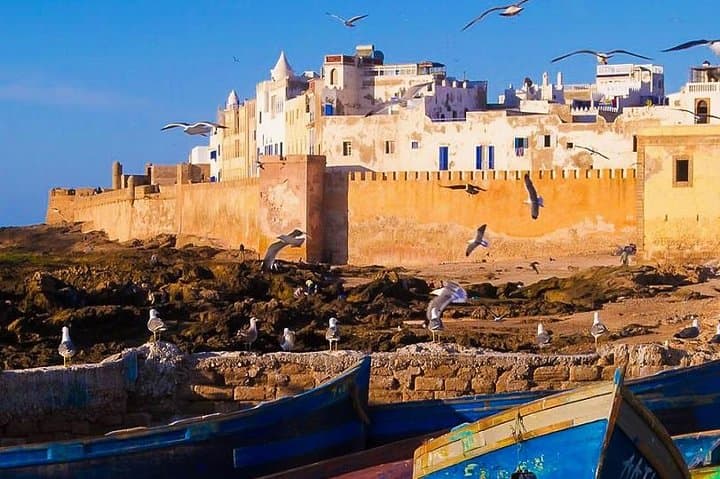
You leave Marrakech at 08:00, the minivan easing onto a two-lane ribbon of road that runs toward the Atlantic. Olive and argan trees blur past; the air shifts from dry heat to a salt-scented breeze. By mid-morning the ramparts of Mogador appear—low, weathered stone walls hugging the sea—and the town’s gulls call like a chorus welcoming you in.
You leave Marrakech at 08:00, the minivan easing onto a two-lane ribbon of road that runs toward the Atlantic. Olive and argan trees blur past; the air shifts from dry heat to a salt-scented breeze. By mid-morning the ramparts of Mogador appear—low, weathered stone walls hugging the sea—and the town’s gulls call like a chorus welcoming you in.
Essaouira’s medina is a lived-in page of history: 18th-century Portuguese bastions, French-era grids, and Berber crafts combining around a working fishing port. Geologically, the coast is compacted sandstone and volcanic outcrops where waves batter and spray, and the steady northeast trade winds—alizés—make the wide beach a world-class playground for windsurfers and kitesurfers. Culturally, Gnawa rhythms and thuya-wood workshops thread through alleyways and the Moulay Hassan square hums with markets and cafes.
Expect a walking visit of roughly three hours within a full 10-hour day trip. You’ll walk narrow streets, climb short staircases on the ramparts, visit the souk and the port, and sample grilled fish at a market stall. Practical notes: dress smart-casual and modestly; bring cash for small purchases; pack sun protection and a wind shell—the coastal wind can bite unexpectedly. The tour is suitable for most fitness levels and is wheelchair- and stroller-accessible in parts, but some alleys are uneven.
If you want surf or a longer cultural stay, consider overnighting; otherwise, return to Marrakech in the evening with sand in your shoes and a clear sense of Mogador’s sea-forged character.