THE ADVENTURE COLLECTIVE® · Independent discovery and booking for outdoor travel

Swap Marrakech’s red-earth bustle for an Atlantic breeze on a full-day trip to Essaouira. Walk the 18th-century ramparts, visit an argan cooperative, and watch the market at the working fishing port.
Swap Marrakech’s red-earth bustle for an Atlantic breeze on a full-day trip to Essaouira. Walk the 18th-century ramparts, visit an argan cooperative, and watch the market at the working fishing port.
The Atlantic wind hits the car like a promise as the road falls away from Marrakech’s ochre heat toward a low, white-washed coast. By late morning the town appears: crenellated ramparts, bright fishing boats, and gulls circling over the port that seem to dare you closer.
Verified experiences and guided adventures in the surrounding area.
Operated by Marrakech Sweet Travel · Essaouira, Marrakech-Safi
The Atlantic wind hits the car like a promise as the road falls away from Marrakech’s ochre heat toward a low, white-washed coast. By late morning the town appears: crenellated ramparts, bright fishing boats, and gulls circling over the port that seem to dare you closer.
Essaouira’s stone walls and seafront bastions were shaped by European military engineers in the 18th century; behind them the medina preserves a working port, Jewish quarter (the Mellah), and a market where sailors trade the morning’s catch. Geologically, the coastline is a broad sandy shelf framed by wind-swept dunes and weathered volcanic outcrops; the Atlantic here pushes steady breezes that have made the town a wind- and kite-surfing draw.
Culturally the town blends Berber, Arab, Jewish and European influences; the argan cooperatives you visit on the way out are run largely by local women, part of a modern effort to preserve traditional harvesting while creating income.
Practical guide: expect a 3-hour drive each way from Marrakech and a 9–10 hour day. The tour includes hotel pickup, a stop at an argan co-op, free time in the medina and port, and a driver-guide. Plan for about three hours to explore Essaouira itself—enough to walk the ramparts, check the fish market, and grab lunch. Bring sun protection, a light wind layer, and cash for souvenirs and market stalls. If you want to swim, bring a towel and time your dip to avoid the colder, windier stretches. Timing your visit for morning or late afternoon light improves photos and eases the heat; midday markets are busiest. Above all, let the wind set the pace: it will tell you when to pause and when to move on.
easy.
9–10 hours.
Suitable for most travelers who can handle light walking on uneven cobbles and short stairs
No—lunch is not included; you’ll have free time in Essaouira to choose a restaurant near the port.
The transfer is about three hours each way, depending on traffic and rest stops en route.
Yes—swimming is possible but water is often cool and winds can make conditions choppy; bring a towel and check local conditions.
You’ll visit a cooperative with a short demonstration and time to browse products, but be prepared for local sales interactions.
Essaouira’s 18th-century ramparts were built with European engineering and the town developed as a regulated Atlantic port with a historical Jewish quarter (Mellah).
Argan cooperatives promote sustainable harvest and women's income; visitors should avoid littering beaches and support local producers rather than takeaway plastics.
Marrakech Sweet Travel operates guided outdoor trips and adventures with an emphasis on safety, stewardship, and memorable experiences.


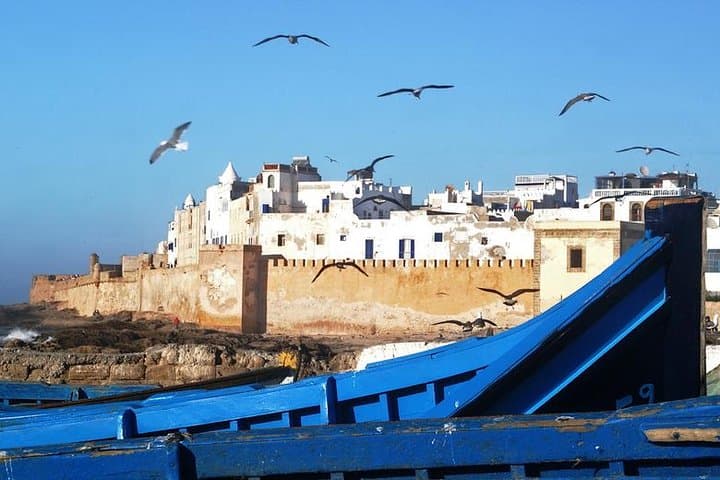
The Atlantic wind hits the car like a promise as the road falls away from Marrakech’s ochre heat toward a low, white-washed coast. By late morning the town appears: crenellated ramparts, bright fishing boats, and gulls circling over the port that seem to dare you closer.
The Atlantic wind hits the car like a promise as the road falls away from Marrakech’s ochre heat toward a low, white-washed coast. By late morning the town appears: crenellated ramparts, bright fishing boats, and gulls circling over the port that seem to dare you closer.
Essaouira’s stone walls and seafront bastions were shaped by European military engineers in the 18th century; behind them the medina preserves a working port, Jewish quarter (the Mellah), and a market where sailors trade the morning’s catch. Geologically, the coastline is a broad sandy shelf framed by wind-swept dunes and weathered volcanic outcrops; the Atlantic here pushes steady breezes that have made the town a wind- and kite-surfing draw.
Culturally the town blends Berber, Arab, Jewish and European influences; the argan cooperatives you visit on the way out are run largely by local women, part of a modern effort to preserve traditional harvesting while creating income.
Practical guide: expect a 3-hour drive each way from Marrakech and a 9–10 hour day. The tour includes hotel pickup, a stop at an argan co-op, free time in the medina and port, and a driver-guide. Plan for about three hours to explore Essaouira itself—enough to walk the ramparts, check the fish market, and grab lunch. Bring sun protection, a light wind layer, and cash for souvenirs and market stalls. If you want to swim, bring a towel and time your dip to avoid the colder, windier stretches. Timing your visit for morning or late afternoon light improves photos and eases the heat; midday markets are busiest. Above all, let the wind set the pace: it will tell you when to pause and when to move on.