THE ADVENTURE COLLECTIVE® · Independent discovery and booking for outdoor travel

Escape Marrakech for a full day in Essaouira—an Atlantic port of ramparts, grilled seafood, and wind-carved beaches. This practical guide covers what to expect on the drive, the medina, and how to make the most of an eight-hour coastal outing.
Escape Marrakech for a full day in Essaouira—an Atlantic port of ramparts, grilled seafood, and wind-carved beaches. This practical guide covers what to expect on the drive, the medina, and how to make the most of an eight-hour coastal outing.
You step off the road and the Atlantic wind meets you first—cool, salty, insistent—pushing the scent of grilled sardines up from the port and carrying the distant pulse of Gnawa drums through narrow alleys. Essaouira’s whitewashed houses and low, gun-lined ramparts open like pages of maritime history; the city is compact enough to feel immediate and small enough to reveal secrets as you walk.
Verified experiences and guided adventures in the surrounding area.
Operated by Imperial Trail Tours · Essaouira, Marrakech-Safi
You step off the road and the Atlantic wind meets you first—cool, salty, insistent—pushing the scent of grilled sardines up from the port and carrying the distant pulse of Gnawa drums through narrow alleys. Essaouira’s whitewashed houses and low, gun-lined ramparts open like pages of maritime history; the city is compact enough to feel immediate and small enough to reveal secrets as you walk.
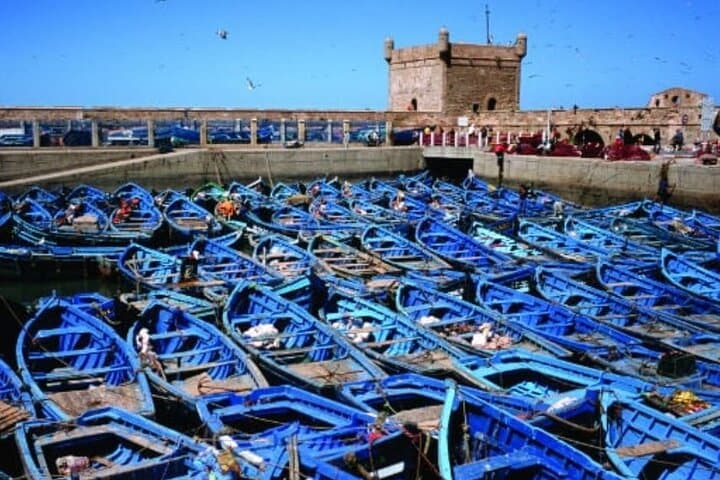
Founded as Mogador and rebuilt under Vauban in the 18th century, Essaouira sits on a rocky promontory where Atlantic swells sculpt beaches and expose strata of ancient coastline. The medina is a working port as much as a tourist site: fishermen haul the day’s catch onto blue boats while woodcarvers and argan-oil vendors work in shaded souks. Orson Welles used the town’s guns and ramparts for Othello, and every June the Gnaoua Festival fills the air with polyrhythms.
Practicalities are direct: the round trip from Marrakech typically takes about 5–6 hours of driving with roughly 2.5–3 hours each way depending on traffic; the full experience runs about eight hours. Tours usually include a comfortable vehicle and driver—bring cash for the port and small purchases, a windproof layer, and shoes that handle cobbles and sand. Allow time for a relaxed seafood lunch at the fishing port, a walk on the windswept beach, and 60–90 minutes to wander the medina and ramparts. Expect easy walking over uneven ground and an immersive mix of culture, sea air, and honest Atlantic weather.
easy.
8 hours.
Suitable for most fitness levels; expect several hours of light walking on uneven cobbles and sand.
Expect roughly 2.5–3 hours each way depending on traffic; the full tour runs about eight hours including stops.
Yes—most itineraries include a relaxed lunch opportunity; vendors and small restaurants serve freshly grilled fish and local specialties.
Parts of the medina and ramparts have narrow, uneven streets and steps; accessibility is limited—contact the tour operator to discuss specific needs and vehicle access.
Weekdays and early mornings are quieter; the Gnaoua Festival in June draws crowds and live music, which is lively but busier.
Essaouira (formerly Mogador) has Phoenician and Roman roots and was fortified under French military engineer Vauban in the 18th century; its natural harbor shaped centuries of trade and cultural exchange.
Local efforts focus on sustainable fishing practices and argan-forest protection; visitors can support these by buying from certified cooperatives and avoiding single-use plastics.
Imperial Trail Tours operates guided outdoor trips and adventures with an emphasis on safety, stewardship, and memorable experiences.


You step off the road and the Atlantic wind meets you first—cool, salty, insistent—pushing the scent of grilled sardines up from the port and carrying the distant pulse of Gnawa drums through narrow alleys. Essaouira’s whitewashed houses and low, gun-lined ramparts open like pages of maritime history; the city is compact enough to feel immediate and small enough to reveal secrets as you walk.
You step off the road and the Atlantic wind meets you first—cool, salty, insistent—pushing the scent of grilled sardines up from the port and carrying the distant pulse of Gnawa drums through narrow alleys. Essaouira’s whitewashed houses and low, gun-lined ramparts open like pages of maritime history; the city is compact enough to feel immediate and small enough to reveal secrets as you walk.
Founded as Mogador and rebuilt under Vauban in the 18th century, Essaouira sits on a rocky promontory where Atlantic swells sculpt beaches and expose strata of ancient coastline. The medina is a working port as much as a tourist site: fishermen haul the day’s catch onto blue boats while woodcarvers and argan-oil vendors work in shaded souks. Orson Welles used the town’s guns and ramparts for Othello, and every June the Gnaoua Festival fills the air with polyrhythms.
Practicalities are direct: the round trip from Marrakech typically takes about 5–6 hours of driving with roughly 2.5–3 hours each way depending on traffic; the full experience runs about eight hours. Tours usually include a comfortable vehicle and driver—bring cash for the port and small purchases, a windproof layer, and shoes that handle cobbles and sand. Allow time for a relaxed seafood lunch at the fishing port, a walk on the windswept beach, and 60–90 minutes to wander the medina and ramparts. Expect easy walking over uneven ground and an immersive mix of culture, sea air, and honest Atlantic weather.