THE ADVENTURE COLLECTIVE® · Independent discovery and booking for outdoor travel

Escape Marrakech for a day on Morocco’s Atlantic coast: explore the Skala fortress, wander a UNESCO medina, and eat fresh seafood at the port. This practical guide outlines what to expect, how to prepare, and how to get the most from a full-day Essaouira trip.
Escape Marrakech for a day on Morocco’s Atlantic coast: explore the Skala fortress, wander a UNESCO medina, and eat fresh seafood at the port. This practical guide outlines what to expect, how to prepare, and how to get the most from a full-day Essaouira trip.
A salt-sweet wind meets the road long before Essaouira appears — you feel the Atlantic’s edge as the bus rounds the last hill and the medina’s white walls fold into view. Skala de la Ville crowns the port with battered brass cannon and ocean panoramas; below, fishing boats line the quay like work-ready punctuation.
Verified experiences and guided adventures in the surrounding area.
Operated by marrakech get your guide · Essaouira, Marrakesh-Safi
A salt-sweet wind meets the road long before Essaouira appears — you feel the Atlantic’s edge as the bus rounds the last hill and the medina’s white walls fold into view. Skala de la Ville crowns the port with battered brass cannon and ocean panoramas; below, fishing boats line the quay like work-ready punctuation.
Essaouira’s story reads in stone and sea spray. Once called Mogador, the town carries layers of Phoenician, Portuguese and 18th-century Moroccan planning; its ramparts were rebuilt by Sultan Mohammed III to protect Atlantic trade. Geologically the coast is a broad sandy shelf with dunes and a shallow, seasonal surf that makes the bay reliably windy — ideal for wind sports and the reason kiteboards and sails pepper the horizon.
Culturally the medina is compact and walkable: galleries and woodworkers share alleys with spice stalls and cafés. The fish market opens a literal, sensory chapter — choose your catch and watch a local kitchen turn it into a simple, grilled lunch.
Practical guide: expect a full day (about 10 hours door-to-door from Marrakech), light walking on cobbles and beach sand, and strong coastal wind that often cools bright days. Carry sun protection, a windproof layer, and cash for small purchases and market prices. If you want to kiteboard or take a camel ride, book those extras locally or in advance on busy days. The trip is accessible to most travelers but involves several short walks, steps on ramparts, and uneven surfaces in the medina — comfortable shoes and steady footing make the day smoother.
easy.
10 hours.
Suitable for travelers in normal physical condition; includes short walks on cobbles and beach sand.
Expect roughly 2.5 to 3 hours each way depending on traffic and stops — a full-day schedule typically runs about 10 hours door-to-door.
Lunch is not included; the itinerary directs you to the fish market and seaside restaurants where you can choose and pay for fresh seafood.
Yes — windsurfing and kiteboarding lessons or rentals are available locally but usually cost extra and may require advance booking in high season.
Some areas are stroller-accessible and the operator notes prams are possible, but the medina has narrow, uneven streets and steps that can be challenging for limited mobility.
Essaouira (formerly Mogador) features 18th-century ramparts redesigned under Sultan Mohammed III and earlier Portuguese influence; the port has long been a trading point between Morocco and Europe.
Support local argan cooperatives and choose responsible tour operators — avoid plastics on the beach and respect fishing spots to reduce pressure on marine resources.
marrakech get your guide operates guided outdoor trips and adventures with an emphasis on safety, stewardship, and memorable experiences.
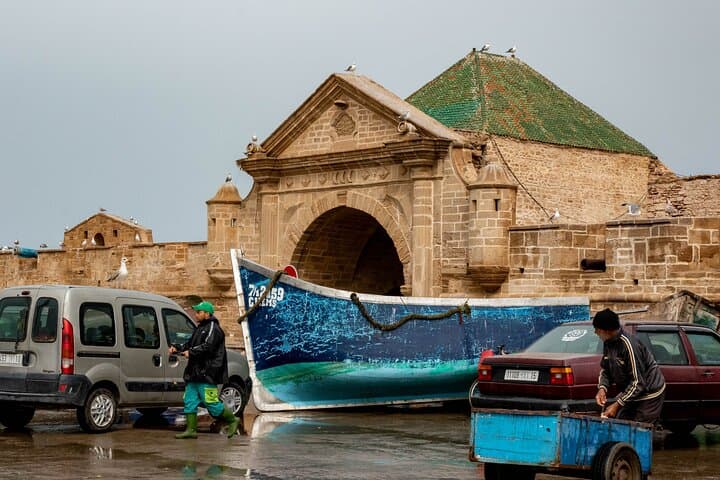
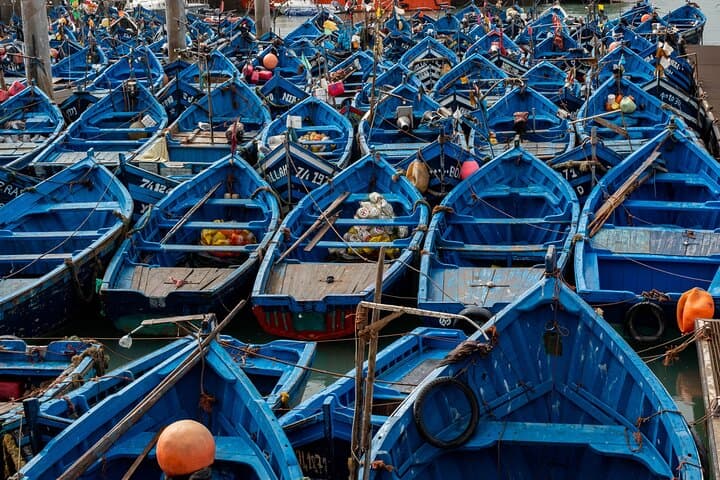
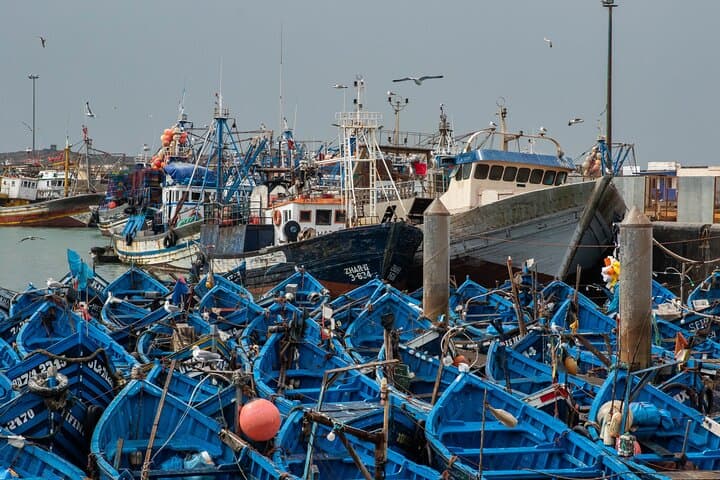
A salt-sweet wind meets the road long before Essaouira appears — you feel the Atlantic’s edge as the bus rounds the last hill and the medina’s white walls fold into view. Skala de la Ville crowns the port with battered brass cannon and ocean panoramas; below, fishing boats line the quay like work-ready punctuation.
A salt-sweet wind meets the road long before Essaouira appears — you feel the Atlantic’s edge as the bus rounds the last hill and the medina’s white walls fold into view. Skala de la Ville crowns the port with battered brass cannon and ocean panoramas; below, fishing boats line the quay like work-ready punctuation.
Essaouira’s story reads in stone and sea spray. Once called Mogador, the town carries layers of Phoenician, Portuguese and 18th-century Moroccan planning; its ramparts were rebuilt by Sultan Mohammed III to protect Atlantic trade. Geologically the coast is a broad sandy shelf with dunes and a shallow, seasonal surf that makes the bay reliably windy — ideal for wind sports and the reason kiteboards and sails pepper the horizon.
Culturally the medina is compact and walkable: galleries and woodworkers share alleys with spice stalls and cafés. The fish market opens a literal, sensory chapter — choose your catch and watch a local kitchen turn it into a simple, grilled lunch.
Practical guide: expect a full day (about 10 hours door-to-door from Marrakech), light walking on cobbles and beach sand, and strong coastal wind that often cools bright days. Carry sun protection, a windproof layer, and cash for small purchases and market prices. If you want to kiteboard or take a camel ride, book those extras locally or in advance on busy days. The trip is accessible to most travelers but involves several short walks, steps on ramparts, and uneven surfaces in the medina — comfortable shoes and steady footing make the day smoother.