THE ADVENTURE COLLECTIVE® · Independent discovery and booking for outdoor travel

Escape Marrakech for a day on the Atlantic: explore Essaouira’s UNESCO medina, historic ramparts and windswept beaches. This accessible full‑day trip blends history, seafood lunches and optional water sports.
Escape Marrakech for a day on the Atlantic: explore Essaouira’s UNESCO medina, historic ramparts and windswept beaches. This accessible full‑day trip blends history, seafood lunches and optional water sports.
You step off the air‑conditioned shuttle into wind and salt: Essaouira’s ramparts cut a stern line against the Atlantic, gulls wheel and the sea dares you to look closer. The medina opens in a grid of narrow streets where cedar wood shops and fish stalls sit shoulder to shoulder; the city’s walls throw back Atlantic light in hard, photographic angles.
Verified experiences and guided adventures in the surrounding area.
Operated by Fajga Travel · Essaouira, Marrakesh-Safi
You step off the air‑conditioned shuttle into wind and salt: Essaouira’s ramparts cut a stern line against the Atlantic, gulls wheel and the sea dares you to look closer. The medina opens in a grid of narrow streets where cedar wood shops and fish stalls sit shoulder to shoulder; the city’s walls throw back Atlantic light in hard, photographic angles.
Founded as Mogador and rebuilt by Europeans and Moroccans over centuries, Essaouira’s fortifications and whitewashed facades reflect Portuguese, French and Berber influences. Geologically, the coast is a flat, eroded plain backed by sandy beaches and dunes, with winds that have shaped both the dunes and a strong kite‑surf culture. Culturally, the town has a long history as a fishing port and an artists’ community — you’ll see galleries and artisans carving thuya wood, and hear strains of gnawa music in side alleys.
Practically, this trip is a full‑day road excursion from Marrakech (about 2½–3 hours each way). Expect a mid‑day arrival for a walk through the UNESCO medina, lunch at a seafood restaurant by the port, beach time with optional camel rides or watersports, and time for shopping before the return drive. Cobblestones and narrow lanes mean comfortable shoes are essential; the Atlantic wind can be sharp even on warm days, so pack a light windbreaker.
Timing your visit for mid‑morning arrival gives better light for photos and more lively markets. Bring cash for small purchases and allow extra time if you want a relaxed lunch — Essaouira’s rhythm is slower than Marrakech’s, and that’s part of the draw.
easy.
12 hours.
Light walking ability; must be able to walk on uneven cobbles for several short stretches.
Expect about 2.5–3 hours each way depending on traffic and stops; the operator typically departs early to maximize time in town.
No — lunch is usually at your leisure; the driver will suggest seafood restaurants near the port serving fresh catch.
Yes — optional camel rides, kite‑ or windsurfing and other watersports are offered locally for additional fees and vary by season.
Parts of the town, transport and some surfaces are wheelchair accessible, but narrow, cobbled lanes and steps can limit access to many medina streets.
Essaouira (historically Mogador) grew as a fortified Atlantic port with Portuguese and later Moroccan influences; the medina is a UNESCO World Heritage Site reflecting this layered past.
Support local argan cooperatives and respect protected dunes and beaches; avoid disturbing nesting birds and minimize plastic waste to protect coastal ecosystems.
Fajga Travel operates guided outdoor trips and adventures with an emphasis on safety, stewardship, and memorable experiences.

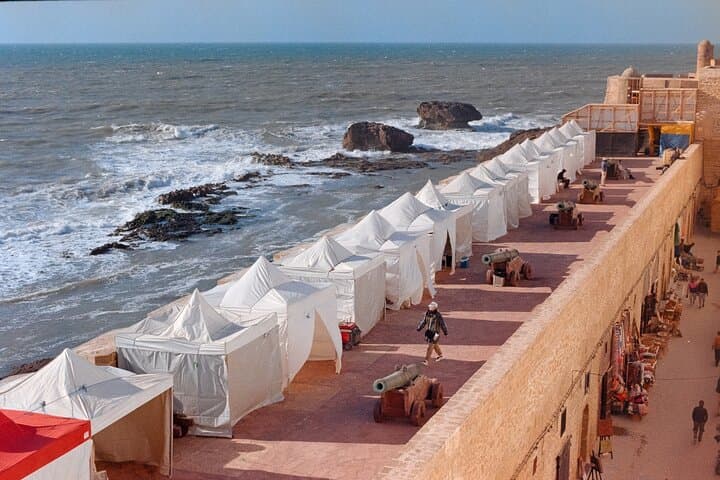


You step off the air‑conditioned shuttle into wind and salt: Essaouira’s ramparts cut a stern line against the Atlantic, gulls wheel and the sea dares you to look closer. The medina opens in a grid of narrow streets where cedar wood shops and fish stalls sit shoulder to shoulder; the city’s walls throw back Atlantic light in hard, photographic angles.
You step off the air‑conditioned shuttle into wind and salt: Essaouira’s ramparts cut a stern line against the Atlantic, gulls wheel and the sea dares you to look closer. The medina opens in a grid of narrow streets where cedar wood shops and fish stalls sit shoulder to shoulder; the city’s walls throw back Atlantic light in hard, photographic angles.
Founded as Mogador and rebuilt by Europeans and Moroccans over centuries, Essaouira’s fortifications and whitewashed facades reflect Portuguese, French and Berber influences. Geologically, the coast is a flat, eroded plain backed by sandy beaches and dunes, with winds that have shaped both the dunes and a strong kite‑surf culture. Culturally, the town has a long history as a fishing port and an artists’ community — you’ll see galleries and artisans carving thuya wood, and hear strains of gnawa music in side alleys.
Practically, this trip is a full‑day road excursion from Marrakech (about 2½–3 hours each way). Expect a mid‑day arrival for a walk through the UNESCO medina, lunch at a seafood restaurant by the port, beach time with optional camel rides or watersports, and time for shopping before the return drive. Cobblestones and narrow lanes mean comfortable shoes are essential; the Atlantic wind can be sharp even on warm days, so pack a light windbreaker.
Timing your visit for mid‑morning arrival gives better light for photos and more lively markets. Bring cash for small purchases and allow extra time if you want a relaxed lunch — Essaouira’s rhythm is slower than Marrakech’s, and that’s part of the draw.