THE ADVENTURE COLLECTIVE® · Independent discovery and booking for outdoor travel

A full-day escape from Marrakech to Essaouira delivers seaside wind, fortified ramparts, and markets selling argan oil and fresh-caught seafood. Plan for a long but rewarding day of walking, photography, and local culture along the Atlantic.
A full-day escape from Marrakech to Essaouira delivers seaside wind, fortified ramparts, and markets selling argan oil and fresh-caught seafood. Plan for a long but rewarding day of walking, photography, and local culture along the Atlantic.
Salt stings the air as you step off the coast road and the Atlantic wind immediately asserts itself, tugging at scarves and daring the kites above the bay.
Verified experiences and guided adventures in the surrounding area.
Operated by Camel Ride Trips · Essaouira, Marrakesh-Safi
Salt stings the air as you step off the coast road and the Atlantic wind immediately asserts itself, tugging at scarves and daring the kites above the bay.
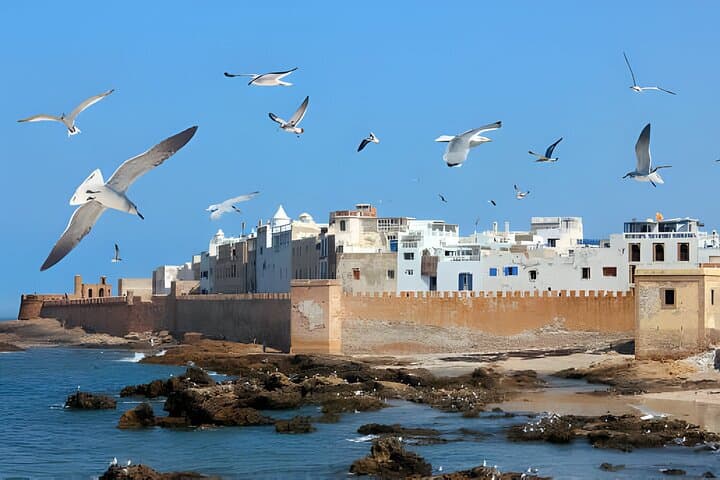
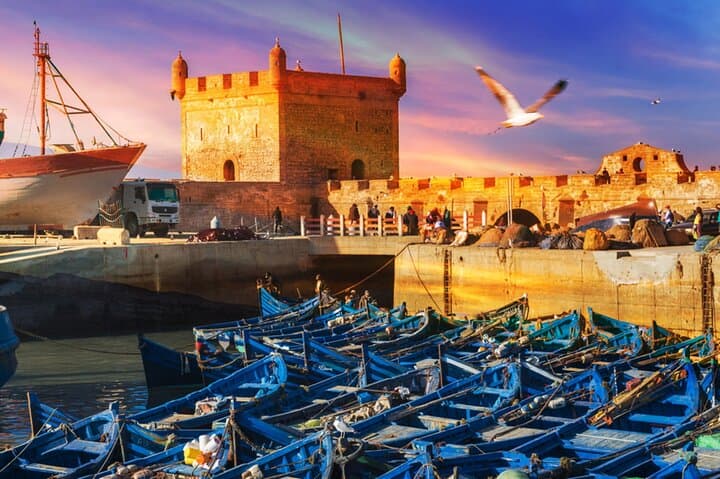
The medina unfurls in whitewashed houses with blue shutters, a Portuguese-era rampart still watching the harbor where wooden boats lean into tide and gulls wheel like punctuation marks. The road from Marrakech passes terraces of olive and orange, then the rounded, drought-hardened silhouettes of argan trees — a living link to the region’s Tertiary past and the source of a local economy made visible in cooperative stalls.
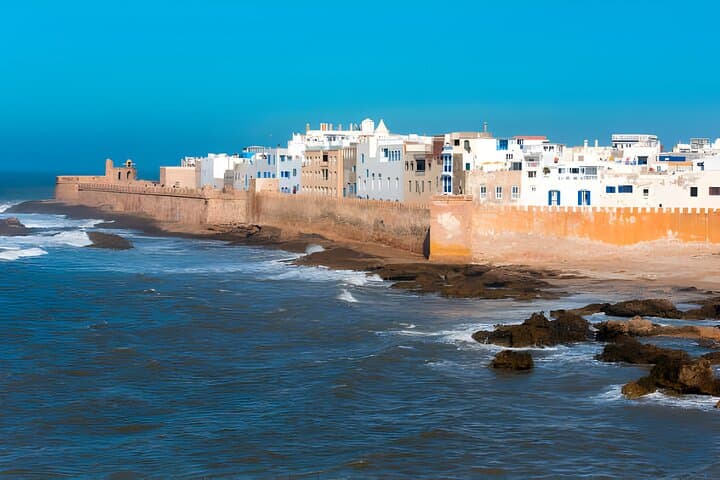
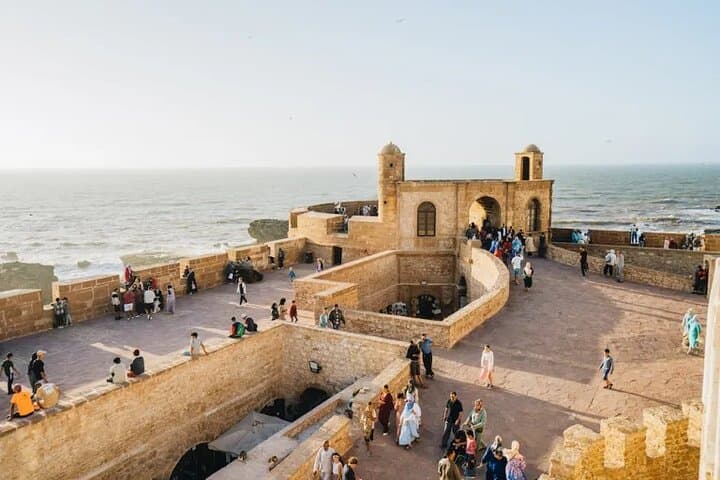
Essaouira’s footprint is maritime and musical: fortified walls from the 16th century, a working port that’s been rewritten by fishermen’s routines, and a strong Gnawa scene that threads music into daily life. The town’s geology—sandy headlands and shelf-like beaches—makes it a reliable wind corridor, which is why windsurfing and kitesurfing icons crowd the horizon.
Practically, expect a long day: 2.5–3 hours each way from Marrakech by air-conditioned vehicle and roughly 2–4 hours on foot in the medina and along the beach, depending on stops. Streets are cobbled and uneven; plan sturdy footwear, small cash purchases at markets, and layered clothing for sudden wind and sun. Photographers should time harbor shots for early morning or late afternoon light. If you want a quieter visit, opt for shoulder seasons when festivals or strong summer winds are less dominant. This is a day built for curious walking, tasting seafood straight off the quay, and feeling the Atlantic push at the town’s edges.
easy.
10–12 hours.
Suitable for most fitness levels; expect a few hours of walking on uneven surfaces
The drive typically takes about 2.5–3 hours one way, depending on traffic and route.
This itinerary usually includes bottled water and transport; plan to purchase lunch in Essaouira’s restaurants or at the port markets.
Stroller access is possible for short distances, but cobbles and stairs in the medina mean a carrier or strong stroller is recommended.
Yes—many stops include or pass local argan cooperatives and artisans; buying directly supports local producers, but compare prices and quality.
Essaouira was rebuilt with European-style fortifications in the 16th century under Portuguese influence; its medina is UNESCO-listed for cultural significance.
Argan trees are a protected, drought-resistant species; visit cooperatives that practice sustainable harvesting and support local women’s groups to minimize impact.
Camel Ride Trips operates guided outdoor trips and adventures with an emphasis on safety, stewardship, and memorable experiences.
Salt stings the air as you step off the coast road and the Atlantic wind immediately asserts itself, tugging at scarves and daring the kites above the bay.
Salt stings the air as you step off the coast road and the Atlantic wind immediately asserts itself, tugging at scarves and daring the kites above the bay.
The medina unfurls in whitewashed houses with blue shutters, a Portuguese-era rampart still watching the harbor where wooden boats lean into tide and gulls wheel like punctuation marks. The road from Marrakech passes terraces of olive and orange, then the rounded, drought-hardened silhouettes of argan trees — a living link to the region’s Tertiary past and the source of a local economy made visible in cooperative stalls.
Essaouira’s footprint is maritime and musical: fortified walls from the 16th century, a working port that’s been rewritten by fishermen’s routines, and a strong Gnawa scene that threads music into daily life. The town’s geology—sandy headlands and shelf-like beaches—makes it a reliable wind corridor, which is why windsurfing and kitesurfing icons crowd the horizon.
Practically, expect a long day: 2.5–3 hours each way from Marrakech by air-conditioned vehicle and roughly 2–4 hours on foot in the medina and along the beach, depending on stops. Streets are cobbled and uneven; plan sturdy footwear, small cash purchases at markets, and layered clothing for sudden wind and sun. Photographers should time harbor shots for early morning or late afternoon light. If you want a quieter visit, opt for shoulder seasons when festivals or strong summer winds are less dominant. This is a day built for curious walking, tasting seafood straight off the quay, and feeling the Atlantic push at the town’s edges.