THE ADVENTURE COLLECTIVE® · Independent discovery and booking for outdoor travel

Swap Marrakech's bustle for a day beside the Atlantic: explore argan groves, watch oil production at a women's cooperative, and spend free time in Essaouira’s historic medina and on its windswept beach.
Swap Marrakech's bustle for a day beside the Atlantic: explore argan groves, watch oil production at a women's cooperative, and spend free time in Essaouira’s historic medina and on its windswept beach.
A salt-swept wind meets the road before the city appears — low white houses, blue shutters and gulls wheeling over an Atlantic that pushes toward the shore with steady insistence. Travelers leave Marrakech at dawn in an air-conditioned vehicle, passing argan groves where spiky trees bend to the coastal breeze and small co-operatives press oil by hand.
Verified experiences and guided adventures in the surrounding area.
Operated by Morocco Travelogue · Essaouira, Marrakesh-Safi
A salt-swept wind meets the road before the city appears — low white houses, blue shutters and gulls wheeling over an Atlantic that pushes toward the shore with steady insistence. Travelers leave Marrakech at dawn in an air-conditioned vehicle, passing argan groves where spiky trees bend to the coastal breeze and small co-operatives press oil by hand.
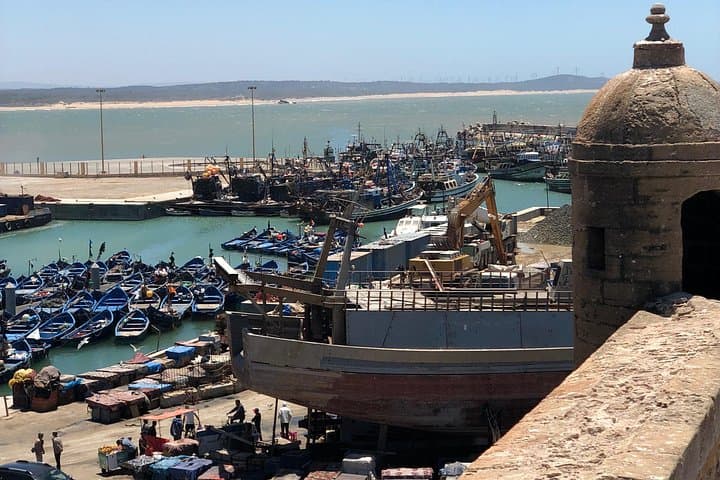
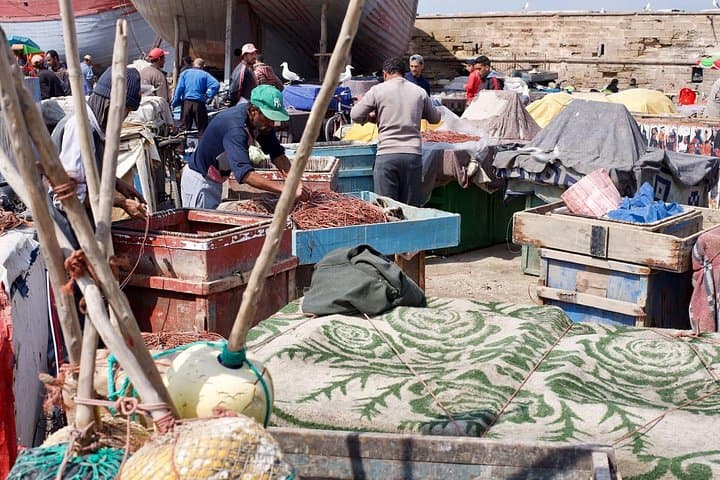
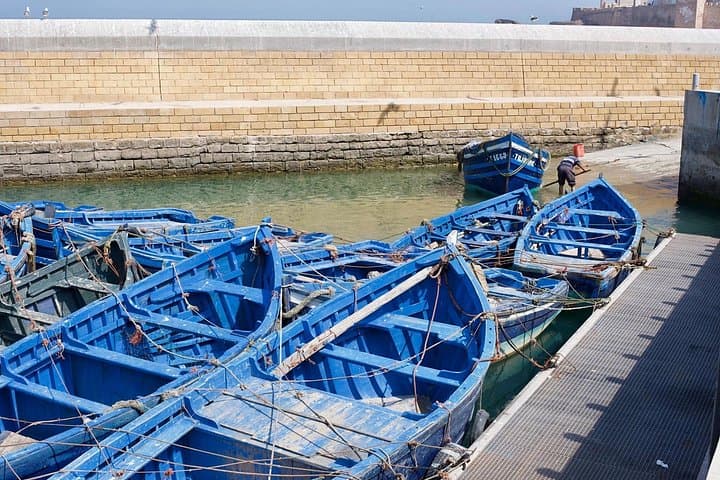
Essaouira's medina is a working port with ramparts that speak to centuries of trade and fortress-building. Portuguese bastions and 18th-century ramparts sit alongside narrow alleys where fishermen's nets dry and spice stalls call out their colors. Geologically, the coastline here is Atlantic Promontory — wind-polished rock, broad sandy beaches, and a seabed that supports a modest local fishery rather than deepwater industry.
Culturally, the town has a strong artisan tradition: Gnawa music, woodworkers carving thuya, and women-led argan cooperatives that offer both a glimpse into local enterprise and a chance to support community income.
Practical guidance: expect a full-day itinerary of roughly 10 hours including round-trip driving (about 2.5–3 hours each way from Marrakech). Bring sturdy walking shoes for cobbled streets, sun protection for exposed ramparts and beach, and cash for small shops and seafood stalls. Lunch is flexible—restaurants along the port offer fresh fish at variable prices. Photo stops at argan fields and the ramparts are part of the route; free time in the medina allows independent exploration. The pace is relaxed but mobile — travelers should plan for walking, stair negotiation, and salty wind. For those combining culture and coastline in a single day, this trip delivers an accessible, sensory-rich slice of Morocco’s Atlantic edge.
easy.
10 hours.
Light fitness—suitable for travelers comfortable with a full day of walking and short climbs on cobbled surfaces
The drive typically takes 2.5–3 hours each way depending on traffic and whether the itinerary includes photo stops at argan fields.
Lunch is generally at the traveler’s own expense—there are many portside restaurants and medina cafés offering fresh seafood and local dishes.
Most cooperatives on the route are locally run by women’s groups demonstrating traditional pressing methods; visitors can observe production and purchase oils and cosmetics.
Parts of the medina and the beachfront are accessible, but many alleys have steps or uneven cobbles; check with the operator about specific pickup/drop-off logistics.
Essaouira developed as a fortified port from the 16th century with Portuguese and later European influence; its ramparts reflect its maritime and trade history.
Argan cooperatives support local livelihoods and help maintain argan woodlands; visitors should avoid single-use plastics and respect fishing areas to reduce pressure on coastal resources.
Morocco Travelogue operates guided outdoor trips and adventures with an emphasis on safety, stewardship, and memorable experiences.
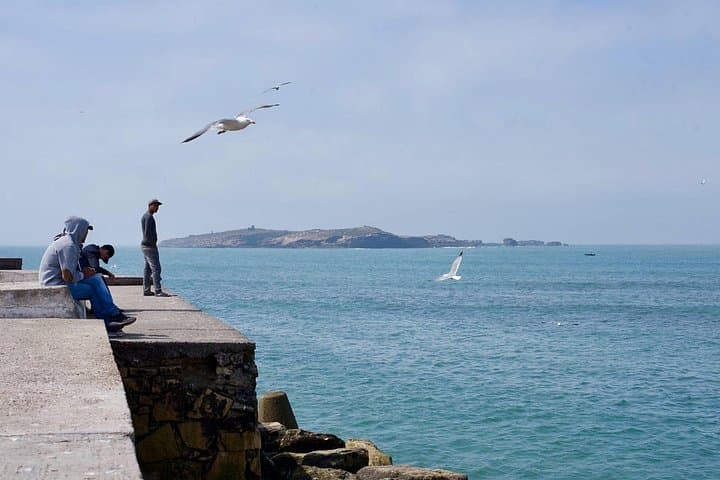
A salt-swept wind meets the road before the city appears — low white houses, blue shutters and gulls wheeling over an Atlantic that pushes toward the shore with steady insistence. Travelers leave Marrakech at dawn in an air-conditioned vehicle, passing argan groves where spiky trees bend to the coastal breeze and small co-operatives press oil by hand.
A salt-swept wind meets the road before the city appears — low white houses, blue shutters and gulls wheeling over an Atlantic that pushes toward the shore with steady insistence. Travelers leave Marrakech at dawn in an air-conditioned vehicle, passing argan groves where spiky trees bend to the coastal breeze and small co-operatives press oil by hand.
Essaouira's medina is a working port with ramparts that speak to centuries of trade and fortress-building. Portuguese bastions and 18th-century ramparts sit alongside narrow alleys where fishermen's nets dry and spice stalls call out their colors. Geologically, the coastline here is Atlantic Promontory — wind-polished rock, broad sandy beaches, and a seabed that supports a modest local fishery rather than deepwater industry.
Culturally, the town has a strong artisan tradition: Gnawa music, woodworkers carving thuya, and women-led argan cooperatives that offer both a glimpse into local enterprise and a chance to support community income.
Practical guidance: expect a full-day itinerary of roughly 10 hours including round-trip driving (about 2.5–3 hours each way from Marrakech). Bring sturdy walking shoes for cobbled streets, sun protection for exposed ramparts and beach, and cash for small shops and seafood stalls. Lunch is flexible—restaurants along the port offer fresh fish at variable prices. Photo stops at argan fields and the ramparts are part of the route; free time in the medina allows independent exploration. The pace is relaxed but mobile — travelers should plan for walking, stair negotiation, and salty wind. For those combining culture and coastline in a single day, this trip delivers an accessible, sensory-rich slice of Morocco’s Atlantic edge.