THE ADVENTURE COLLECTIVE® · Independent discovery and booking for outdoor travel

Trade Marrakech’s red stone for Essaouira’s wind-swept harbor on a full-day private trip. Explore ramparts, fish markets, argan cooperatives and the Atlantic shoreline with time for a beach walk or optional camel ride.
Trade Marrakech’s red stone for Essaouira’s wind-swept harbor on a full-day private trip. Explore ramparts, fish markets, argan cooperatives and the Atlantic shoreline with time for a beach walk or optional camel ride.
You roll out of Marrakech before breakfast, the Atlas foothills shrinking behind the van as argan-studded plains stretch toward a wind-scoured coastline. Salt and surf cut through the air; Essaouira’s red ramparts and a scatter of white houses with blue shutters appear like a map you can walk into. The sea wind is constant here—part challenge, part invitation—pushing surf onto a wide beach where camels and local fishermen share the shore.
Verified experiences and guided adventures in the surrounding area.
Operated by Eddyafa Travel · Essaouira, Marrakech-Safi
You roll out of Marrakech before breakfast, the Atlas foothills shrinking behind the van as argan-studded plains stretch toward a wind-scoured coastline. Salt and surf cut through the air; Essaouira’s red ramparts and a scatter of white houses with blue shutters appear like a map you can walk into. The sea wind is constant here—part challenge, part invitation—pushing surf onto a wide beach where camels and local fishermen share the shore.
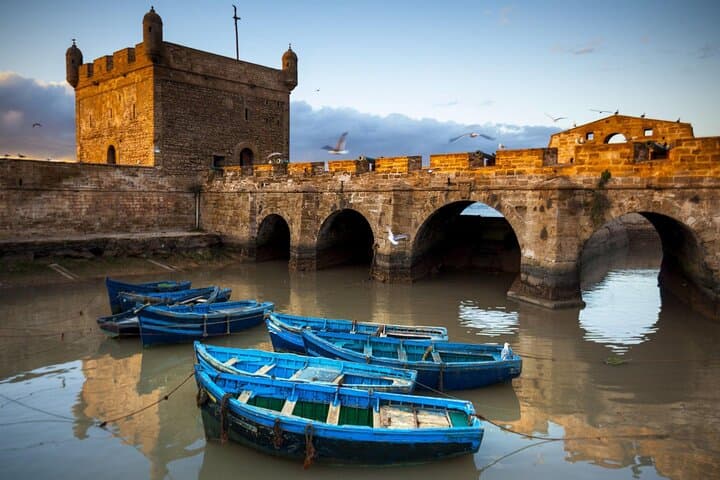
Esseouira grew as a fortified Portuguese port in the 16th century and later thrived as a Moroccan trading hub; the stone ramparts at Skala de la Ville still bear cannon embrasures aimed at the Atlantic. Geologically, the coast is a mix of wind-carved sandstone and coastal plains; the surrounding argan trees are relics of a Tertiary landscape and now part of a UNESCO-protected arganeraie. Culture here folds together Amazigh (Berber) traditions, a strong artisanal scene, and a seafood economy that still unloads daily catches at the port.
Practically, expect a long but comfortable day: depart Marrakech ~08:00, drive ~1h20–1h45 each way, with 4–5 hours in Essaouira for the medina, port, and optional beach time or camel ride. Wear sturdy shoes for cobbles, a windproof layer, sun protection, and carry cash for markets and cooperatives. Swimming is possible but currents can be strong; ask local lifeguards or guides. Visit an argan cooperative with respectful buying practices, time the medina walk early to avoid peak wind, and leave for return around mid-afternoon to reach Marrakech by early evening.
easy.
8–10 hours.
Suitable for most fitness levels—expect moderate walking on uneven cobbles and some standing at markets and viewpoints.
Yes—the tour includes private pickup and drop-off from Marrakech hotels or riads; you’ll confirm a pickup point when booking.
You can, but currents can be strong; swim in designated safe areas and ask locals or your guide about conditions that day.
Camel rides are optional extras arranged locally on the beach and typically paid directly to operators.
Choose cooperatives that explain production and pay women fairly; ask about prices and processing to support transparent operations.
Essaouira’s 16th-century Portuguese fortifications shaped the town’s layout; its port later became a hub for trade and cultural exchange.
The argan landscape is protected as a UNESCO-recognized region—support local cooperatives and avoid disturbing fragile dunes and native vegetation.
Eddyafa Travel operates guided outdoor trips and adventures with an emphasis on safety, stewardship, and memorable experiences.



You roll out of Marrakech before breakfast, the Atlas foothills shrinking behind the van as argan-studded plains stretch toward a wind-scoured coastline. Salt and surf cut through the air; Essaouira’s red ramparts and a scatter of white houses with blue shutters appear like a map you can walk into. The sea wind is constant here—part challenge, part invitation—pushing surf onto a wide beach where camels and local fishermen share the shore.
You roll out of Marrakech before breakfast, the Atlas foothills shrinking behind the van as argan-studded plains stretch toward a wind-scoured coastline. Salt and surf cut through the air; Essaouira’s red ramparts and a scatter of white houses with blue shutters appear like a map you can walk into. The sea wind is constant here—part challenge, part invitation—pushing surf onto a wide beach where camels and local fishermen share the shore.
Esseouira grew as a fortified Portuguese port in the 16th century and later thrived as a Moroccan trading hub; the stone ramparts at Skala de la Ville still bear cannon embrasures aimed at the Atlantic. Geologically, the coast is a mix of wind-carved sandstone and coastal plains; the surrounding argan trees are relics of a Tertiary landscape and now part of a UNESCO-protected arganeraie. Culture here folds together Amazigh (Berber) traditions, a strong artisanal scene, and a seafood economy that still unloads daily catches at the port.
Practically, expect a long but comfortable day: depart Marrakech ~08:00, drive ~1h20–1h45 each way, with 4–5 hours in Essaouira for the medina, port, and optional beach time or camel ride. Wear sturdy shoes for cobbles, a windproof layer, sun protection, and carry cash for markets and cooperatives. Swimming is possible but currents can be strong; ask local lifeguards or guides. Visit an argan cooperative with respectful buying practices, time the medina walk early to avoid peak wind, and leave for return around mid-afternoon to reach Marrakech by early evening.