THE ADVENTURE COLLECTIVE® · Independent discovery and booking for outdoor travel

Escape Marrakech for a five-hour coastal day trip to Essaouira — visit argan groves and women's cooperatives, explore fortified ramparts and Thuya wood workshops, then stroll the working harbor and sandy shore. Practical tips on timing, footwear and what to expect on the road back to Marrakech.
Escape Marrakech for a five-hour coastal day trip to Essaouira — visit argan groves and women's cooperatives, explore fortified ramparts and Thuya wood workshops, then stroll the working harbor and sandy shore. Practical tips on timing, footwear and what to expect on the road back to Marrakech.
By midmorning the atlas-colored road opens to the Atlantic: wind picks up, gulls wheel over low dunes and the smell of salt and frying fish arrives before the city does.
Verified experiences and guided adventures in the surrounding area.
Operated by Green Palms Transport · Essaouira, Marrakesh-Safi
By midmorning the atlas-colored road opens to the Atlantic: wind picks up, gulls wheel over low dunes and the smell of salt and frying fish arrives before the city does.
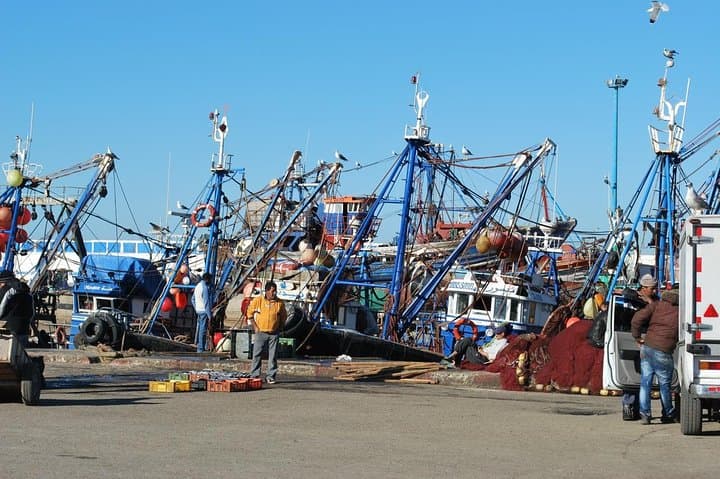
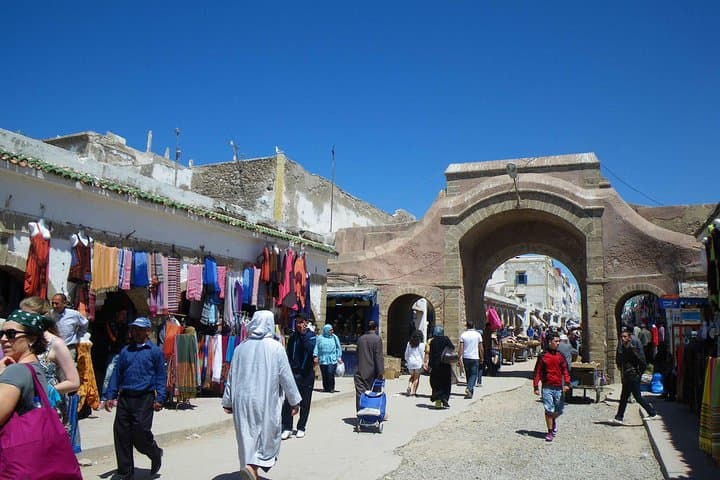
This full-day route from Marrakech pauses first at the argan groves — low, gnarled trees that survive thin soils and seasonal drought. Goats clamber into branches, and small women’s cooperatives demonstrate the slow, labor-intensive press that turns kernels into culinary and cosmetic oil. Essaouira itself is a compact working port founded by the Portuguese in the 16th century; its ramparts and cannon-lined skala reflect a mix of Portuguese, Berber and French influences, while Thuya wood carvers keep a long local craft alive.
Geologically, the coast is young and abrasive: wind-driven sand, low cliffs and broad beaches where the Atlantic pushes in with steady swell. The medina’s narrow lanes funnel the wind and the city’s energy — fishmongers, art galleries, and carpenters working Thuya wood stand side by side.
Practically, expect a five-hour outing with hotel pickup and drop-off, an orientation walk, time for lunch and shopping, and a short beach stroll. Surfaces range from paved harbors to cobbled alleys and soft sand; wear grippy shoes, bring sun protection, and carry water. Photography is best in morning or late afternoon light; if you want quieter lanes, avoid midday market rush. The trip is wheelchair- and stroller-friendly in many areas, but some alleyways remain uneven. Plan for Atlantic wind: a light jacket keeps the chill off during harbor-side pauses.
easy.
5 hours.
Suitable for most fitness levels; involves short walks on uneven surfaces and standing at markets and viewpoints.
Travel time is roughly 2.5 to 3 hours each way depending on traffic, with the full tour lasting about five hours including stops.
Yes—cooperatives offer insight into traditional argan pressing and a chance to buy locally produced oil while supporting community enterprises.
Lunch is not typically included; you’ll have time to eat in Essaouira’s harbor area where fresh seafood and local dishes are available.
The operator notes wheelchair and stroller accessibility for many areas and that the tour is suitable for all fitness levels, but some narrow alleys may be uneven.
Essaouira was fortified in the 16th century under Portuguese control and later influenced by Berber and French architecture, making its ramparts and harbor historically strategic.
Argan forests are protected and many local cooperatives practice sustainable harvesting; overgrazing and development are ongoing conservation concerns.
Green Palms Transport operates guided outdoor trips and adventures with an emphasis on safety, stewardship, and memorable experiences.


By midmorning the atlas-colored road opens to the Atlantic: wind picks up, gulls wheel over low dunes and the smell of salt and frying fish arrives before the city does.
By midmorning the atlas-colored road opens to the Atlantic: wind picks up, gulls wheel over low dunes and the smell of salt and frying fish arrives before the city does.
This full-day route from Marrakech pauses first at the argan groves — low, gnarled trees that survive thin soils and seasonal drought. Goats clamber into branches, and small women’s cooperatives demonstrate the slow, labor-intensive press that turns kernels into culinary and cosmetic oil. Essaouira itself is a compact working port founded by the Portuguese in the 16th century; its ramparts and cannon-lined skala reflect a mix of Portuguese, Berber and French influences, while Thuya wood carvers keep a long local craft alive.
Geologically, the coast is young and abrasive: wind-driven sand, low cliffs and broad beaches where the Atlantic pushes in with steady swell. The medina’s narrow lanes funnel the wind and the city’s energy — fishmongers, art galleries, and carpenters working Thuya wood stand side by side.
Practically, expect a five-hour outing with hotel pickup and drop-off, an orientation walk, time for lunch and shopping, and a short beach stroll. Surfaces range from paved harbors to cobbled alleys and soft sand; wear grippy shoes, bring sun protection, and carry water. Photography is best in morning or late afternoon light; if you want quieter lanes, avoid midday market rush. The trip is wheelchair- and stroller-friendly in many areas, but some alleyways remain uneven. Plan for Atlantic wind: a light jacket keeps the chill off during harbor-side pauses.