THE ADVENTURE COLLECTIVE® · Independent discovery and booking for outdoor travel

Swap Marrakech’s bustle for the Atlantic air on a private day trip to Essaouira. Visit an argan cooperative, explore the blue-and-white medina and stretch out on sweeping beaches—all in one full day.
Swap Marrakech’s bustle for the Atlantic air on a private day trip to Essaouira. Visit an argan cooperative, explore the blue-and-white medina and stretch out on sweeping beaches—all in one full day.
A low, salty wind meets the road as you leave Marrakech behind; the Atlas foothills flatten into olive-splashed scrub and rows of gnarled argan trees that lean toward the Atlantic. By mid-morning the town appears—white and blue walls, thick stone ramparts and a harbor where fishing boats ride gentle swells. The day unfolds as a coastal reconnaissance: a cooperative visit, a stroll through the medina, a seafood lunch and time on a broad, wind-scoured beach.
Verified experiences and guided adventures in the surrounding area.
Operated by Excursions Tours Marrakech · Essaouira, Marrakesh-Safi
A low, salty wind meets the road as you leave Marrakech behind; the Atlas foothills flatten into olive-splashed scrub and rows of gnarled argan trees that lean toward the Atlantic. By mid-morning the town appears—white and blue walls, thick stone ramparts and a harbor where fishing boats ride gentle swells. The day unfolds as a coastal reconnaissance: a cooperative visit, a stroll through the medina, a seafood lunch and time on a broad, wind-scoured beach.
Essaouira’s fortified medina dates to the 18th-century rebuilding under Sultan Mohammed III and carries traces of earlier Portuguese defenses—its ramparts are both strategic and photogenic. Geologically, the coast is a mix of sandy strands and rocky outcrops carved by Atlantic swell; the argan trees you pass are endemic to southwestern Morocco and grow on erosion-prone soils that shape local land use and livelihoods.
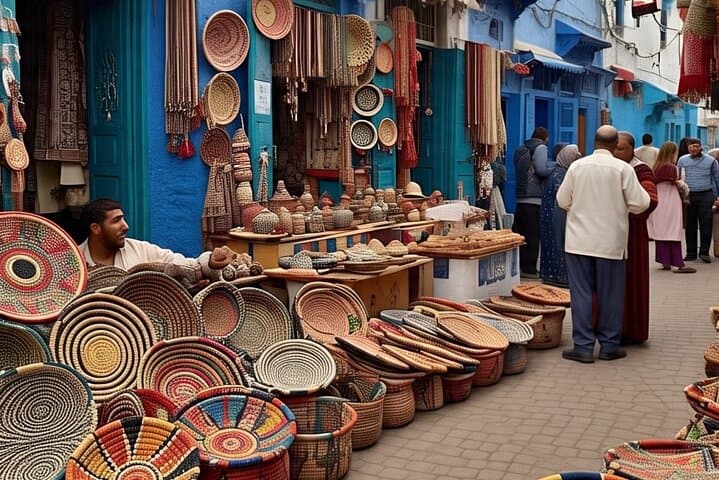
Culturally the town is defined by craft: women’s argan cooperatives keep traditional pressing methods alive, while small workshops turn local cedar and thuya into inlaid wood goods. Expect skilled vendors, seagulls, and the scent of grilled fish drifting from the port.
Practical guidance: plan for an 8–12 hour day with multiple stops. Wear sturdy walking shoes for cobbled medina streets and a windproof layer for the beach. Bring cash for the cooperative and small vendors, and schedule your visit earlier in the day to avoid late-afternoon winds that pick up along the shore. The route is comfortable by private, air-conditioned vehicle—ideal for travelers who want a compact but comprehensive introduction to Morocco’s Atlantic coast.
easy.
8–12 hours.
Suitable for most fitness levels; involves light walking on uneven medina streets and brief beach walks.
Expect about 2.5–3 hours each way depending on traffic and stops; the full tour runs roughly 8–12 hours.
Lunch is typically not included—your tour will stop at local restaurants and seafood stalls where you can choose and pay for your meal.
Most cooperatives are family-friendly; many are accessible but check with the operator ahead of time for wheelchair access specifics.
Yes—cooperatives sell traditionally pressed argan oil; buying directly supports local women and sustainable production practices.
Essaouira’s modern plan dates to the 18th century under Sultan Mohammed III; earlier Portuguese and Berber influences shaped its fortifications and port role.
Argan woodlands are protected but sensitive to overgrazing and development; buying from women’s cooperatives supports sustainable harvest and local economies.
Excursions Tours Marrakech operates guided outdoor trips and adventures with an emphasis on safety, stewardship, and memorable experiences.
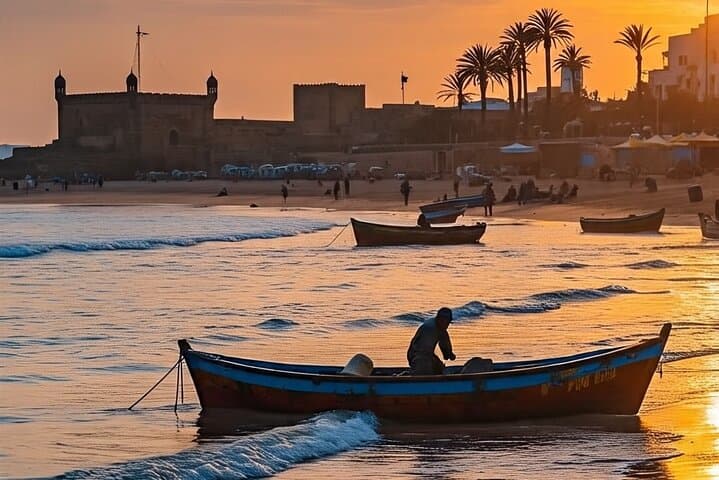
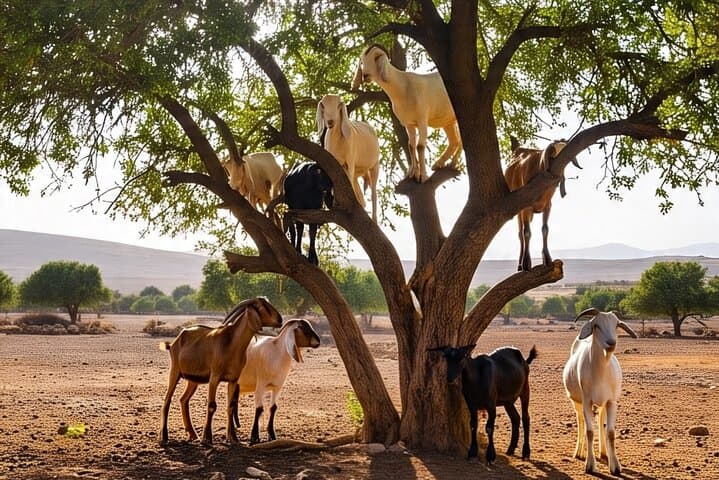
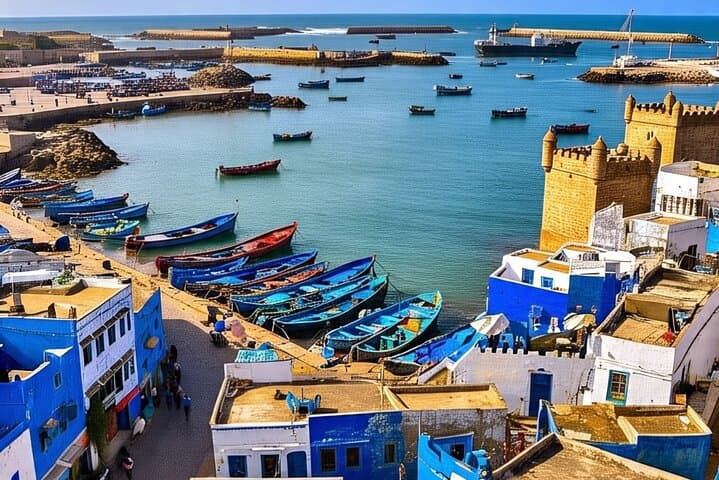
A low, salty wind meets the road as you leave Marrakech behind; the Atlas foothills flatten into olive-splashed scrub and rows of gnarled argan trees that lean toward the Atlantic. By mid-morning the town appears—white and blue walls, thick stone ramparts and a harbor where fishing boats ride gentle swells. The day unfolds as a coastal reconnaissance: a cooperative visit, a stroll through the medina, a seafood lunch and time on a broad, wind-scoured beach.
A low, salty wind meets the road as you leave Marrakech behind; the Atlas foothills flatten into olive-splashed scrub and rows of gnarled argan trees that lean toward the Atlantic. By mid-morning the town appears—white and blue walls, thick stone ramparts and a harbor where fishing boats ride gentle swells. The day unfolds as a coastal reconnaissance: a cooperative visit, a stroll through the medina, a seafood lunch and time on a broad, wind-scoured beach.
Essaouira’s fortified medina dates to the 18th-century rebuilding under Sultan Mohammed III and carries traces of earlier Portuguese defenses—its ramparts are both strategic and photogenic. Geologically, the coast is a mix of sandy strands and rocky outcrops carved by Atlantic swell; the argan trees you pass are endemic to southwestern Morocco and grow on erosion-prone soils that shape local land use and livelihoods.
Culturally the town is defined by craft: women’s argan cooperatives keep traditional pressing methods alive, while small workshops turn local cedar and thuya into inlaid wood goods. Expect skilled vendors, seagulls, and the scent of grilled fish drifting from the port.
Practical guidance: plan for an 8–12 hour day with multiple stops. Wear sturdy walking shoes for cobbled medina streets and a windproof layer for the beach. Bring cash for the cooperative and small vendors, and schedule your visit earlier in the day to avoid late-afternoon winds that pick up along the shore. The route is comfortable by private, air-conditioned vehicle—ideal for travelers who want a compact but comprehensive introduction to Morocco’s Atlantic coast.