THE ADVENTURE COLLECTIVE® · Independent discovery and booking for outdoor travel

A full-day private transfer from Marrakech to Essaouira that pairs a women-run argan cooperative visit with time in the medina and harbor. Expect coastal winds, fresh seafood at the quay, and a close-up look at argan oil production.
A full-day private transfer from Marrakech to Essaouira that pairs a women-run argan cooperative visit with time in the medina and harbor. Expect coastal winds, fresh seafood at the quay, and a close-up look at argan oil production.
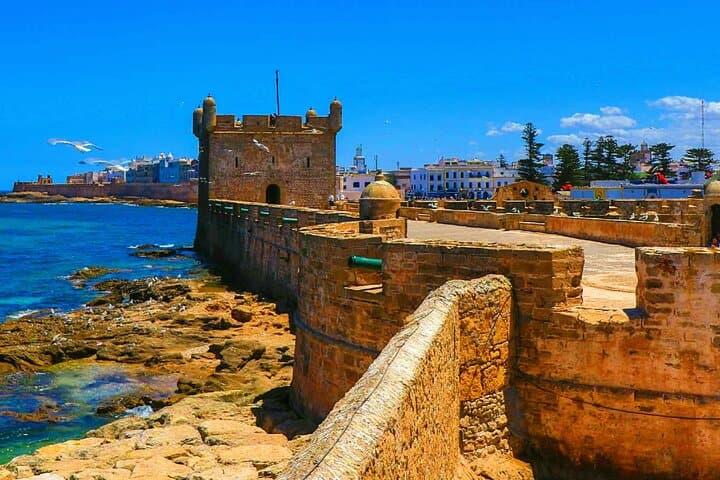
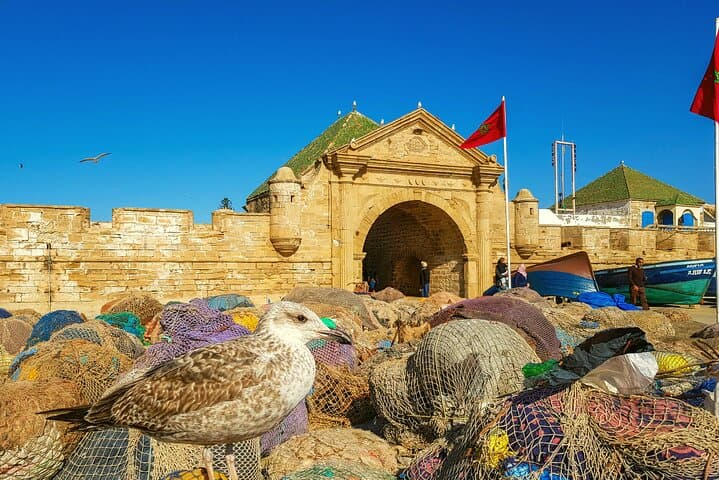
The Atlantic wind meets you first — sharp, cool and salt-laden — as the minivan eases into Essaouira’s harbor. Fishermen haul nets; gulls argue over a catch; ochre ramparts frame the harbor like a weathered stage. This day trip moves from Marrakech’s ochre sprawl across plains dotted with argan trees to a compact coastal city whose rhythms are set by tides and craft.
Verified experiences and guided adventures in the surrounding area.
Operated by Marrakech First Trip · Essaouira, Marrakesh-Safi
The Atlantic wind meets you first — sharp, cool and salt-laden — as the minivan eases into Essaouira’s harbor. Fishermen haul nets; gulls argue over a catch; ochre ramparts frame the harbor like a weathered stage. This day trip moves from Marrakech’s ochre sprawl across plains dotted with argan trees to a compact coastal city whose rhythms are set by tides and craft.
Essaouira (formerly Mogador) sits on a wind-carved promontory where Portuguese fortifications from the 16th century rub shoulders with a long Jewish trading presence and Berber hinterlands. Geologically, the coastline is a mix of sandy beaches and low rocky headlands, with soils that support the slow-growing argan tree — a species endemic to southwestern Morocco. Local cooperatives, often run by women, demonstrate traditional argan pressing methods that connect sustainable livelihoods to conservation.
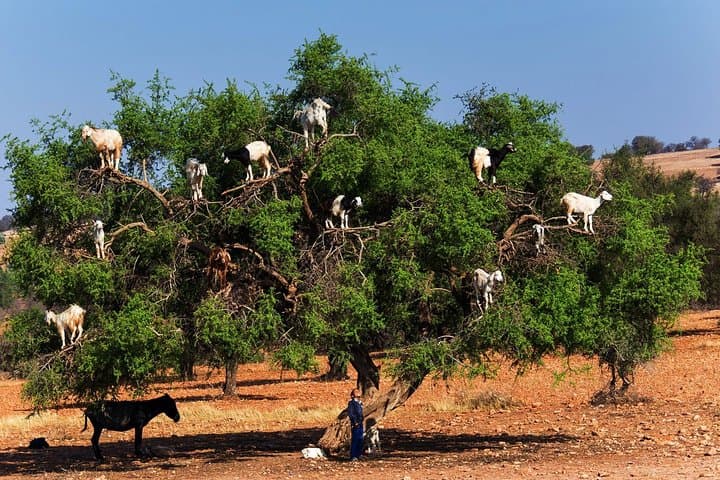
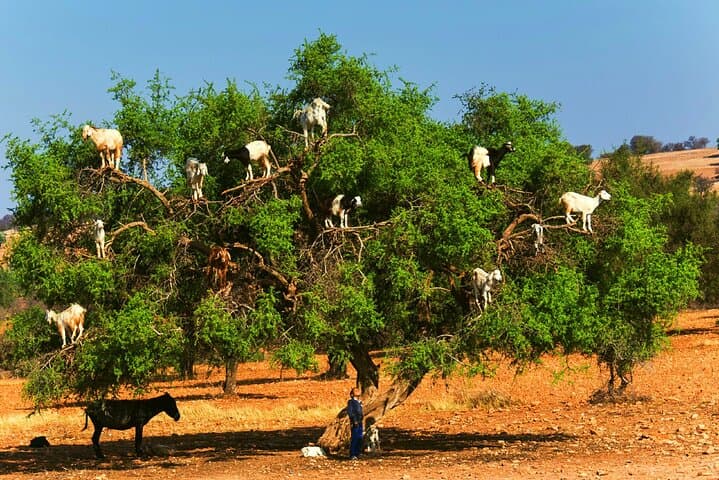
Visitors spend time in the working port, the medina’s narrow souks, and the sekkala (Portuguese-built ramparts), sampling fresh fish at quayside stalls. The argan forest stop offers tactile learning: tree-climbing goats, hand-cracked kernels, and the slow press of oil.
Practical guidance: plan for a 9–10 hour day with moderate time on foot across cobbles and sand. Bring sun protection and cash for small purchases; comfortable shoes are essential for uneven streets. Midday wind can be strong — a light windbreaker helps. The route is suitable for most fitness levels and is accessible via air-conditioned transport with hotel pickup and return in Marrakech.
easy.
9–10 hours.
Suitable for most travelers with light walking; expect repeated short walks on uneven surfaces
Yes — the tour includes hotel or riad pickup and return in Marrakech via air-conditioned minivan or 4WD.
The itinerary features a fish lunch at the port; operators typically include the arranged meal, but confirm dietary needs when booking.
Yes — the route stops at a women-run argan cooperative with a guided demo of traditional argan oil production.
The tour lists wheelchair accessibility, but expect uneven ground in the medina and at the harbor; check specific accessibility needs with the operator.
Essaouira’s fortified seafront reflects its Portuguese occupation in the 16th century and a long history as a trading port with a vibrant Jewish community.
Argan forests are protected through community-managed cooperatives that promote sustainable harvesting and provide income, helping reduce pressures from overgrazing and development.
Marrakech First Trip operates guided outdoor trips and adventures with an emphasis on safety, stewardship, and memorable experiences.
The Atlantic wind meets you first — sharp, cool and salt-laden — as the minivan eases into Essaouira’s harbor. Fishermen haul nets; gulls argue over a catch; ochre ramparts frame the harbor like a weathered stage. This day trip moves from Marrakech’s ochre sprawl across plains dotted with argan trees to a compact coastal city whose rhythms are set by tides and craft.
The Atlantic wind meets you first — sharp, cool and salt-laden — as the minivan eases into Essaouira’s harbor. Fishermen haul nets; gulls argue over a catch; ochre ramparts frame the harbor like a weathered stage. This day trip moves from Marrakech’s ochre sprawl across plains dotted with argan trees to a compact coastal city whose rhythms are set by tides and craft.
Essaouira (formerly Mogador) sits on a wind-carved promontory where Portuguese fortifications from the 16th century rub shoulders with a long Jewish trading presence and Berber hinterlands. Geologically, the coastline is a mix of sandy beaches and low rocky headlands, with soils that support the slow-growing argan tree — a species endemic to southwestern Morocco. Local cooperatives, often run by women, demonstrate traditional argan pressing methods that connect sustainable livelihoods to conservation.
Visitors spend time in the working port, the medina’s narrow souks, and the sekkala (Portuguese-built ramparts), sampling fresh fish at quayside stalls. The argan forest stop offers tactile learning: tree-climbing goats, hand-cracked kernels, and the slow press of oil.
Practical guidance: plan for a 9–10 hour day with moderate time on foot across cobbles and sand. Bring sun protection and cash for small purchases; comfortable shoes are essential for uneven streets. Midday wind can be strong — a light windbreaker helps. The route is suitable for most fitness levels and is accessible via air-conditioned transport with hotel pickup and return in Marrakech.