THE ADVENTURE COLLECTIVE® · Independent discovery and booking for outdoor travel

Drive from Marrakech to the windswept Atlantic port of Essaouira for a day of argan cooperatives, fresh seafood and a labyrinthine medina. This full‑day shore‑and‑city outing combines light walking, cultural visits and coastal scenery.
Drive from Marrakech to the windswept Atlantic port of Essaouira for a day of argan cooperatives, fresh seafood and a labyrinthine medina. This full‑day shore‑and‑city outing combines light walking, cultural visits and coastal scenery.
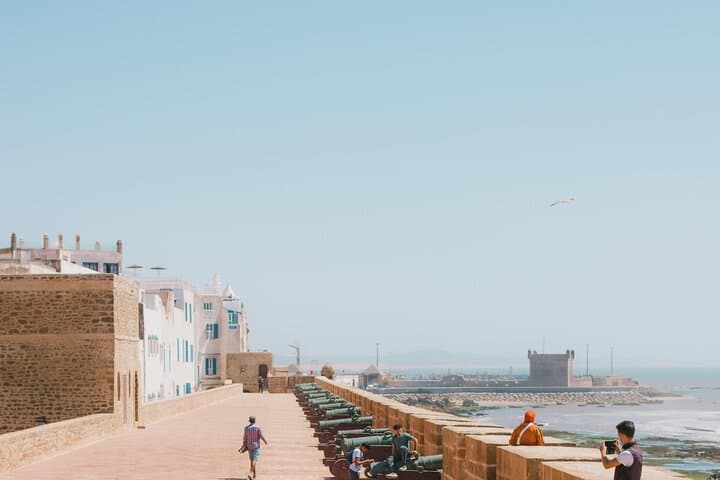
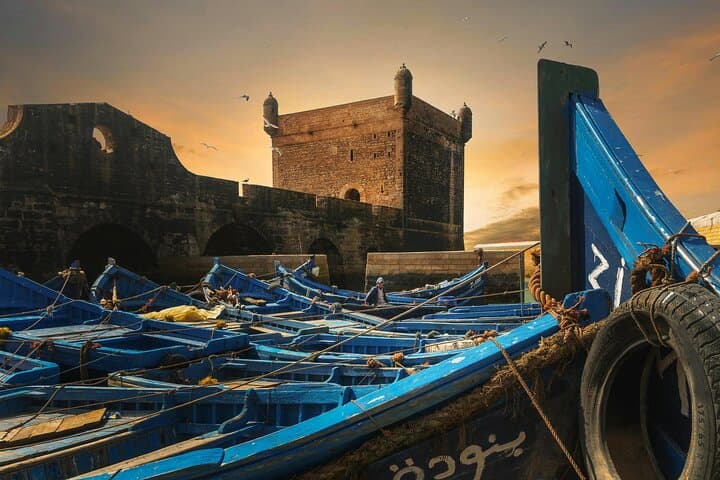
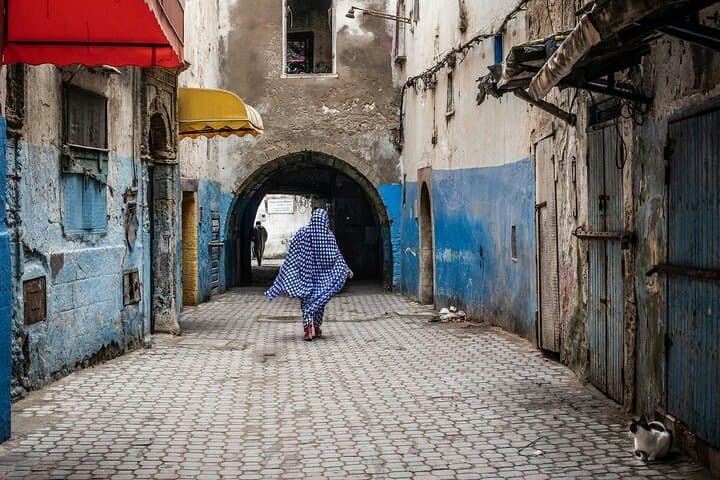
The morning drive out of Marrakech unfurls a changing landscape: ochre walls give way to scrubby argan groves, then to the salt-scented air of the Atlantic as Essaouira’s ramparts come into view. Travelers step from the minibus into a port town defined by wind, sea gulls and a maze-like medina where timber-latticed shops sell silver and leather beneath shops painted in pale blues and rust.
Verified experiences and guided adventures in the surrounding area.
Operated by amazigh voyage · Essaouira, Marrakech-Safi
The morning drive out of Marrakech unfurls a changing landscape: ochre walls give way to scrubby argan groves, then to the salt-scented air of the Atlantic as Essaouira’s ramparts come into view. Travelers step from the minibus into a port town defined by wind, sea gulls and a maze-like medina where timber-latticed shops sell silver and leather beneath shops painted in pale blues and rust.
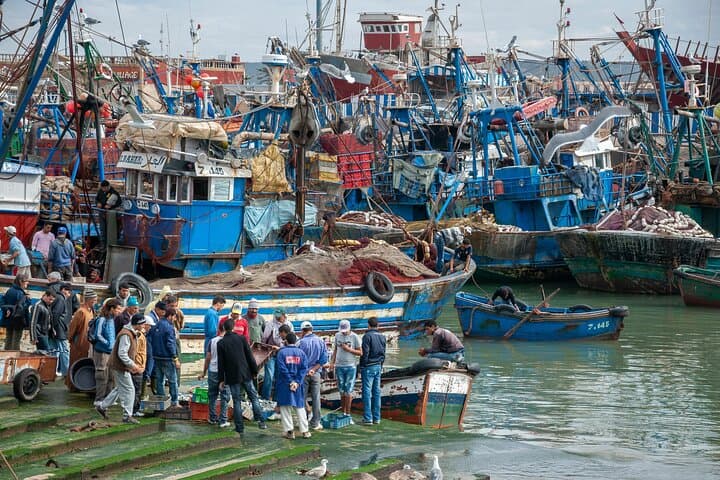
Essaouira — once the fortified harbor of Mogador — has layers of history: Phoenician and Portuguese trade routes, a 18th-century rampart system, and a living craft economy shaped by Berber communities and Atlantic fishing culture. Geologically the coast is a low-lying shelf of sedimentary rock and sand that exposes broad beaches and tidal flats; argan trees cling to the thin soils inland, their knobby roots and drought-adapted form a backdrop to village life.
Culturally, the day blends hands-on learning at a women’s argan cooperative with a lunch of freshly grilled fish and a guided stroll through Moulay El Hassan square and the jewelers’ quarter. The town’s souks offer slow bargaining and visible craft techniques — a practical window into local livelihoods.
Plan for a full day: good walking shoes for uneven medina streets, sun protection, and a small amount of dirhams for market purchases. The trip suits travelers who want coastal air, cultural exchange, light walking, and a glimpse of Morocco’s Atlantic edge without overnight logistics. Expect a long but rewarding day with several short on-foot stops and straightforward access to toilets, cafés, and sheltered seating throughout the route.
moderate.
8–10 hours.
Suitable for travelers with moderate fitness who can walk several miles over uneven surfaces.
Expect roughly 2.5 to 3 hours each way depending on traffic, with scenic stops en route.
Lunch is typically a fresh fish meal at a local restaurant; dietary requests can often be accommodated with advance notice.
Yes—cooperatives sell locally-produced argan oil; look for unrefined oil and ask about production methods to ensure authenticity.
The tour is family-friendly, but medina alleys and cobbles may be difficult with wide strollers; infant seats and wheelchair-accessible transport are noted as available.
Essaouira (historically Mogador) was a strategic Atlantic harbor with Portuguese fortifications and a long tradition of trade connecting North Africa with Europe and sub‑Saharan routes.
Argan cooperatives support local economies and help protect argan woodlands; visitors should avoid buying products wrapped in disposable plastics and respect cooperative guidelines when photographing.
amazigh voyage operates guided outdoor trips and adventures with an emphasis on safety, stewardship, and memorable experiences.
The morning drive out of Marrakech unfurls a changing landscape: ochre walls give way to scrubby argan groves, then to the salt-scented air of the Atlantic as Essaouira’s ramparts come into view. Travelers step from the minibus into a port town defined by wind, sea gulls and a maze-like medina where timber-latticed shops sell silver and leather beneath shops painted in pale blues and rust.
The morning drive out of Marrakech unfurls a changing landscape: ochre walls give way to scrubby argan groves, then to the salt-scented air of the Atlantic as Essaouira’s ramparts come into view. Travelers step from the minibus into a port town defined by wind, sea gulls and a maze-like medina where timber-latticed shops sell silver and leather beneath shops painted in pale blues and rust.
Essaouira — once the fortified harbor of Mogador — has layers of history: Phoenician and Portuguese trade routes, a 18th-century rampart system, and a living craft economy shaped by Berber communities and Atlantic fishing culture. Geologically the coast is a low-lying shelf of sedimentary rock and sand that exposes broad beaches and tidal flats; argan trees cling to the thin soils inland, their knobby roots and drought-adapted form a backdrop to village life.
Culturally, the day blends hands-on learning at a women’s argan cooperative with a lunch of freshly grilled fish and a guided stroll through Moulay El Hassan square and the jewelers’ quarter. The town’s souks offer slow bargaining and visible craft techniques — a practical window into local livelihoods.
Plan for a full day: good walking shoes for uneven medina streets, sun protection, and a small amount of dirhams for market purchases. The trip suits travelers who want coastal air, cultural exchange, light walking, and a glimpse of Morocco’s Atlantic edge without overnight logistics. Expect a long but rewarding day with several short on-foot stops and straightforward access to toilets, cafés, and sheltered seating throughout the route.