THE ADVENTURE COLLECTIVE® · Independent discovery and booking for outdoor travel

Walk 12 km from argan groves down to a wild Atlantic beach and up toward the Sidi M'Barek waterfalls, finishing with a solar-cooked tagine in a local home. A moderate coastal hike that combines natural scenery, local culture and practical travel comforts.
Walk 12 km from argan groves down to a wild Atlantic beach and up toward the Sidi M'Barek waterfalls, finishing with a solar-cooked tagine in a local home. A moderate coastal hike that combines natural scenery, local culture and practical travel comforts.
You step out of the minivan into the warm Atlantic air and the argan trees seem to lean toward the sea, their gnarled limbs offering a patchwork of shade as the coastline calls you forward.
Verified experiences and guided adventures in the surrounding area.
Operated by Ecotourism and Hiking · Essaouira, Marrakech-Safi
You step out of the minivan into the warm Atlantic air and the argan trees seem to lean toward the sea, their gnarled limbs offering a patchwork of shade as the coastline calls you forward.
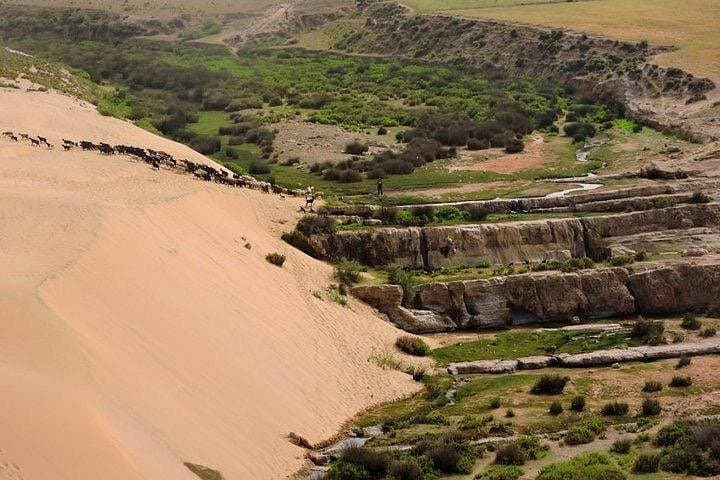
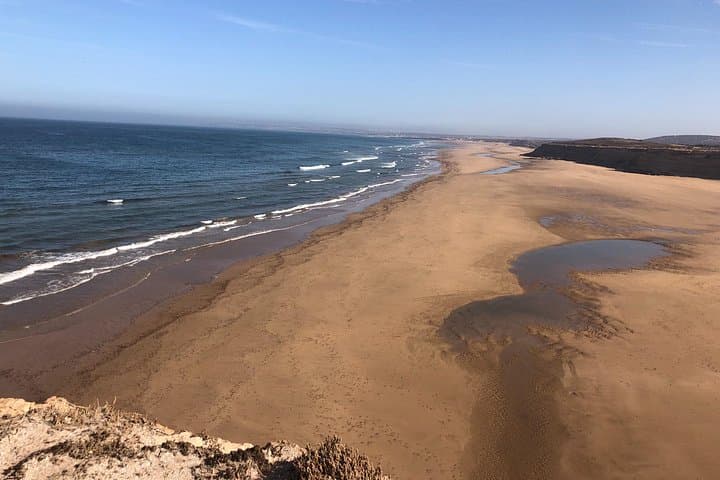
The route threads through working argan groves and low scrub, drops to a wide wild beach for a brisk shoreline walk, then climbs terraced gardens toward the Sidi M'Barek falls — a landscape shaped by coastal winds, soft sandstone outcrops and centuries of Amazigh land use. The falls are often dry in drought years, but the gulls and salt-scented breeze keep the coast alive.
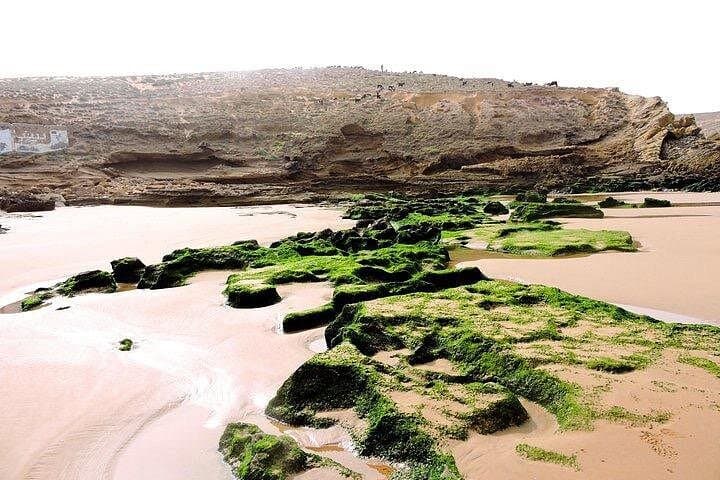
Argan forests around Essaouira are culturally significant; the arganeraie is linked to Berber communities and local cooperatives that harvest argan fruit for oil. Geologically, the coast here is Pleistocene sand and marine terraces, worn smooth and punctuated by small cliffs and coves.
Midday brings a practical, intimate pause: a solar-cooked tagine in a family home, served with mint tea — a chance to learn about local foodways and hear French spoken around the table.
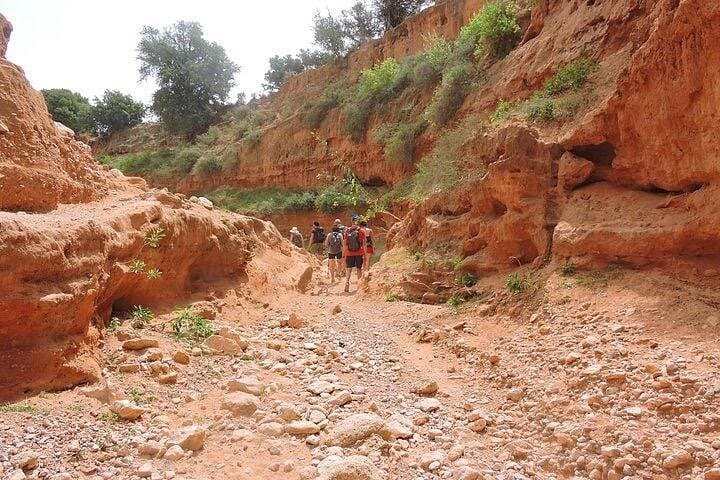
Practicalities: this is a roughly 12 km loop with rolling terrain, several short ascents through terraced gardens and sandy shoreline walking; expect 6–7 hours including transport and lunch. Trails can be rocky and exposed; bring sturdy shoes, a full water supply and sun protection. Because water is scarce, plan smartly and tread lightly — stick to paths, support local cooperatives if offered argan products, and check with the operator about current waterfall flows before booking.
moderate.
6–7 hours.
Suitable for hikers with moderate fitness who can sustain a 12 km walk with some short climbs and sandy terrain.
The outing covers about 12 km of mixed terrain with rolling ascents through terraces and a beach section; it’s rated moderate and typically takes 6–7 hours including transport and lunch.
The Sidi M'Barek falls have been dry in recent drought years—check current conditions with the operator before booking if a flowing waterfall is essential to you.
Yes; the tour includes private transportation to and from the trailhead as listed in the inclusions.
Lunch is with a Moroccan family who speak French; guides may assist with translation but confirm languages when you book.
Argan woodlands around Essaouira are intertwined with Amazigh communities; the wider arganeraie is recognized for its cultural and environmental importance.
The region faces drought and fragile soils—stick to paths, avoid disturbing terraces, and support local cooperatives to keep traditional land-use viable.
Ecotourism and Hiking operates guided outdoor trips and adventures with an emphasis on safety, stewardship, and memorable experiences.
You step out of the minivan into the warm Atlantic air and the argan trees seem to lean toward the sea, their gnarled limbs offering a patchwork of shade as the coastline calls you forward.
You step out of the minivan into the warm Atlantic air and the argan trees seem to lean toward the sea, their gnarled limbs offering a patchwork of shade as the coastline calls you forward.
The route threads through working argan groves and low scrub, drops to a wide wild beach for a brisk shoreline walk, then climbs terraced gardens toward the Sidi M'Barek falls — a landscape shaped by coastal winds, soft sandstone outcrops and centuries of Amazigh land use. The falls are often dry in drought years, but the gulls and salt-scented breeze keep the coast alive.
Argan forests around Essaouira are culturally significant; the arganeraie is linked to Berber communities and local cooperatives that harvest argan fruit for oil. Geologically, the coast here is Pleistocene sand and marine terraces, worn smooth and punctuated by small cliffs and coves.
Midday brings a practical, intimate pause: a solar-cooked tagine in a family home, served with mint tea — a chance to learn about local foodways and hear French spoken around the table.
Practicalities: this is a roughly 12 km loop with rolling terrain, several short ascents through terraced gardens and sandy shoreline walking; expect 6–7 hours including transport and lunch. Trails can be rocky and exposed; bring sturdy shoes, a full water supply and sun protection. Because water is scarce, plan smartly and tread lightly — stick to paths, support local cooperatives if offered argan products, and check with the operator about current waterfall flows before booking.