THE ADVENTURE COLLECTIVE® · Independent discovery and booking for outdoor travel

Escape Manuel Antonio’s crowds for a dawn-to-midday birding trek into the Esquipulas mountains. Expect hummingbird hover shows, manakin displays, and guided, slow-paced searching in cool, bird-rich rainforest.
Escape Manuel Antonio’s crowds for a dawn-to-midday birding trek into the Esquipulas mountains. Expect hummingbird hover shows, manakin displays, and guided, slow-paced searching in cool, bird-rich rainforest.
You step off the van and the rainforest greets you like a living orchestra — a quick trill, a metallic tap, then a low, resonant call that threads through the understory.
Verified experiences and guided adventures in the surrounding area.
Operated by Fabio Araya · Quepos, Puntarenas
You step off the van and the rainforest greets you like a living orchestra — a quick trill, a metallic tap, then a low, resonant call that threads through the understory.
This tour moves away from Manuel Antonio’s busy coastline into the quieter Esquipulas hills above Quepos, where old-growth patches, secondary forest and edge habitat host roughly 300 species of birds in the region. Geologically the hills are part of the Talamanca range foothills, composed of volcanic soils that support dense, nutrient-rich understories and nectar-rich flowering shrubs — favoured perches for hummingbirds and tanagers.
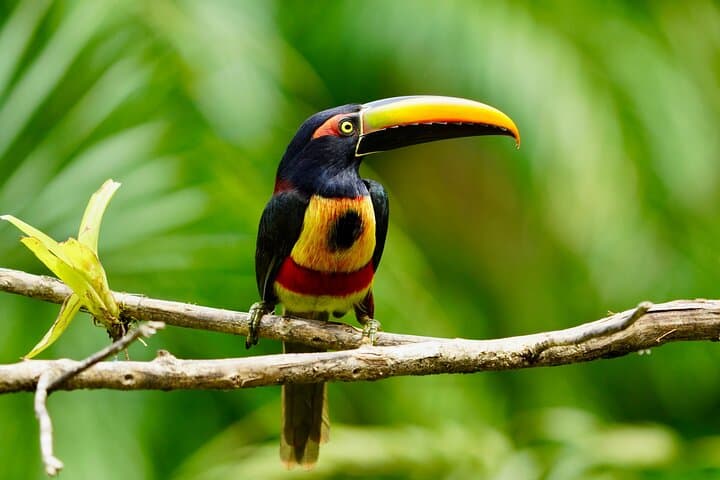
For centuries the local coastal communities have lived alongside these forests, harvesting small-scale crops and maintaining trails that now double as birding corridors. Naturalists visiting here will look for orange-collared manakin’s courtship displays, fleeting turquoise cotinga flashes, and the rare white-crested coquette hovering over flowers.
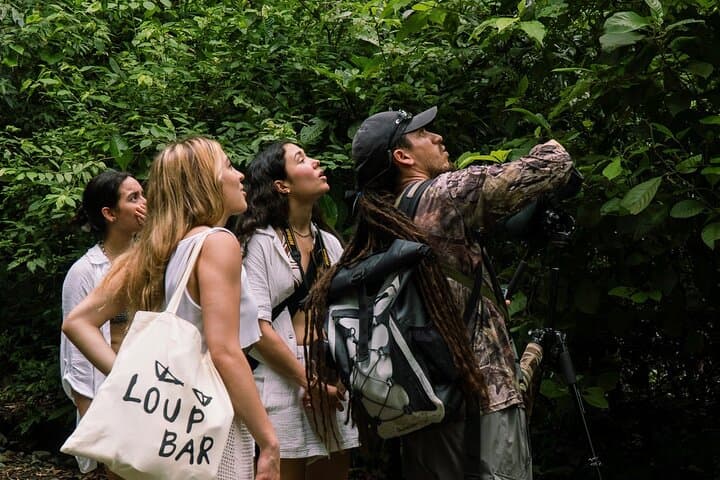
Expect guided, slow-paced searching: guides scan canopy gaps, listen for antbird chatter, and stake out lek sites. Most activity happens at dawn; mid-morning use quieter trails or shaded benches. The route includes short, sometimes muddy forest trails with modest elevation changes — nothing technical but uneven underfoot.
Practical essentials: arrive before sunrise, bring full-spectrum binoculars, quiet shoes with good grip, and a light rain layer. Hydrate and protect against bugs and sun — the guide will adapt pace for families and less-mobile guests. Photography opportunities are excellent from cleared viewing spots and roadside stops; keep gear silent and compact.
This is a patient, sensory experience — the birds do the teasing, the mountains reward the watchful.
easy.
5 hours.
Suitable for all fitness levels; requires short walks on uneven ground and occasional low slopes
The tour runs about 5 hours and is rated easy: expect short, slow walks on mostly flat to gently sloping trails; guides adapt pace for mixed fitness levels.
A Costa Rican breakfast and coffee are included, typically served at a local restaurant partway through the tour.
Bring binoculars, a field guide or app, water, insect repellent, a light rain jacket, and a compact camera with a zoom if you want photos.
Yes — the operator notes the tour is suitable for all fitness levels; however, some short uneven sections may be challenging for limited mobility, so inform the guide when booking.
Local communities have long used these foothills for small-scale agriculture and trail networks; modern ecotourism built on that legacy supports guide livelihoods.
Visitor numbers are kept moderate to reduce disturbance to lek sites and nesting areas; stay on trails, keep noise low, and avoid feeding wildlife to protect fragile behaviors.
Fabio Araya operates guided outdoor trips and adventures with an emphasis on safety, stewardship, and memorable experiences.


You step off the van and the rainforest greets you like a living orchestra — a quick trill, a metallic tap, then a low, resonant call that threads through the understory.
You step off the van and the rainforest greets you like a living orchestra — a quick trill, a metallic tap, then a low, resonant call that threads through the understory.
This tour moves away from Manuel Antonio’s busy coastline into the quieter Esquipulas hills above Quepos, where old-growth patches, secondary forest and edge habitat host roughly 300 species of birds in the region. Geologically the hills are part of the Talamanca range foothills, composed of volcanic soils that support dense, nutrient-rich understories and nectar-rich flowering shrubs — favoured perches for hummingbirds and tanagers.
For centuries the local coastal communities have lived alongside these forests, harvesting small-scale crops and maintaining trails that now double as birding corridors. Naturalists visiting here will look for orange-collared manakin’s courtship displays, fleeting turquoise cotinga flashes, and the rare white-crested coquette hovering over flowers.
Expect guided, slow-paced searching: guides scan canopy gaps, listen for antbird chatter, and stake out lek sites. Most activity happens at dawn; mid-morning use quieter trails or shaded benches. The route includes short, sometimes muddy forest trails with modest elevation changes — nothing technical but uneven underfoot.
Practical essentials: arrive before sunrise, bring full-spectrum binoculars, quiet shoes with good grip, and a light rain layer. Hydrate and protect against bugs and sun — the guide will adapt pace for families and less-mobile guests. Photography opportunities are excellent from cleared viewing spots and roadside stops; keep gear silent and compact.
This is a patient, sensory experience — the birds do the teasing, the mountains reward the watchful.