THE ADVENTURE COLLECTIVE® · Independent discovery and booking for outdoor travel

Explore Espargos on a 2.5-hour afternoon walk from Santa Maria—discover street art, local flavors, and the town’s airport-driven history while tasting Cape Verdean tapas and meeting residents.
Explore Espargos on a 2.5-hour afternoon walk from Santa Maria—discover street art, local flavors, and the town’s airport-driven history while tasting Cape Verdean tapas and meeting residents.
Late afternoon in Espargos: the trade wind pushes warm air across low concrete blocks, and bright murals catch the angle of the sinking sun. A guide leads the group through a compact grid of streets where painted walls and neighborhood stalls narrate daily life—children play on sidewalks, radios hum morna, and the scent of frying snacks drifts from a small eatery.
Verified experiences and guided adventures in the surrounding area.
Operated by Sal Experiences · Espargos, Sal
Late afternoon in Espargos: the trade wind pushes warm air across low concrete blocks, and bright murals catch the angle of the sinking sun. A guide leads the group through a compact grid of streets where painted walls and neighborhood stalls narrate daily life—children play on sidewalks, radios hum morna, and the scent of frying snacks drifts from a small eatery.
Espargos expanded rapidly after the construction of Amílcar Cabral International Airport; the town’s growth is tied to aviation and the island’s salt economy (Sal = salt). Geologically the island is an exposed volcanic plain with pockets of sand and scattered salt pans; the landscape feels open and wind-sculpted rather than steep or forested. Culturally, visitors encounter morabeza—Cape Verdean hospitality—Creole language, and musical rhythms shaped by West African and Portuguese roots.
On this 2.5-hour excursion travelers should expect 20–40 minutes of easy walking on paved streets and a short climb to a local viewpoint with wide views over town. Street art stops, a visit to the airport perimeter for historical context, and an aperitif with small Cape Verdean tapas are included. Wear sturdy closed shoes for uneven sidewalks, bring sun protection and a refillable water bottle, and carry small bills for purchases.
Practical tip: schedule the tour late afternoon for softer light and cooler conditions; the route is flat and accessible but can be adapted for mobility needs with advance notice. The tour offers a compact, tangible introduction to Espargos—its people, flavors, and the island’s wind-shaped character.
easy.
2–3 hours.
Suitable for most travelers with basic mobility; the tour includes short, easy walks totaling under 3 km and low elevation change.
Expect 20–40 minutes of walking broken into short segments across mostly flat, paved streets—total walking distance is under 3 km.
Yes—an aperitif and small tapas-style snacks featuring local flavors are included in the tour price.
Infants and small children in strollers are accommodated; private tours can be personalized for mobility needs—confirm at booking for wheelchair access options.
Guides are local and typically speak Portuguese and at least one common tourist language; verify language availability when booking.
Espargos expanded after Amílcar Cabral International Airport opened; Sal’s economy historically centered on salt extraction and later on aviation and tourism.
Sal’s arid environment is sensitive—water is scarce and litter harms local habitats; stick to marked streets, avoid single-use plastics where possible and support local businesses.
Sal Experiences operates guided outdoor trips and adventures with an emphasis on safety, stewardship, and memorable experiences.



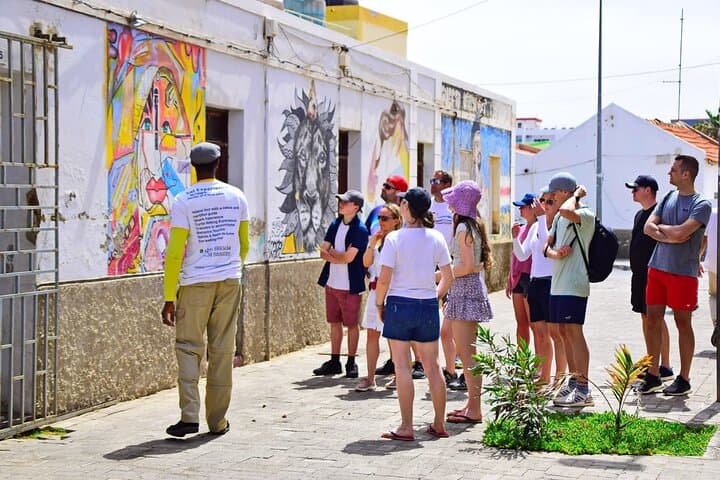
Late afternoon in Espargos: the trade wind pushes warm air across low concrete blocks, and bright murals catch the angle of the sinking sun. A guide leads the group through a compact grid of streets where painted walls and neighborhood stalls narrate daily life—children play on sidewalks, radios hum morna, and the scent of frying snacks drifts from a small eatery.
Late afternoon in Espargos: the trade wind pushes warm air across low concrete blocks, and bright murals catch the angle of the sinking sun. A guide leads the group through a compact grid of streets where painted walls and neighborhood stalls narrate daily life—children play on sidewalks, radios hum morna, and the scent of frying snacks drifts from a small eatery.
Espargos expanded rapidly after the construction of Amílcar Cabral International Airport; the town’s growth is tied to aviation and the island’s salt economy (Sal = salt). Geologically the island is an exposed volcanic plain with pockets of sand and scattered salt pans; the landscape feels open and wind-sculpted rather than steep or forested. Culturally, visitors encounter morabeza—Cape Verdean hospitality—Creole language, and musical rhythms shaped by West African and Portuguese roots.
On this 2.5-hour excursion travelers should expect 20–40 minutes of easy walking on paved streets and a short climb to a local viewpoint with wide views over town. Street art stops, a visit to the airport perimeter for historical context, and an aperitif with small Cape Verdean tapas are included. Wear sturdy closed shoes for uneven sidewalks, bring sun protection and a refillable water bottle, and carry small bills for purchases.
Practical tip: schedule the tour late afternoon for softer light and cooler conditions; the route is flat and accessible but can be adapted for mobility needs with advance notice. The tour offers a compact, tangible introduction to Espargos—its people, flavors, and the island’s wind-shaped character.