THE ADVENTURE COLLECTIVE® · Independent discovery and booking for outdoor travel

A full-day escape from Addis to the Debre Libanos monastery and the Portuguese Bridge that overlooks the Blue Nile Gorge. Expect short coastal-style hikes, dramatic viewpoints, Gelada baboons and a guided church tour with lunch included.
A full-day escape from Addis to the Debre Libanos monastery and the Portuguese Bridge that overlooks the Blue Nile Gorge. Expect short coastal-style hikes, dramatic viewpoints, Gelada baboons and a guided church tour with lunch included.
You arrive before the roar — a ribbon of highway unspools from Addis and the air cools as the rift valley opens. The Abay (Blue Nile) pushes itself through the highlands below, daring you to edge closer at the main viewpoint. The monastery cluster at Debre Libanos perches on a plateau above a sheer gorge; stone buildings and chapel domes sit quiet against a sky that thins toward the abyss.
Verified experiences and guided adventures in the surrounding area.
Operated by East Africa Tour Operator · Debre Libanos, Oromia
You arrive before the roar — a ribbon of highway unspools from Addis and the air cools as the rift valley opens. The Abay (Blue Nile) pushes itself through the highlands below, daring you to edge closer at the main viewpoint. The monastery cluster at Debre Libanos perches on a plateau above a sheer gorge; stone buildings and chapel domes sit quiet against a sky that thins toward the abyss.
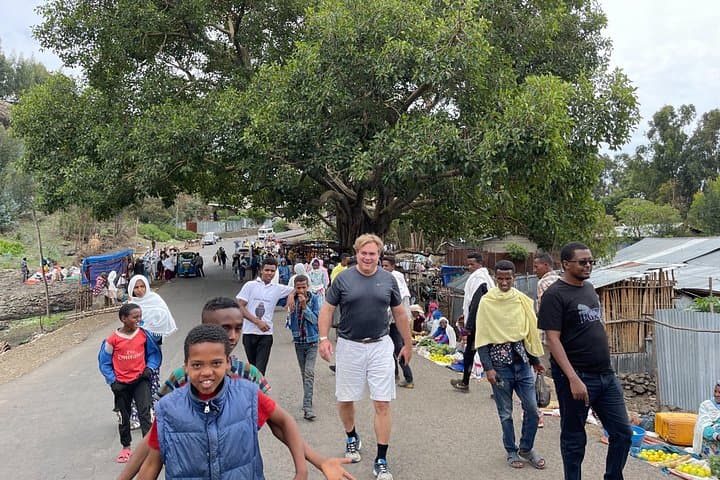
The site dates to the medieval era: Debre Libanos was established as a monastic center in the thirteenth century and is tied to the life of St. Tekle Haymanot, who is said to have spent decades in prayer in nearby caves. Geologically, the route follows the escarpment of the Ethiopian Plateau where basalt flows and river erosion carved the Abay Gorge. Cultural life here still hinges on the monastery — church services, local markets, and shepherds watching flocks on the terraces.
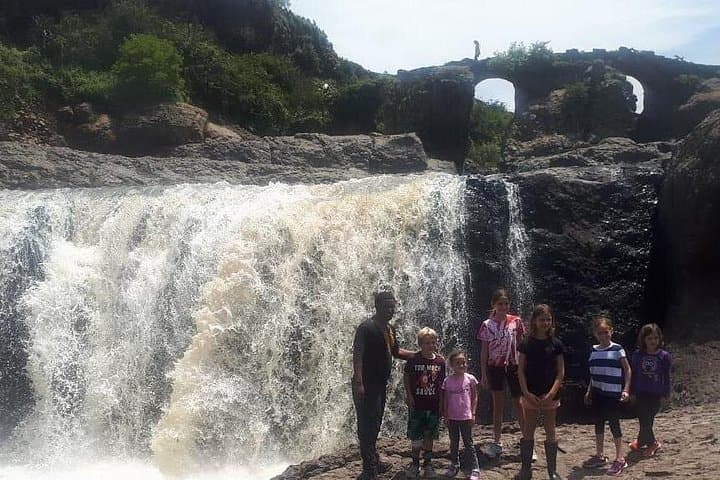
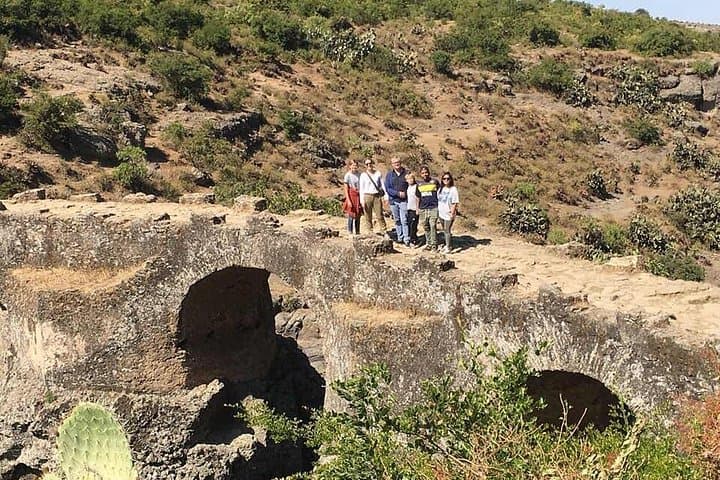
Expect short, steep walks rather than long treks: a guided church tour, a short climb to Tekle Haymanot’s cave, then a descent toward the Portuguese Bridge and a waterfall where Gelada troops forage on cliff ledges. Bring sturdy shoes for rocky steps and a wind layer for the exposed viewpoints.
Practicalities: the day trip runs from Addis with an air-conditioned vehicle, a guide, lunch, and bottled water included. Photography is welcome but respectful behavior at church sites is required. The best light for views and wildlife is early morning or late afternoon — plan your return accordingly to avoid driving at dusk.
moderate.
8–10 hours.
Suitable for travelers in average fitness; involves short climbs, steep steps and descents to the bridge
The drive is roughly 100–120 km depending on your starting point and takes about 2–3 hours each way by road.
No — the itinerary includes short hikes and stairs to viewpoints, the cave church, and a descent to the Portuguese Bridge rather than extended trekking.
Geladas are frequently seen around the bridge and cliffs, especially in the morning and late afternoon, but wildlife sightings can vary with season and time of day.
Yes; guided tours typically include the church and museum—dress modestly and follow the guide’s directions inside religious areas.
Debre Libanos grew into a major monastic center from the thirteenth century and is closely linked to St. Tekle Haymanot and Ethiopian Orthodox traditions.
Stay on established paths to limit erosion in the fragile escarpment environment, and avoid feeding wildlife; local guides often support small conservation efforts.
East Africa Tour Operator operates guided outdoor trips and adventures with an emphasis on safety, stewardship, and memorable experiences.
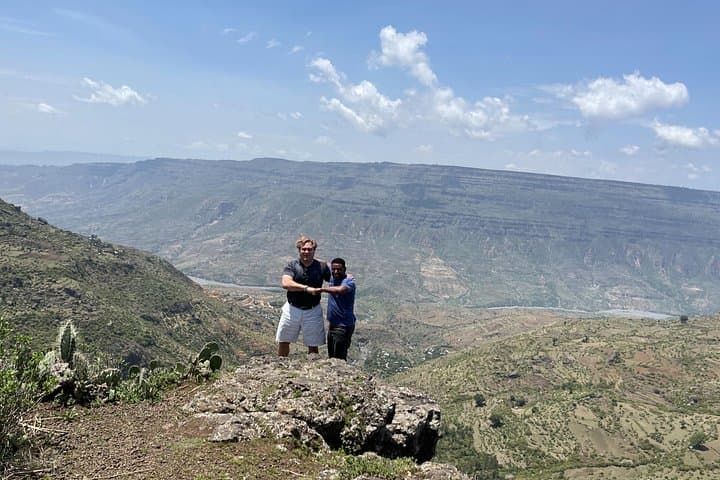
You arrive before the roar — a ribbon of highway unspools from Addis and the air cools as the rift valley opens. The Abay (Blue Nile) pushes itself through the highlands below, daring you to edge closer at the main viewpoint. The monastery cluster at Debre Libanos perches on a plateau above a sheer gorge; stone buildings and chapel domes sit quiet against a sky that thins toward the abyss.
You arrive before the roar — a ribbon of highway unspools from Addis and the air cools as the rift valley opens. The Abay (Blue Nile) pushes itself through the highlands below, daring you to edge closer at the main viewpoint. The monastery cluster at Debre Libanos perches on a plateau above a sheer gorge; stone buildings and chapel domes sit quiet against a sky that thins toward the abyss.
The site dates to the medieval era: Debre Libanos was established as a monastic center in the thirteenth century and is tied to the life of St. Tekle Haymanot, who is said to have spent decades in prayer in nearby caves. Geologically, the route follows the escarpment of the Ethiopian Plateau where basalt flows and river erosion carved the Abay Gorge. Cultural life here still hinges on the monastery — church services, local markets, and shepherds watching flocks on the terraces.
Expect short, steep walks rather than long treks: a guided church tour, a short climb to Tekle Haymanot’s cave, then a descent toward the Portuguese Bridge and a waterfall where Gelada troops forage on cliff ledges. Bring sturdy shoes for rocky steps and a wind layer for the exposed viewpoints.
Practicalities: the day trip runs from Addis with an air-conditioned vehicle, a guide, lunch, and bottled water included. Photography is welcome but respectful behavior at church sites is required. The best light for views and wildlife is early morning or late afternoon — plan your return accordingly to avoid driving at dusk.