THE ADVENTURE COLLECTIVE® · Independent discovery and booking for outdoor travel

Spend a night on the wind-sculpted dunes of Erg Chigaga with a nomad bivouac, camel rides, sandboarding and a star-filled campfire. This short 2-day trip from M'Hamid pairs easy logistics with authentic cultural exchange.
Spend a night on the wind-sculpted dunes of Erg Chigaga with a nomad bivouac, camel rides, sandboarding and a star-filled campfire. This short 2-day trip from M'Hamid pairs easy logistics with authentic cultural exchange.
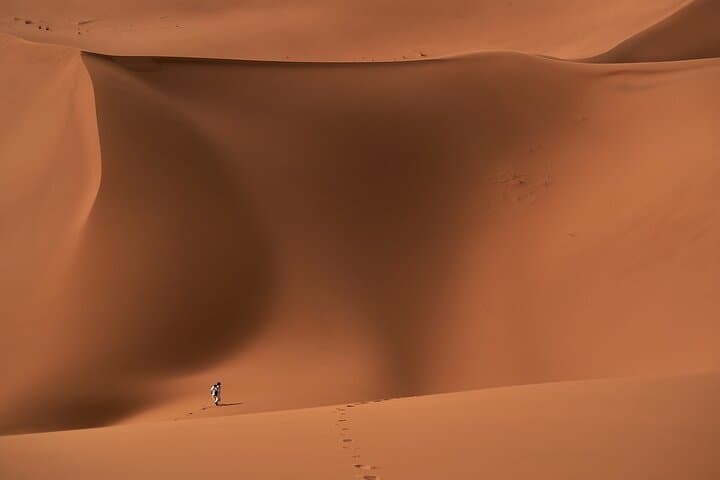
A high, ochre lip of sand rises and falls like the breath of the desert as you approach Erg Chigaga by late afternoon. Wind-carved ridges throw long shadows; the plateau behind you goes quiet. The first cup of mint tea tastes of travel and dust; camels nod as the sun flattens into color.
Verified experiences and guided adventures in the surrounding area.
Operated by Erg Chigaga · M'Hamid, Drâa-Tafilalet
A high, ochre lip of sand rises and falls like the breath of the desert as you approach Erg Chigaga by late afternoon. Wind-carved ridges throw long shadows; the plateau behind you goes quiet. The first cup of mint tea tastes of travel and dust; camels nod as the sun flattens into color.
This zone in southern Morocco marks the western edge of the Sahara where ancient caravan routes met seasonal oases. Geologically the dunes are star and crescent forms built from millennia of wind-sorted sand over a hard, stony hamada. Local culture is Tuareg and nomadic Arab—camp life centers on shared meals, firelight storytelling and music played on simple, portable instruments.
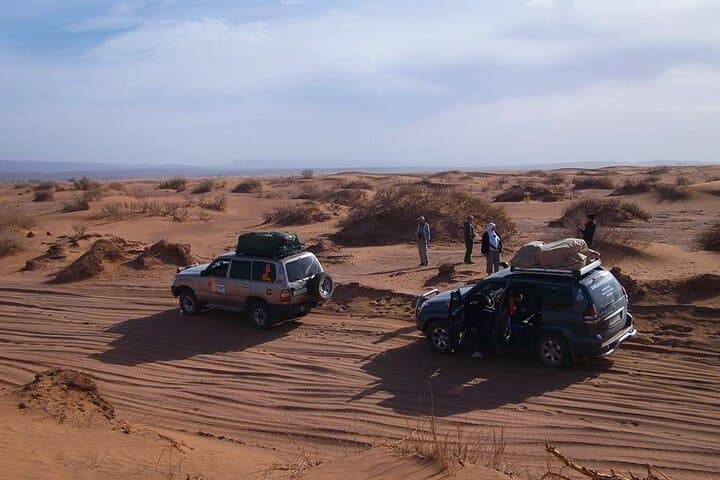
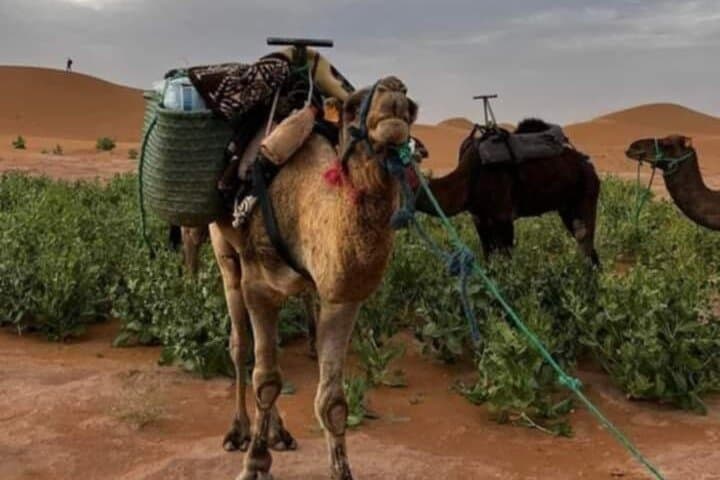
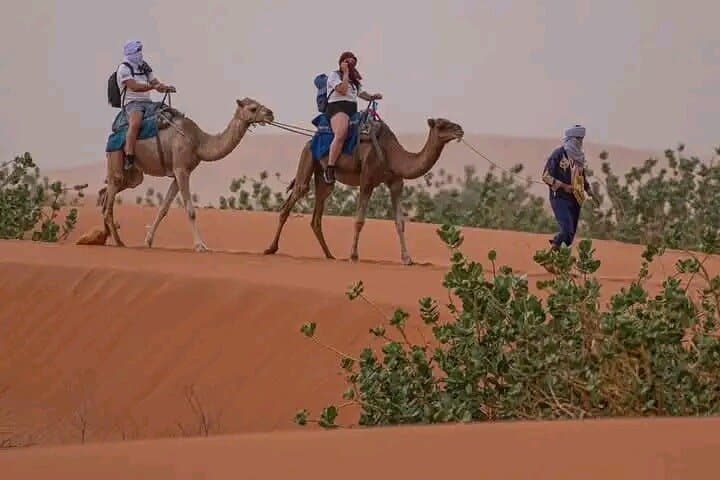
Expect a short drive from M'Hamid across a rocky plain, a light lunch with nomad hosts, and a slow arrival into the erg before sunset. Activities include optional camel treks, sandboarding down soft faces, and quad rides offered by operators; most guests overnight in traditional tents or under open sky.
Practical guidance: bring layered clothing for hot days and cold nights, closed-toe shoes for dune climbs, and at least 2–3 liters of water per person. Time arrivals for golden hour to watch the dunes shift color. Respect private camp areas, follow guides off-track to avoid fragile vegetation, and pack out trash—the desert keeps evidence a long time.
This trip is an accessible introduction to desert bivouac: easy logistics, immersive culture, and the rare, quiet sky that makes a simple camp feel vast and unforgettable.
easy.
2 days (about 48 hours).
Suitable for people with basic mobility; requires short dune climbs and short camel rides—no special fitness required.
Most tours include pickup in M'Hamid with transfer by air-conditioned vehicle across the desert plateau to the bivouac.
Overnight options include traditional nomad tents or sleeping under the stars; basic bedding is typically supplied—confirm specifics with the operator.
Camel rides and other on-site activities like sandboarding or quad rides are commonly offered; check the itinerary—some are optional or incur extra cost.
The operator lists the activity as suitable for most ages but advises against travel for pregnant guests and those with serious health issues; infants may need to sit on laps.
Erg Chigaga sits along historic trans-Saharan caravan corridors used for salt and date trade; local settlements grew around seasonal water sources and nomadic camps.
The dune environment is fragile—stick to established routes, avoid driving on vegetated crusts, and pack out all waste to minimize impact.
Erg Chigaga operates guided outdoor trips and adventures with an emphasis on safety, stewardship, and memorable experiences.
A high, ochre lip of sand rises and falls like the breath of the desert as you approach Erg Chigaga by late afternoon. Wind-carved ridges throw long shadows; the plateau behind you goes quiet. The first cup of mint tea tastes of travel and dust; camels nod as the sun flattens into color.
A high, ochre lip of sand rises and falls like the breath of the desert as you approach Erg Chigaga by late afternoon. Wind-carved ridges throw long shadows; the plateau behind you goes quiet. The first cup of mint tea tastes of travel and dust; camels nod as the sun flattens into color.
This zone in southern Morocco marks the western edge of the Sahara where ancient caravan routes met seasonal oases. Geologically the dunes are star and crescent forms built from millennia of wind-sorted sand over a hard, stony hamada. Local culture is Tuareg and nomadic Arab—camp life centers on shared meals, firelight storytelling and music played on simple, portable instruments.
Expect a short drive from M'Hamid across a rocky plain, a light lunch with nomad hosts, and a slow arrival into the erg before sunset. Activities include optional camel treks, sandboarding down soft faces, and quad rides offered by operators; most guests overnight in traditional tents or under open sky.
Practical guidance: bring layered clothing for hot days and cold nights, closed-toe shoes for dune climbs, and at least 2–3 liters of water per person. Time arrivals for golden hour to watch the dunes shift color. Respect private camp areas, follow guides off-track to avoid fragile vegetation, and pack out trash—the desert keeps evidence a long time.
This trip is an accessible introduction to desert bivouac: easy logistics, immersive culture, and the rare, quiet sky that makes a simple camp feel vast and unforgettable.