THE ADVENTURE COLLECTIVE® · Independent discovery and booking for outdoor travel

Ride into the Sahara from M’Hamid for an overnight under the stars on Erg Chegaga. This two‑day trip pairs a sunset dune climb, traditional bivouac music and morning sandboarding on Morocco’s largest dunes.
Ride into the Sahara from M’Hamid for an overnight under the stars on Erg Chegaga. This two‑day trip pairs a sunset dune climb, traditional bivouac music and morning sandboarding on Morocco’s largest dunes.
Late-afternoon light slices across a sea of sand as the 4x4 leaves M’Hamid and the track turns from stony hammada to rippling dune. The wind writes new lines on the slope while a single camel silhouette climbs toward the highest lip; by dusk you stand thirty minutes above the summit, watching shadows crawl down a 300‑meter face that feels both ancient and immediate.
Verified experiences and guided adventures in the surrounding area.
Operated by Desertbrise Travel · M'Hamid (M’Hamid El Ghizlane), Drâa‑Tafilalet
Late-afternoon light slices across a sea of sand as the 4x4 leaves M’Hamid and the track turns from stony hammada to rippling dune. The wind writes new lines on the slope while a single camel silhouette climbs toward the highest lip; by dusk you stand thirty minutes above the summit, watching shadows crawl down a 300‑meter face that feels both ancient and immediate.
Erg Chegaga sits at the southern edge of Morocco’s Sahara, carved from Pleistocene sediments and wind-worked quartz and feldspar. The area has been a crossroads for Saharan nomads and caravan routes; palm‑fringed oases mark old water lenses where local communities once paused between trade stops. Culture here is as much sound as sight — Berber songs and darbuka rhythms around the bivouac are part of the evening’s map.
Practically, expect coarse dune sand underfoot, loose slopes that make each step a small effort, and temperature swings from hot afternoon to crisp desert night. The itinerary is straightforward: an afternoon 4x4 transfer, a short climb to sunset, tea and traditional dinner at camp, sleeping in tents, morning sandboarding and a tracked return to M’Hamid.
Bring sun protection, warm layers for night, and a sense of patience when moving across soft sand. Hydration and pacing matter — ascending the grand dune is short but steep. For a first overnight in the Sahara, this is immediate, tactile desert travel: startlingly empty landscapes, music under the stars, and a clear view of why dunes continue to pull people into the long silence.
moderate.
20–24 hours (overnight).
Suitable for travelers in light to moderate fitness; must manage short dune climbs and moving over soft sand.
The climb to the main dune rim takes 20–30 minutes at a steady pace; loose sand makes it more tiring than the distance suggests, but no technical skills are required.
Overnight arrangements are in a desert bivouac with tents; basic bedding is provided, but bring a warm layer and any personal comfort items.
Yes — sandboarding is part of the morning activities; most operators supply boards, but bring closed footwear to ride comfortably.
Expect limited or no cell service and minimal power at the bivouac; charge devices beforehand and bring portable power if needed.
The route around M’Hamid was part of trans‑Saharan caravan tracks; local oases supported nomadic settlements and seasonal agriculture.
The dunes are ecologically sensitive—travelers should avoid disturbing vegetation and respect local guidelines to limit tire tracks and campfire impacts.
Desertbrise Travel operates guided outdoor trips and adventures with an emphasis on safety, stewardship, and memorable experiences.
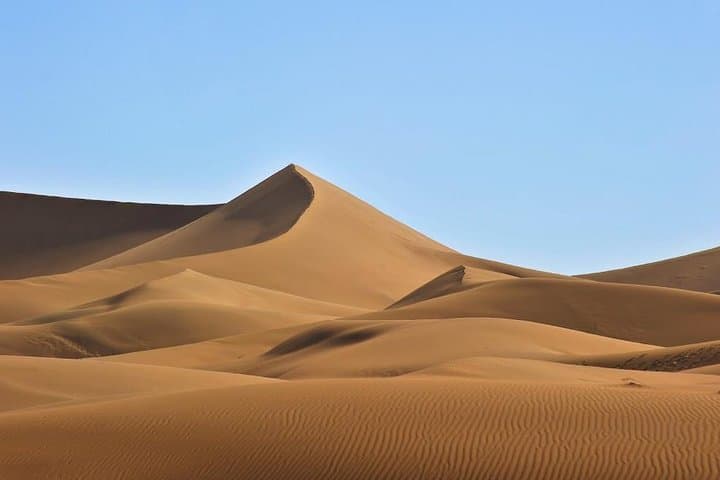


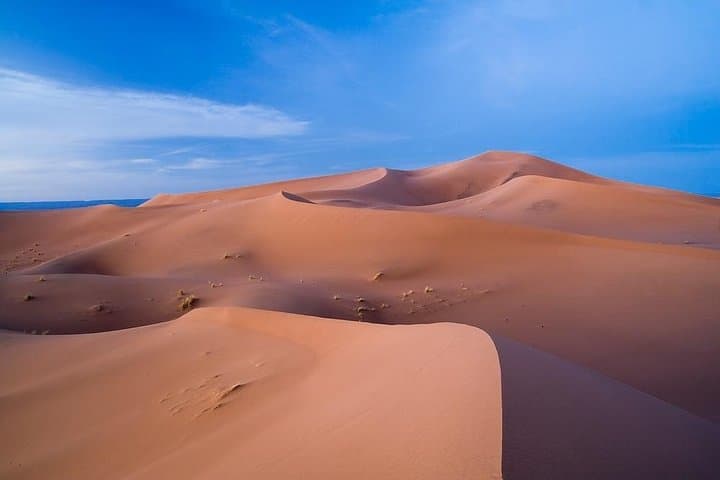
Late-afternoon light slices across a sea of sand as the 4x4 leaves M’Hamid and the track turns from stony hammada to rippling dune. The wind writes new lines on the slope while a single camel silhouette climbs toward the highest lip; by dusk you stand thirty minutes above the summit, watching shadows crawl down a 300‑meter face that feels both ancient and immediate.
Late-afternoon light slices across a sea of sand as the 4x4 leaves M’Hamid and the track turns from stony hammada to rippling dune. The wind writes new lines on the slope while a single camel silhouette climbs toward the highest lip; by dusk you stand thirty minutes above the summit, watching shadows crawl down a 300‑meter face that feels both ancient and immediate.
Erg Chegaga sits at the southern edge of Morocco’s Sahara, carved from Pleistocene sediments and wind-worked quartz and feldspar. The area has been a crossroads for Saharan nomads and caravan routes; palm‑fringed oases mark old water lenses where local communities once paused between trade stops. Culture here is as much sound as sight — Berber songs and darbuka rhythms around the bivouac are part of the evening’s map.
Practically, expect coarse dune sand underfoot, loose slopes that make each step a small effort, and temperature swings from hot afternoon to crisp desert night. The itinerary is straightforward: an afternoon 4x4 transfer, a short climb to sunset, tea and traditional dinner at camp, sleeping in tents, morning sandboarding and a tracked return to M’Hamid.
Bring sun protection, warm layers for night, and a sense of patience when moving across soft sand. Hydration and pacing matter — ascending the grand dune is short but steep. For a first overnight in the Sahara, this is immediate, tactile desert travel: startlingly empty landscapes, music under the stars, and a clear view of why dunes continue to pull people into the long silence.