THE ADVENTURE COLLECTIVE® · Independent discovery and booking for outdoor travel

Walk from Merzouga into Erg Chebbi for an overnight camp beneath the stars. Watch sunset from a dune crest, sleep in a private tent with facilities, then rise for a desert sunrise and a short return walk.
Walk from Merzouga into Erg Chebbi for an overnight camp beneath the stars. Watch sunset from a dune crest, sleep in a private tent with facilities, then rise for a desert sunrise and a short return walk.
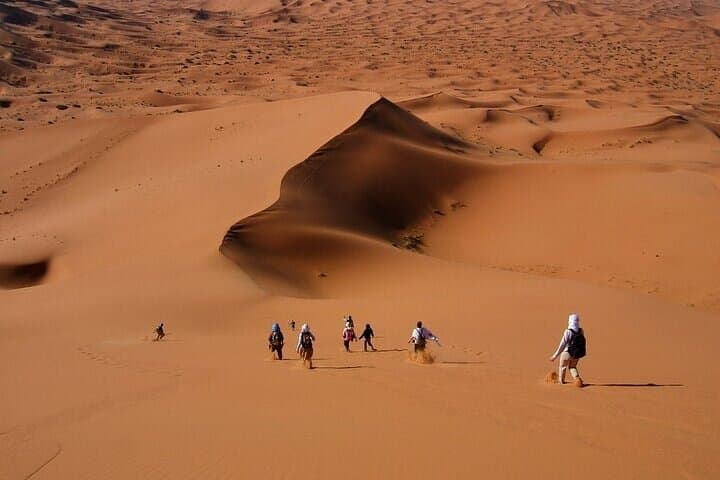
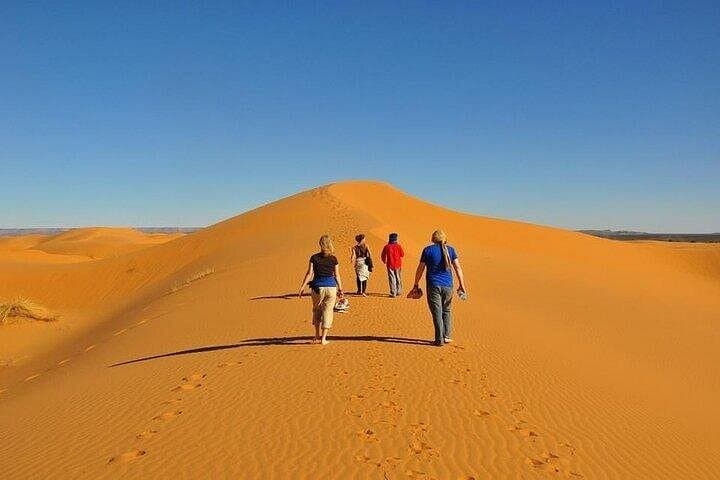
Late-afternoon light slides across the Erg Chebbi ridgeline and the sand changes from gold to copper as you step off dusty track and into open dune. The guide sets an easy pace; the sand gives underfoot and the world narrows to wind, sky and the low thud of a distant camel bell.
Verified experiences and guided adventures in the surrounding area.
Operated by Quiet Merzouga Desert- Day Tours · Merzouga, Drâa-Tafilalet
Late-afternoon light slides across the Erg Chebbi ridgeline and the sand changes from gold to copper as you step off dusty track and into open dune. The guide sets an easy pace; the sand gives underfoot and the world narrows to wind, sky and the low thud of a distant camel bell.
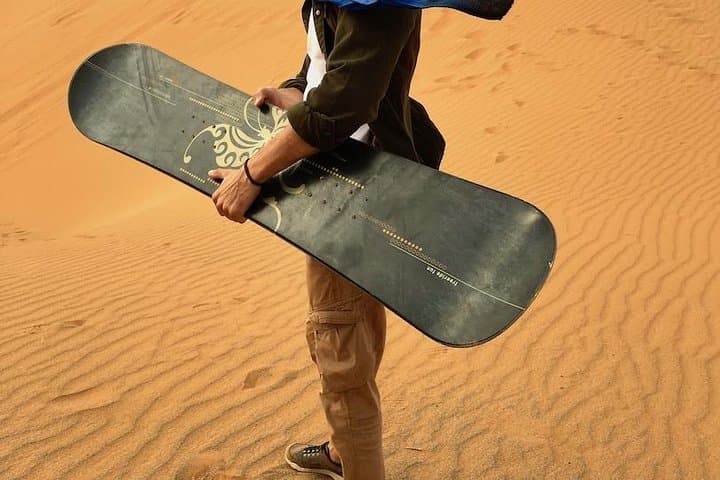
Erg Chebbi is one of Morocco’s largest dune seas, shaped over millennia by Atlas-fed winds that pile sand into sweeping crescent crests. This edge of the Sahara sits within the cultural landscape of the Amazigh (Berber) people — a place of seasonal salt lakes, caravan histories and living music. Local camps combine modern comforts (private tent bathrooms, shower, electricity points) with traditional elements: Berber songs, shared dinners and a sand-boarding try at the camp’s base.
Practically, expect two short dune walks: an hour walk from village to camp around sunset, and a pre-dawn climb to watch the sun stretch light across the hollow. Temperatures swing widely — hot in daytime, cold after midnight — and walking on loose sand is slower than trail hiking. Bring layered clothing, at least 2–3 liters of water per person, closed-toe shoes with good traction, sun protection and a small headlamp.
The overnight pace suits travelers who want a tactile desert experience without long camel treks or multi-day logistics. Guides lead navigation, handle camp setup and provide food; your role is to arrive with sensible gear, a readiness for quiet, and an appetite for sunrise that repays the short climb with wide, empty horizon views.
moderate.
17 hours (overnight).
Basic to moderate fitness—able to walk for roughly an hour on loose sand and manage short dune climbs.
The walk is about an hour over loose sand with short climbs to dune crests; it’s steady but manageable for most people with basic fitness.
Yes—the advertised overnight camp includes private tent facilities with a bathroom and shower for each tent.
This itinerary is a walking trek; camels are not required but may be available separately if you prefer a ride.
Spring and fall offer the most comfortable daytime temperatures; early morning and late afternoon are best for photography year-round.
Erg Chebbi sits along traditional trans-Saharan routes and is part of a landscape long inhabited by Amazigh (Berber) communities who guided caravan trade across the region.
Water is scarce and waste degrades fragile dune systems—stick to established campsites, carry out trash, and minimize night lighting to protect nocturnal wildlife.
Quiet Merzouga Desert- Day Tours operates guided outdoor trips and adventures with an emphasis on safety, stewardship, and memorable experiences.

Late-afternoon light slides across the Erg Chebbi ridgeline and the sand changes from gold to copper as you step off dusty track and into open dune. The guide sets an easy pace; the sand gives underfoot and the world narrows to wind, sky and the low thud of a distant camel bell.
Late-afternoon light slides across the Erg Chebbi ridgeline and the sand changes from gold to copper as you step off dusty track and into open dune. The guide sets an easy pace; the sand gives underfoot and the world narrows to wind, sky and the low thud of a distant camel bell.
Erg Chebbi is one of Morocco’s largest dune seas, shaped over millennia by Atlas-fed winds that pile sand into sweeping crescent crests. This edge of the Sahara sits within the cultural landscape of the Amazigh (Berber) people — a place of seasonal salt lakes, caravan histories and living music. Local camps combine modern comforts (private tent bathrooms, shower, electricity points) with traditional elements: Berber songs, shared dinners and a sand-boarding try at the camp’s base.
Practically, expect two short dune walks: an hour walk from village to camp around sunset, and a pre-dawn climb to watch the sun stretch light across the hollow. Temperatures swing widely — hot in daytime, cold after midnight — and walking on loose sand is slower than trail hiking. Bring layered clothing, at least 2–3 liters of water per person, closed-toe shoes with good traction, sun protection and a small headlamp.
The overnight pace suits travelers who want a tactile desert experience without long camel treks or multi-day logistics. Guides lead navigation, handle camp setup and provide food; your role is to arrive with sensible gear, a readiness for quiet, and an appetite for sunrise that repays the short climb with wide, empty horizon views.