THE ADVENTURE COLLECTIVE® · Independent discovery and booking for outdoor travel

A long day that pairs emerald multi-tiered falls with the sobering history of the River Kwai, this private tour from Bangkok mixes easy hiking and swimming with wartime landmarks. Read on for what to expect and how to prepare.
A long day that pairs emerald multi-tiered falls with the sobering history of the River Kwai, this private tour from Bangkok mixes easy hiking and swimming with wartime landmarks. Read on for what to expect and how to prepare.
You set out before the heat climbs, the highway unfurling west toward limestone ridges and teak forest. By late morning the air changes—cleaner, cooler—and you can hear the falls before you see them: water falling tier by tier into emerald basins that dare you to step closer.
Verified experiences and guided adventures in the surrounding area.
Operated by Trips Planners · Kanchanaburi, Kanchanaburi
You set out before the heat climbs, the highway unfurling west toward limestone ridges and teak forest. By late morning the air changes—cleaner, cooler—and you can hear the falls before you see them: water falling tier by tier into emerald basins that dare you to step closer.
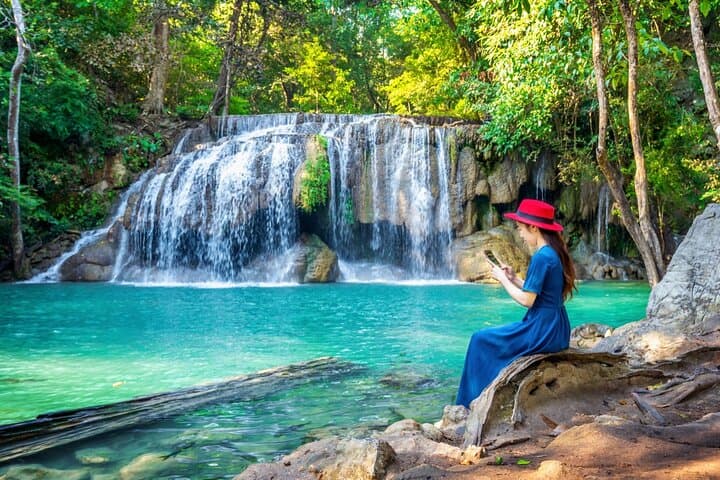
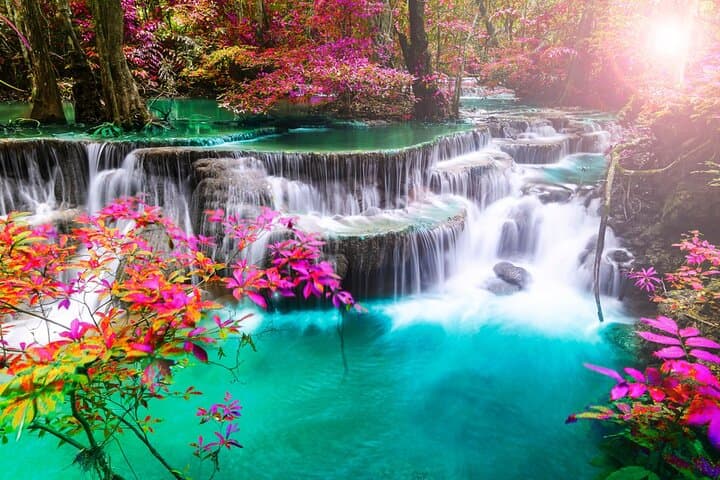
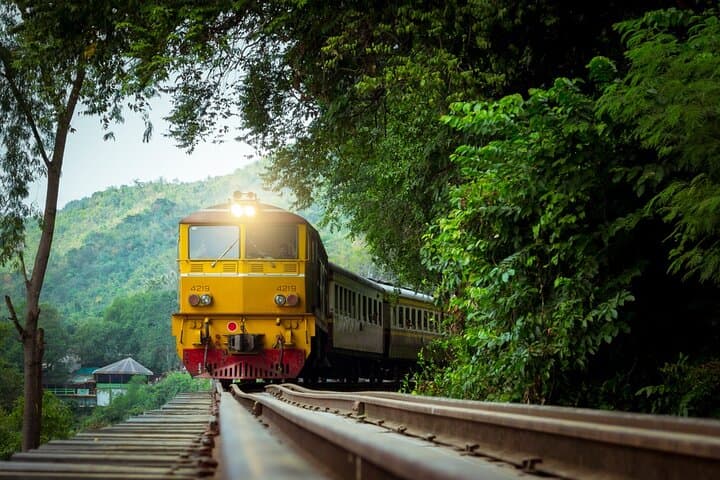
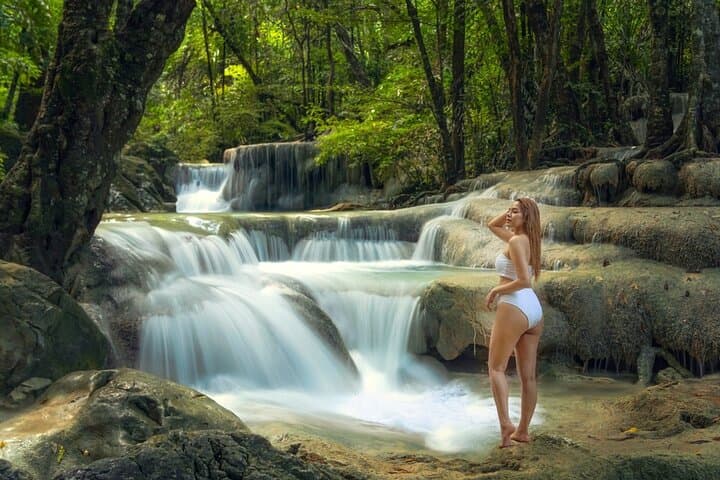
Erawan National Park's seven-tier cascade sits on karst limestone carved over millennia; each pool catches sunlight differently, from pale green to deep jade. The terrain around the falls is a mix of worn steps, short jungle tracks and slick rock; expect roughly 2–3 kilometers of walking on trails with about 200–300 meters of cumulative ascent to reach the higher tiers. Later the tour moves from nature to history along the Khwae Yai, where the Bridge on the River Kwai and the nearby railway trace the wartime Death Railway built under brutal wartime conditions. The JEATH War Museum and riverside exhibits frame the human cost with artifacts and photographs.
Practical edge: the drive from Bangkok is about 3–4 hours each way, so it’s a long but compact day. Bring quick-dry swimwear and shoes with grip for the falls, sun protection, and cash for small food stalls. Respect posted closures—some tiers close for maintenance or conservation—and give space at memorial sites. Timing matters: arrive early to beat crowds, and save higher-tier exploration for cooler hours. This is a full-day pairing of natural swimming and sober history that rewards planning and sensible gear.
moderate.
9–10 hours.
Light to moderate fitness; able to walk uneven ground and climb steps for several short stretches
Expect roughly 3–4 hours each way depending on traffic; many operators include hotel pickup to streamline travel.
Yes—swimming is allowed in designated pools at several tiers but follow park signage and avoid pools that are closed for maintenance or conservation.
Tour inclusions often cover Erawan National Park entrance; confirm with your operator, but bring cash for local stalls and optional museum donations.
Yes, the bridge and nearby walking areas are open to visitors; expect crowds and pay attention to railway safety notices.
Kanchanaburi preserves sites tied to the WWII Death Railway; the bridge and nearby museums chronicle forced labor and wartime losses.
Erawan Park limits access to some pools and enforces rules about soap and sunscreen to protect water quality; stay on trails to prevent erosion.
Trips Planners operates guided outdoor trips and adventures with an emphasis on safety, stewardship, and memorable experiences.
You set out before the heat climbs, the highway unfurling west toward limestone ridges and teak forest. By late morning the air changes—cleaner, cooler—and you can hear the falls before you see them: water falling tier by tier into emerald basins that dare you to step closer.
You set out before the heat climbs, the highway unfurling west toward limestone ridges and teak forest. By late morning the air changes—cleaner, cooler—and you can hear the falls before you see them: water falling tier by tier into emerald basins that dare you to step closer.
Erawan National Park's seven-tier cascade sits on karst limestone carved over millennia; each pool catches sunlight differently, from pale green to deep jade. The terrain around the falls is a mix of worn steps, short jungle tracks and slick rock; expect roughly 2–3 kilometers of walking on trails with about 200–300 meters of cumulative ascent to reach the higher tiers. Later the tour moves from nature to history along the Khwae Yai, where the Bridge on the River Kwai and the nearby railway trace the wartime Death Railway built under brutal wartime conditions. The JEATH War Museum and riverside exhibits frame the human cost with artifacts and photographs.
Practical edge: the drive from Bangkok is about 3–4 hours each way, so it’s a long but compact day. Bring quick-dry swimwear and shoes with grip for the falls, sun protection, and cash for small food stalls. Respect posted closures—some tiers close for maintenance or conservation—and give space at memorial sites. Timing matters: arrive early to beat crowds, and save higher-tier exploration for cooler hours. This is a full-day pairing of natural swimming and sober history that rewards planning and sensible gear.