THE ADVENTURE COLLECTIVE® · Independent discovery and booking for outdoor travel

A full-day outing that pairs a refreshing hike-and-swim at Erawan’s seven tiers with a visit to the historic River Kwai bridge. Expect clear pools, limestone steps, wartime history, and a long but rewarding day trip from central Thailand.
A full-day outing that pairs a refreshing hike-and-swim at Erawan’s seven tiers with a visit to the historic River Kwai bridge. Expect clear pools, limestone steps, wartime history, and a long but rewarding day trip from central Thailand.
You step off the bus into humid forest air and a chorus of running water — Erawan’s pools glint like coins through green leaves. The trail climbs over limestone outcrops and past carved tiers, each pool a safe, inviting place to cool down before you push higher for a wider view.
Verified experiences and guided adventures in the surrounding area.
Operated by Bangkok Top Sights · Kanchanaburi, Kanchanaburi
You step off the bus into humid forest air and a chorus of running water — Erawan’s pools glint like coins through green leaves. The trail climbs over limestone outcrops and past carved tiers, each pool a safe, inviting place to cool down before you push higher for a wider view.
Erawan National Park is best known for its seven-tier cascade fed by mountain streams; the falls cut through hard limestone, creating clear turquoise basins and short cliff faces. Later the tour drops you into a very different story at the River Kwai bridge and JEATH museum in Kanchanaburi, where the railway’s wartime construction and local history are explained against the backdrop of the Khwae Noi River.
Geology here is compact: karst limestone, walking paths with steps and occasional roots. Culturally, the area mixes provincial market towns with memorials to allied POWs; guides often interweave natural history with wartime narratives.
Practical guidance: allow 1.5–3 hours at Erawan to visit lower and mid tiers, wear grippy shoes, and bring a towel and dry bag for electronics. The trail is moderate — some steep steps and slippery rocks after rain. At the River Kwai stop expect short walks, photo opportunities on the bridge, and museum exhibits; budget time for refreshments and local stalls. Start early to avoid heat and crowds, carry at least 2 liters of water, and respect memorial sites by keeping noise low. The combination of swimming and history makes this a full, varied day for travelers comfortable with moderate activity and a long round-trip from Bangkok.
moderate.
6–8 hours.
Moderate fitness — able to hike on uneven trails, climb steps, and swim in calm pools for short periods.
This is a full-day tour — expect roughly 2.5–3 hours each way by air-conditioned van depending on traffic.
Many tiers have designated swimming pools; higher tiers may be reached by steeper paths and some pools are off-limits after heavy rain for safety.
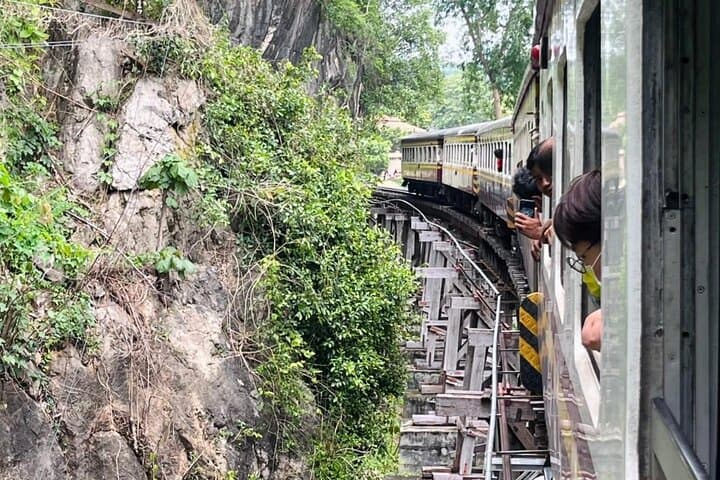
Parts of the bridge reflect the historic alignment; much of the railway and bridges were rebuilt after the war, and the museums provide context about wartime construction.
There are restrooms and local snack stalls near both sites; the tour typically includes a Thai lunch at a local restaurant.
Kanchanaburi became prominent during WWII for the Thai–Burma railway; local museums document the railway’s construction and its human cost.
Erawan is managed to balance visitor access with habitat protection — follow park rules, avoid littering, and use marked paths to reduce erosion.
Bangkok Top Sights operates guided outdoor trips and adventures with an emphasis on safety, stewardship, and memorable experiences.


You step off the bus into humid forest air and a chorus of running water — Erawan’s pools glint like coins through green leaves. The trail climbs over limestone outcrops and past carved tiers, each pool a safe, inviting place to cool down before you push higher for a wider view.
You step off the bus into humid forest air and a chorus of running water — Erawan’s pools glint like coins through green leaves. The trail climbs over limestone outcrops and past carved tiers, each pool a safe, inviting place to cool down before you push higher for a wider view.
Erawan National Park is best known for its seven-tier cascade fed by mountain streams; the falls cut through hard limestone, creating clear turquoise basins and short cliff faces. Later the tour drops you into a very different story at the River Kwai bridge and JEATH museum in Kanchanaburi, where the railway’s wartime construction and local history are explained against the backdrop of the Khwae Noi River.
Geology here is compact: karst limestone, walking paths with steps and occasional roots. Culturally, the area mixes provincial market towns with memorials to allied POWs; guides often interweave natural history with wartime narratives.
Practical guidance: allow 1.5–3 hours at Erawan to visit lower and mid tiers, wear grippy shoes, and bring a towel and dry bag for electronics. The trail is moderate — some steep steps and slippery rocks after rain. At the River Kwai stop expect short walks, photo opportunities on the bridge, and museum exhibits; budget time for refreshments and local stalls. Start early to avoid heat and crowds, carry at least 2 liters of water, and respect memorial sites by keeping noise low. The combination of swimming and history makes this a full, varied day for travelers comfortable with moderate activity and a long round-trip from Bangkok.