THE ADVENTURE COLLECTIVE® · Independent discovery and booking for outdoor travel

Swap Bangkok traffic for jungle cascades and iron rails on a full-day from the capital. Visit the seven tiers of Erawan Falls, cool off in emerald pools, then ride the historic Death Railway past the River Kwai Bridge.
Swap Bangkok traffic for jungle cascades and iron rails on a full-day from the capital. Visit the seven tiers of Erawan Falls, cool off in emerald pools, then ride the historic Death Railway past the River Kwai Bridge.
You step off an air-conditioned coach before dawn and the noisy pulse of Bangkok is replaced by humidity, jungle calls and the slow thrust of the River Kwai. The day unfolds as two contrasting landscapes: a limestone jungle where emerald pools collect beneath pounding falls, and a historic iron spine — the Death Railway — that clings to river bends and cliff faces.
Verified experiences and guided adventures in the surrounding area.
Operated by Click2GoThailand.com · Kanchanaburi, Kanchanaburi Province
You step off an air-conditioned coach before dawn and the noisy pulse of Bangkok is replaced by humidity, jungle calls and the slow thrust of the River Kwai. The day unfolds as two contrasting landscapes: a limestone jungle where emerald pools collect beneath pounding falls, and a historic iron spine — the Death Railway — that clings to river bends and cliff faces.
Erawan National Park's seven-tier waterfall is carved from Triassic limestone and fed by clear streams that have cut pools and travertine shelves over millennia. Locals revere the site for its natural beauty, while the nearby River Kwai area bears deeper scars: bridges, caves and tracks tied to the Second World War and the forced labor that built the Burma Railway. Tham Krasae cave and the wartime stations make the past tangible — sleepers, plaques and rusted rails that frame modern reflection.
Expect a mixed day: a 1–2 hour walking loop up and between tiers on uneven stone steps (roughly 1–2 km of trail with intermittent elevation gain), time to swim in cool emerald basins, and a scenic 60–90 minute rail segment to the River Kwai Bridge with river and teak forest views.
Practical edge: bring reef-safe sunscreen, a towel, sturdy water-resistant shoes, and THB cash for park and train fees. Start early to avoid midday heat, carry at least 1–2 liters of water, and budget patience for crowds at the lower tiers. The route pairs active nature with quiet history — a single-day window into Kanchanaburi's wild curves and wartime memory.
moderate.
12–13 hours.
Moderate fitness: able to walk uneven trails, manage stairs, and tolerate a long day with brief swims
Typical time at the falls is 2–4 hours depending on how many tiers you hike and whether you swim; the tour schedules around 3 hours there.
Swimming is permitted in designated pools at lower and mid tiers, but access to some upper sections may be restricted after heavy rain for safety.
A train-ticket surcharge (approx. 100 THB) is payable on the day as noted in tour instructions; the scenic rail segment is part of the itinerary.
Not recommended for travelers with significant mobility issues, pregnancy or serious back/heart conditions due to stairs, uneven terrain and the long day.
Kanchanaburi’s railway and bridges were built during WWII by forced labor on the Burma Railway; sites like Tham Krasae and the River Kwai Bridge are preserved as memorials and museums.
Erawan is managed to protect karst streams and forest habitat — stay on marked trails, avoid soap in pools, and pack out waste to reduce impact.
Click2GoThailand.com operates guided outdoor trips and adventures with an emphasis on safety, stewardship, and memorable experiences.
You step off an air-conditioned coach before dawn and the noisy pulse of Bangkok is replaced by humidity, jungle calls and the slow thrust of the River Kwai. The day unfolds as two contrasting landscapes: a limestone jungle where emerald pools collect beneath pounding falls, and a historic iron spine — the Death Railway — that clings to river bends and cliff faces.
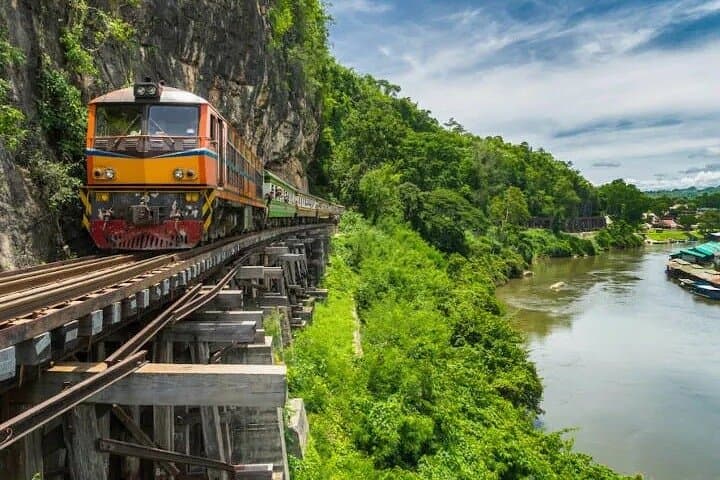
You step off an air-conditioned coach before dawn and the noisy pulse of Bangkok is replaced by humidity, jungle calls and the slow thrust of the River Kwai. The day unfolds as two contrasting landscapes: a limestone jungle where emerald pools collect beneath pounding falls, and a historic iron spine — the Death Railway — that clings to river bends and cliff faces.
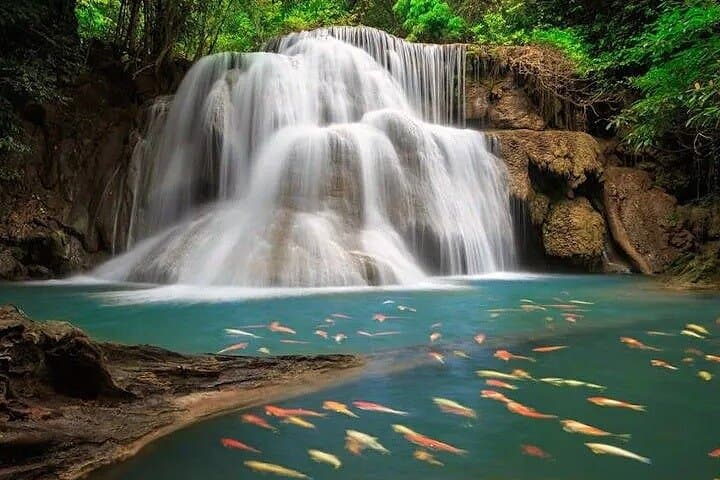
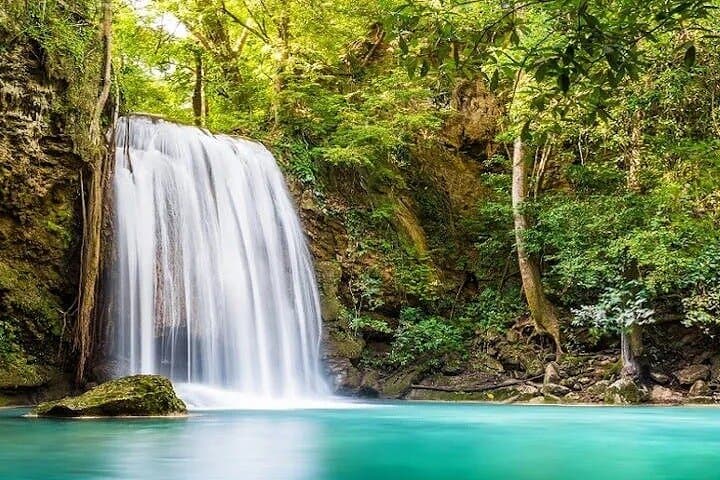
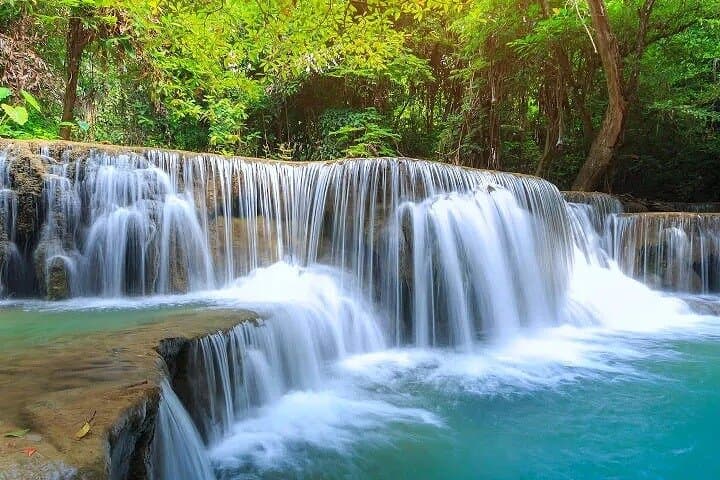
Erawan National Park's seven-tier waterfall is carved from Triassic limestone and fed by clear streams that have cut pools and travertine shelves over millennia. Locals revere the site for its natural beauty, while the nearby River Kwai area bears deeper scars: bridges, caves and tracks tied to the Second World War and the forced labor that built the Burma Railway. Tham Krasae cave and the wartime stations make the past tangible — sleepers, plaques and rusted rails that frame modern reflection.
Expect a mixed day: a 1–2 hour walking loop up and between tiers on uneven stone steps (roughly 1–2 km of trail with intermittent elevation gain), time to swim in cool emerald basins, and a scenic 60–90 minute rail segment to the River Kwai Bridge with river and teak forest views.
Practical edge: bring reef-safe sunscreen, a towel, sturdy water-resistant shoes, and THB cash for park and train fees. Start early to avoid midday heat, carry at least 1–2 liters of water, and budget patience for crowds at the lower tiers. The route pairs active nature with quiet history — a single-day window into Kanchanaburi's wild curves and wartime memory.