THE ADVENTURE COLLECTIVE® · Independent discovery and booking for outdoor travel

Step into Bangkok’s Erawan Museum and stand beneath a three‑headed elephant that guards decades of Thai art. This practical guide explains what to see, when to arrive, and how to make the most of a self‑paced visit.
Step into Bangkok’s Erawan Museum and stand beneath a three‑headed elephant that guards decades of Thai art. This practical guide explains what to see, when to arrive, and how to make the most of a self‑paced visit.
You arrive under a towering three‑headed elephant, its copper skin catching midday sun, and the city hum drops away. The Erawan Museum’s elephant—Airavata in sculptural scale—dominates an open forecourt and signals a visit that alternates between theatrical architecture and intimate artifact rooms.
Verified experiences and guided adventures in the surrounding area.
Operated by Bangkok Travel Agency · Samut Prakan, Samut Prakan
You arrive under a towering three‑headed elephant, its copper skin catching midday sun, and the city hum drops away. The Erawan Museum’s elephant—Airavata in sculptural scale—dominates an open forecourt and signals a visit that alternates between theatrical architecture and intimate artifact rooms.
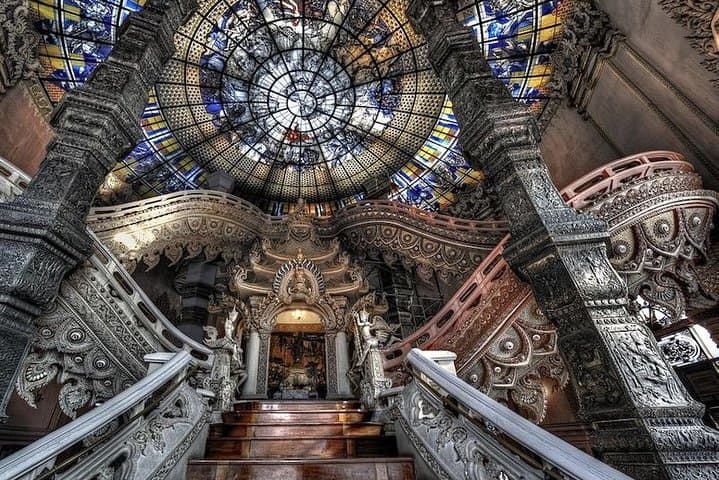
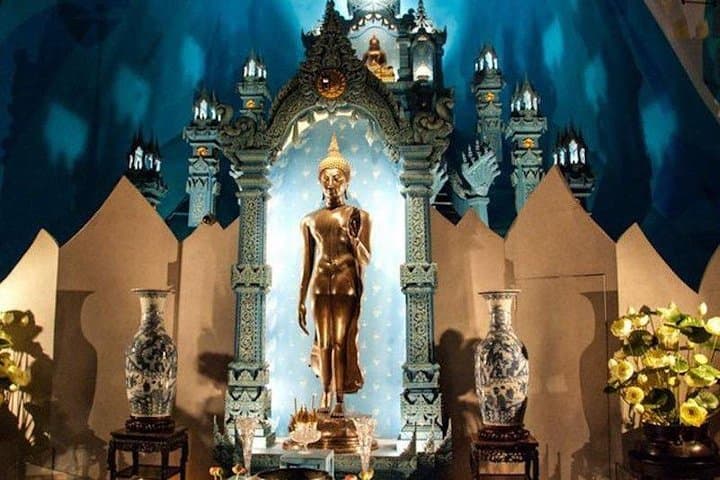
Built by collector Lek Viriyaphant, the museum occupies a compact estate east of central Bangkok and showcases Thai statuary, Chinese ceramics, and European pottery collected over decades. The design layers symbolic spaces: a subterranean hall representing the underworld, a middle gallery of terrestrial artifacts, and an upper shrine whose stained glass dome bathes carved Buddhas in colored light. The site sits on low coastal plain geology shaped by the nearby Chao Phraya estuary; mangrove and river systems historically supported the surrounding communities.
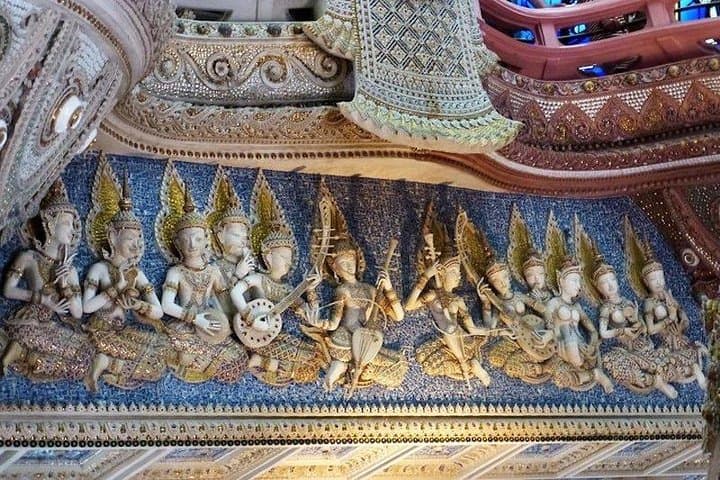
Culturally, the museum bridges devotional display and private collection—expect meticulous craftsmanship, lacquer work, and Indian and Southeast Asian iconography. Locals favor late mornings for softer lighting and quieter galleries; photographers will find reflections and mosaic surfaces that reward patience.
Practical guidance: book a mobile ticket to skip lines and arrive before 17:00 (last entry 17:00; inner area closes 17:30). Wear comfortable shoes for stairs and small elevation changes inside the galleries. Public transport and taxis serve the site from Bangkok; plan 30–60 minutes from central districts depending on traffic. The experience is suitable for all ages and most mobility levels, but some spaces require steps and careful footing. Hydrate, respect signage in sacred areas, and allow two to four hours to move through the complex at a relaxed pace.
easy.
1–4 hours (self‑paced; up to 10 hours allowed by ticket).
Suitable for most visitors; requires ability to climb stairs and stand for periods
The museum accepts visitors between 09:00 and 18:00, with last entry at 17:00 and inner areas closing at 17:30.
Standard admission covers only entry; guided tours may be available through third‑party operators—check locally or book in advance if desired.
Some public areas are accessible, but parts of the museum include stairs and narrow passages; contact the museum for specific accessibility arrangements.
Plan 1–4 hours for a relaxed visit; dedicated art and photography visits can take longer.
Created by collector Lek Viriyaphant, the museum was conceived to preserve Thai art and religious sculpture and is known for its monumental three‑headed elephant structure.
The museum relies on visitor fees and careful exhibit management; follow signs, avoid flash photography where prohibited, and stick to marked paths to reduce wear on delicate artifacts.
Bangkok Travel Agency operates guided outdoor trips and adventures with an emphasis on safety, stewardship, and memorable experiences.
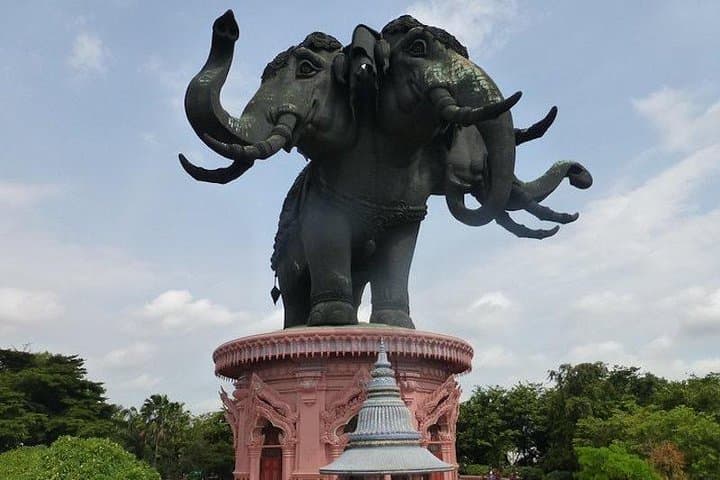
You arrive under a towering three‑headed elephant, its copper skin catching midday sun, and the city hum drops away. The Erawan Museum’s elephant—Airavata in sculptural scale—dominates an open forecourt and signals a visit that alternates between theatrical architecture and intimate artifact rooms.
You arrive under a towering three‑headed elephant, its copper skin catching midday sun, and the city hum drops away. The Erawan Museum’s elephant—Airavata in sculptural scale—dominates an open forecourt and signals a visit that alternates between theatrical architecture and intimate artifact rooms.
Built by collector Lek Viriyaphant, the museum occupies a compact estate east of central Bangkok and showcases Thai statuary, Chinese ceramics, and European pottery collected over decades. The design layers symbolic spaces: a subterranean hall representing the underworld, a middle gallery of terrestrial artifacts, and an upper shrine whose stained glass dome bathes carved Buddhas in colored light. The site sits on low coastal plain geology shaped by the nearby Chao Phraya estuary; mangrove and river systems historically supported the surrounding communities.
Culturally, the museum bridges devotional display and private collection—expect meticulous craftsmanship, lacquer work, and Indian and Southeast Asian iconography. Locals favor late mornings for softer lighting and quieter galleries; photographers will find reflections and mosaic surfaces that reward patience.
Practical guidance: book a mobile ticket to skip lines and arrive before 17:00 (last entry 17:00; inner area closes 17:30). Wear comfortable shoes for stairs and small elevation changes inside the galleries. Public transport and taxis serve the site from Bangkok; plan 30–60 minutes from central districts depending on traffic. The experience is suitable for all ages and most mobility levels, but some spaces require steps and careful footing. Hydrate, respect signage in sacred areas, and allow two to four hours to move through the complex at a relaxed pace.