THE ADVENTURE COLLECTIVE® · Independent discovery and booking for outdoor travel

Stand beneath the giant three-headed elephant and step inside a museum built to display Thailand’s religious art and cultural models. This ticket unlocks a compact, accessible experience that pairs well with nearby open-air heritage sites.
Stand beneath the giant three-headed elephant and step inside a museum built to display Thailand’s religious art and cultural models. This ticket unlocks a compact, accessible experience that pairs well with nearby open-air heritage sites.
You arrive beneath an enormous three-headed elephant whose copper skin gleams against Bangkok’s blue sky — the museum’s outer sculpture is both gatekeeper and landmark. Step through the elephant’s base and vertical galleries open: ground-floor shrines, a middle level of mythic dioramas and a rooftop that offers a calm, reflective view of the surrounding gardens.
Verified experiences and guided adventures in the surrounding area.
Operated by OTO Trip Service · Samut Prakan, Samut Prakan
You arrive beneath an enormous three-headed elephant whose copper skin gleams against Bangkok’s blue sky — the museum’s outer sculpture is both gatekeeper and landmark. Step through the elephant’s base and vertical galleries open: ground-floor shrines, a middle level of mythic dioramas and a rooftop that offers a calm, reflective view of the surrounding gardens.
The Erawan Museum was created by collector and patron Lek Viriyapant to house religious artifacts and model sculptures of Thai culture. Architecturally its centerpiece combines heavy copper work and mirrored mosaics; the three trunks of Erawan (Airavata) reference Hindu-Buddhist cosmology and local devotional practice. Nearby, the grounds and the related Ancient City complex map out Thailand’s historic monuments across open space, so the visit often pairs well with a broader cultural circuit in Samut Prakan.
Practical visit notes: allow 2–3 hours to explore the elephant and interior displays, longer if you include the museum gardens or the nearby Ancient City. The site is wheelchair accessible and served by public transit (Chang Erawan BTS area connections and local buses), and mobile tickets are accepted. Expect warm, humid weather year-round — lightweight, respectful clothing and comfortable shoes make the visit easier. Photography is allowed in many areas but be mindful in shrine spaces. The museum is a compact, well-curated stop that rewards a curious pace, whether you’re focused on religious art, conservation of antiques, or the theatrical presence of the elephant itself.
easy.
4–6 hours.
Suitable for all fitness levels; some standing and stair climbing is required
Yes — the museum lists wheelchair-accessible surfaces and routes; staff can assist with access where needed.
Plan 2–3 hours for the Erawan Museum itself; 4–6 hours if you pair it with nearby attractions like Ancient City.
Yes — mobile or paper tickets are accepted for entry as noted on the ticketing information.
Yes — the area is served by public transit options with local connections; taxis and rideshares are common for the final leg.
The Erawan Museum was commissioned by collector Lek Viriyapant and showcases his assemblage of religious artifacts and cultural models, reflecting mid-20th-century private patronage of public heritage.
The museum emphasizes conservation of ceramics and religious objects; visitors should avoid touching displays and stick to designated paths to protect delicate mosaics and gardens.
OTO Trip Service operates guided outdoor trips and adventures with an emphasis on safety, stewardship, and memorable experiences.
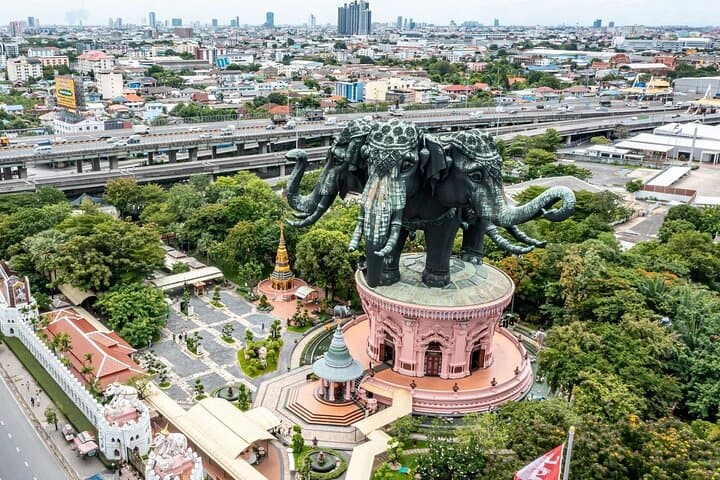
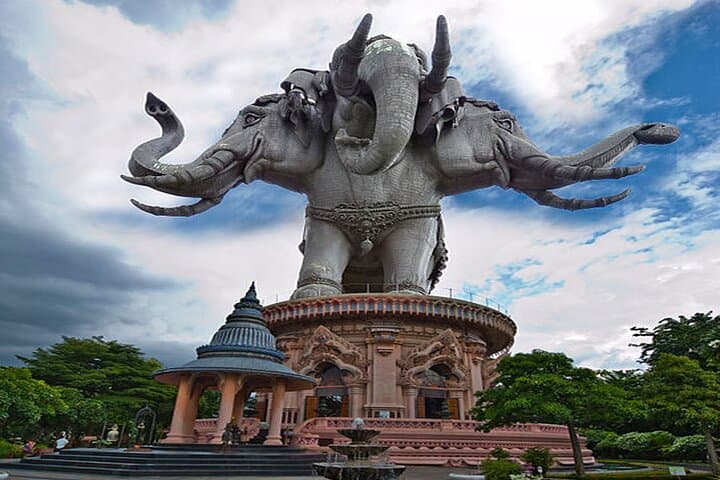
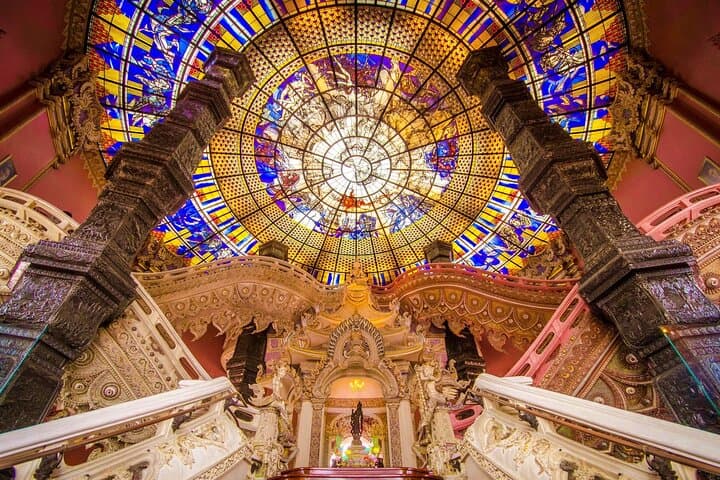
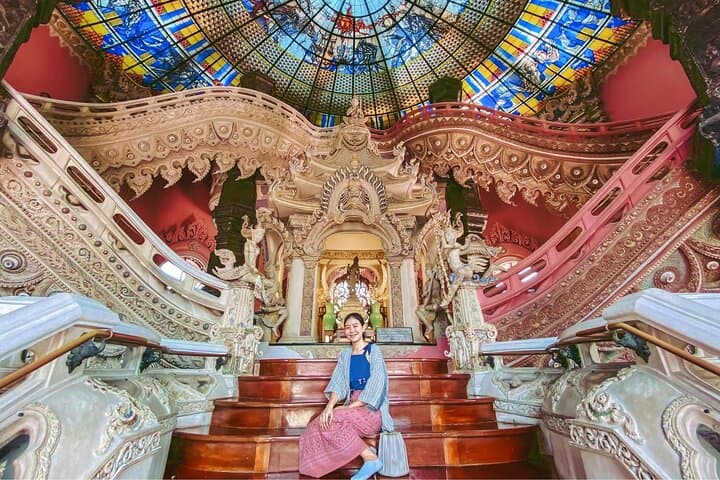
You arrive beneath an enormous three-headed elephant whose copper skin gleams against Bangkok’s blue sky — the museum’s outer sculpture is both gatekeeper and landmark. Step through the elephant’s base and vertical galleries open: ground-floor shrines, a middle level of mythic dioramas and a rooftop that offers a calm, reflective view of the surrounding gardens.
You arrive beneath an enormous three-headed elephant whose copper skin gleams against Bangkok’s blue sky — the museum’s outer sculpture is both gatekeeper and landmark. Step through the elephant’s base and vertical galleries open: ground-floor shrines, a middle level of mythic dioramas and a rooftop that offers a calm, reflective view of the surrounding gardens.
The Erawan Museum was created by collector and patron Lek Viriyapant to house religious artifacts and model sculptures of Thai culture. Architecturally its centerpiece combines heavy copper work and mirrored mosaics; the three trunks of Erawan (Airavata) reference Hindu-Buddhist cosmology and local devotional practice. Nearby, the grounds and the related Ancient City complex map out Thailand’s historic monuments across open space, so the visit often pairs well with a broader cultural circuit in Samut Prakan.
Practical visit notes: allow 2–3 hours to explore the elephant and interior displays, longer if you include the museum gardens or the nearby Ancient City. The site is wheelchair accessible and served by public transit (Chang Erawan BTS area connections and local buses), and mobile tickets are accepted. Expect warm, humid weather year-round — lightweight, respectful clothing and comfortable shoes make the visit easier. Photography is allowed in many areas but be mindful in shrine spaces. The museum is a compact, well-curated stop that rewards a curious pace, whether you’re focused on religious art, conservation of antiques, or the theatrical presence of the elephant itself.