THE ADVENTURE COLLECTIVE® · Independent discovery and booking for outdoor travel

Move through Central Park’s most iconic corners on a focused two-hour walking tour that blends history, architecture and quiet reflection. This route covers Pulitzer Fountain, Bethesda Terrace, the Imagine Mosaic and Strawberry Fields with practical stops and local context.
Move through Central Park’s most iconic corners on a focused two-hour walking tour that blends history, architecture and quiet reflection. This route covers Pulitzer Fountain, Bethesda Terrace, the Imagine Mosaic and Strawberry Fields with practical stops and local context.
The city exhales around you — taxis hum, tourists chatter, and beneath the sound the park pulls focus: a mosaic of stone, water and trees that dares you to slow down. On this two-hour walking journey, participants move at a steady pace through Central Park’s most resonant sites — Pulitzer Fountain, Grand Army Plaza, Bethesda Terrace, the Imagine Mosaic and Strawberry Fields — each stop a chapter of New York’s civic life.
Verified experiences and guided adventures in the surrounding area.
Operated by Opatrip.com USA · New York, New York
The city exhales around you — taxis hum, tourists chatter, and beneath the sound the park pulls focus: a mosaic of stone, water and trees that dares you to slow down. On this two-hour walking journey, participants move at a steady pace through Central Park’s most resonant sites — Pulitzer Fountain, Grand Army Plaza, Bethesda Terrace, the Imagine Mosaic and Strawberry Fields — each stop a chapter of New York’s civic life.
These landmarks carry history in plain sight: Grand Army Plaza’s Beaux-Arts framing reflects the city’s turn-of-century ambitions; Bethesda Terrace, carved in the mid-1800s, reveals Olmsted and Vaux’s intention to give the metropolis a managed wilderness; Strawberry Fields is a late-20th-century memorial that channels cultural memory into quiet. The bedrock underfoot is Manhattan schist, the island’s sturdy spine that allowed skyscrapers to rise and paths to settle into measured grades. Urban culture meets green space here — street performers, morning runners and reflective visitors all share the same routes.
Expect roughly 1.5–2 miles of mostly paved walking with minimal elevation gain (under 100 ft) and a few stone steps at Bethesda. Terrain is stroller- and wheelchair- friendly in many places but includes stairs and compacted gravel on some side paths.
Bring water, a charged phone for photos and transit directions, and shoes built for city surfaces. Start early to avoid midday crowds and use the subway (5, N/Q/R, A/B/C/D nearby) for easy access. The tour balances storytelling with pauses for reflection — practical, paced, and designed so travelers leave knowing a little more about how this park-shaped city makes itself felt.
easy.
2 hours.
Suitable for most fitness levels; requires standing and walking up to 2 miles with occasional steps.
Expect about 1.5–2 miles total with frequent stops; the pace is moderate and suited to a two-hour window.
Yes — the route is generally family- and senior-friendly, though there are some stairs; wheelchair access is available on many but not all paths.
Tours typically run in light rain; bring waterproof layers. Confirm cancellation or rescheduling policies with the operator for severe weather.
Central Park borders multiple subway lines. Use nearby stops on the 5, N/Q/R, or A/B/C/D lines depending on the specific meeting location provided after booking.
Central Park was designed in the 1850s by Frederick Law Olmsted and Calvert Vaux as a deliberate counterpoint to dense urban life; many features date to 19th- and early-20th-century civic projects.
Park stewardship is managed by the Central Park Conservancy; visitors are asked to stay on paths, dispose of litter, and respect memorial plantings to minimize impact.
Opatrip.com USA operates guided outdoor trips and adventures with an emphasis on safety, stewardship, and memorable experiences.

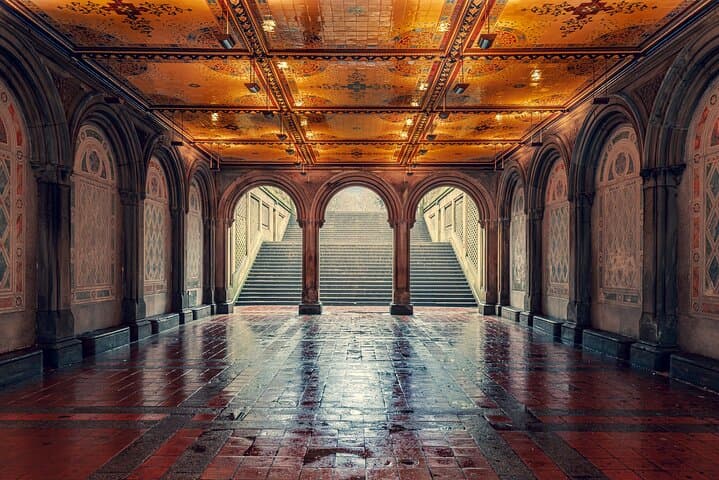
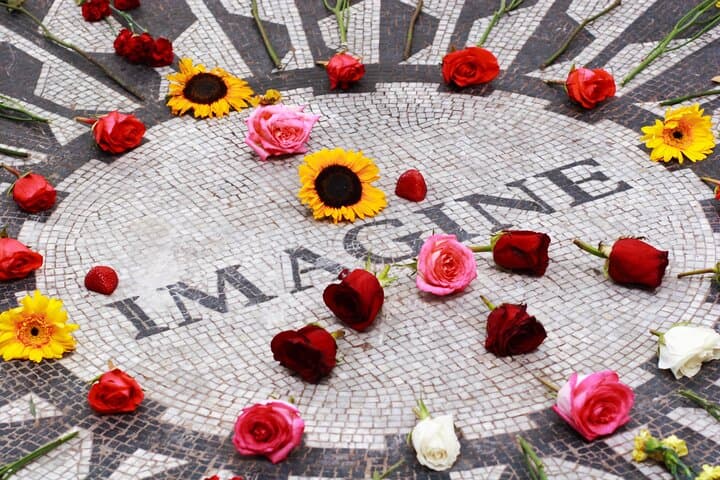

The city exhales around you — taxis hum, tourists chatter, and beneath the sound the park pulls focus: a mosaic of stone, water and trees that dares you to slow down. On this two-hour walking journey, participants move at a steady pace through Central Park’s most resonant sites — Pulitzer Fountain, Grand Army Plaza, Bethesda Terrace, the Imagine Mosaic and Strawberry Fields — each stop a chapter of New York’s civic life.
The city exhales around you — taxis hum, tourists chatter, and beneath the sound the park pulls focus: a mosaic of stone, water and trees that dares you to slow down. On this two-hour walking journey, participants move at a steady pace through Central Park’s most resonant sites — Pulitzer Fountain, Grand Army Plaza, Bethesda Terrace, the Imagine Mosaic and Strawberry Fields — each stop a chapter of New York’s civic life.
These landmarks carry history in plain sight: Grand Army Plaza’s Beaux-Arts framing reflects the city’s turn-of-century ambitions; Bethesda Terrace, carved in the mid-1800s, reveals Olmsted and Vaux’s intention to give the metropolis a managed wilderness; Strawberry Fields is a late-20th-century memorial that channels cultural memory into quiet. The bedrock underfoot is Manhattan schist, the island’s sturdy spine that allowed skyscrapers to rise and paths to settle into measured grades. Urban culture meets green space here — street performers, morning runners and reflective visitors all share the same routes.
Expect roughly 1.5–2 miles of mostly paved walking with minimal elevation gain (under 100 ft) and a few stone steps at Bethesda. Terrain is stroller- and wheelchair- friendly in many places but includes stairs and compacted gravel on some side paths.
Bring water, a charged phone for photos and transit directions, and shoes built for city surfaces. Start early to avoid midday crowds and use the subway (5, N/Q/R, A/B/C/D nearby) for easy access. The tour balances storytelling with pauses for reflection — practical, paced, and designed so travelers leave knowing a little more about how this park-shaped city makes itself felt.