THE ADVENTURE COLLECTIVE® · Independent discovery and booking for outdoor travel

Dock in Kusadasi and trade a few hours ashore for Roman grandeur and Aegean flavors: a private, 4–6 hour tour that pairs Ephesus’ marble streets with Selçuk’s street-food scene. Perfect for cruise passengers who want history, local bites, and a guaranteed return to port.
Dock in Kusadasi and trade a few hours ashore for Roman grandeur and Aegean flavors: a private, 4–6 hour tour that pairs Ephesus’ marble streets with Selçuk’s street-food scene. Perfect for cruise passengers who want history, local bites, and a guaranteed return to port.
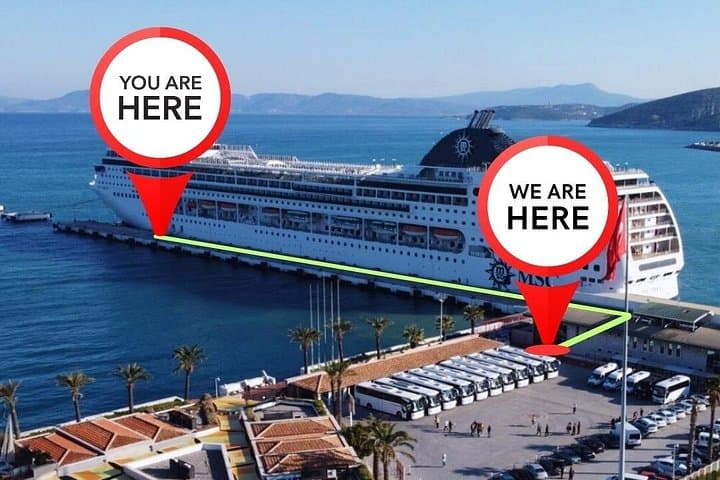
You step off the ship into the warm Aegean light and the minivan hums away from Kusadasi port, the smell of salt and roasting chestnuts fading as ancient stone rises on the horizon.
Verified experiences and guided adventures in the surrounding area.
Operated by The Tour Specialist · Selcuk, Aydın
You step off the ship into the warm Aegean light and the minivan hums away from Kusadasi port, the smell of salt and roasting chestnuts fading as ancient stone rises on the horizon.
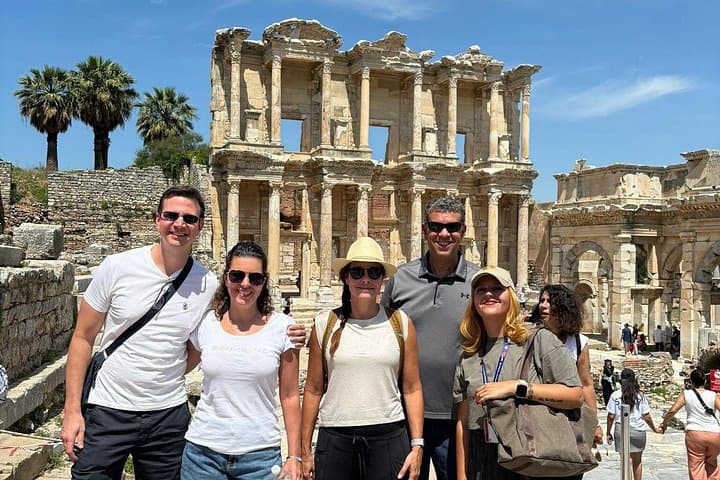
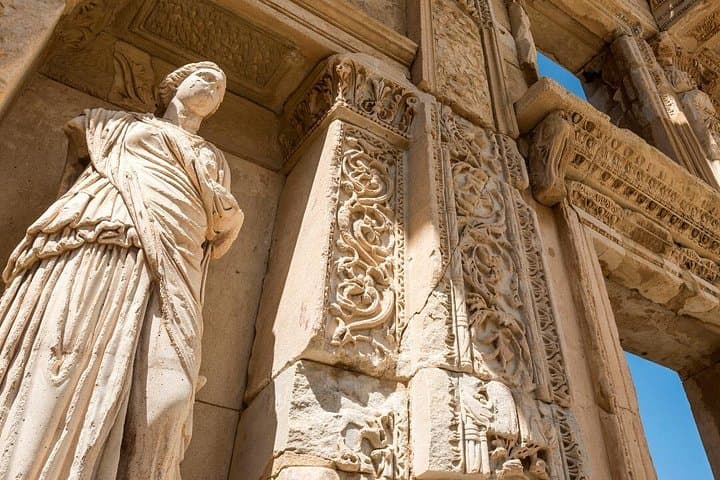
At Ephesus the Marble Road runs underfoot, worn smooth by millennia of feet. The Library of Celsus looms—an ornate façade holding stories of Roman civic power—and the amphitheater’s tiers climb like a stone wave where once 25,000 voices filled the air. Later, Selçuk’s market stalls and narrow streets reintroduce the present: vendors call, ice cream is folded into cones with theatrical skill, and stuffed mussels steam at sea-front carts.
Ephesus began as an Ionian port that became a Roman metropolis; its marble, built from nearby quarries, records seismic shifts and gradual silting that moved the coastline inland. Selçuk carries Seljuk and Ottoman layers—carpet workshops and leather ateliers still working by hand.
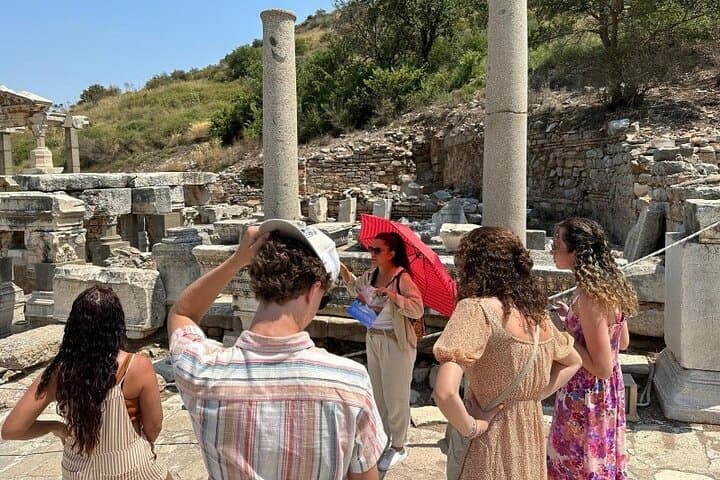
Practically: expect 2–3 km of walking on mostly flat but uneven marble and packed earth, with short flights of stairs at the amphitheater. The tour runs 4–6 hours and returns you to Kusadasi port on time; guides commonly assist with ticket purchase and a compact walking route to maximize highlights.
Pack sun protection, comfortable closed-toe shoes, and small bills for street food. Morning departures beat the heat and crowds; late afternoons offer softer light for photos. Whether you’re driven by history or hunger, this private tour balances efficient logistics with the unhurried pleasures of tasting Aegean Turkey.
easy.
4–6 hours.
Suitable for travelers in normal walking condition; you should be comfortable with 2–3 km of walking on uneven surfaces.
Admission is typically not included; guides usually help visitors purchase tickets on arrival—confirm with the operator before travel.
The tour is listed as wheelchair accessible, but the archaeological site has uneven surfaces and limited ramp access; notify the operator in advance so they can advise and plan accordingly.
Yes—this private itinerary guarantees on-time return to Kusadasi port and coordinates pickups and drop-offs with ship schedules.
Plan for roughly 2–3 km of walking around the main ruins with some stair sections at the amphitheater; pacing is moderate with frequent stops.
Ephesus was a major Ionian city later rebuilt under Roman rule; the Library of Celsus served as both a monument and mausoleum, reflecting the city’s civic wealth.
Ephesus is an active conservation site—stay on marked paths, avoid touching fragile facades, and support local guides who promote preservation.
The Tour Specialist operates guided outdoor trips and adventures with an emphasis on safety, stewardship, and memorable experiences.
You step off the ship into the warm Aegean light and the minivan hums away from Kusadasi port, the smell of salt and roasting chestnuts fading as ancient stone rises on the horizon.
You step off the ship into the warm Aegean light and the minivan hums away from Kusadasi port, the smell of salt and roasting chestnuts fading as ancient stone rises on the horizon.
At Ephesus the Marble Road runs underfoot, worn smooth by millennia of feet. The Library of Celsus looms—an ornate façade holding stories of Roman civic power—and the amphitheater’s tiers climb like a stone wave where once 25,000 voices filled the air. Later, Selçuk’s market stalls and narrow streets reintroduce the present: vendors call, ice cream is folded into cones with theatrical skill, and stuffed mussels steam at sea-front carts.
Ephesus began as an Ionian port that became a Roman metropolis; its marble, built from nearby quarries, records seismic shifts and gradual silting that moved the coastline inland. Selçuk carries Seljuk and Ottoman layers—carpet workshops and leather ateliers still working by hand.
Practically: expect 2–3 km of walking on mostly flat but uneven marble and packed earth, with short flights of stairs at the amphitheater. The tour runs 4–6 hours and returns you to Kusadasi port on time; guides commonly assist with ticket purchase and a compact walking route to maximize highlights.
Pack sun protection, comfortable closed-toe shoes, and small bills for street food. Morning departures beat the heat and crowds; late afternoons offer softer light for photos. Whether you’re driven by history or hunger, this private tour balances efficient logistics with the unhurried pleasures of tasting Aegean Turkey.