THE ADVENTURE COLLECTIVE® · Independent discovery and booking for outdoor travel

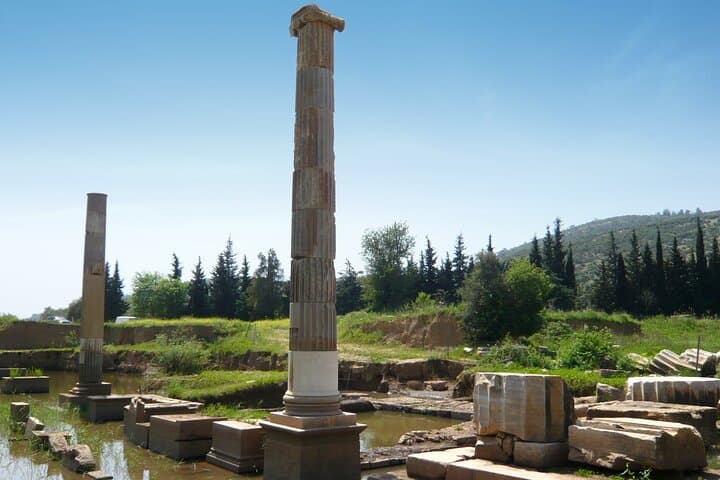
Walk Ephesus’s marble avenues, peer into the Grotto of the Seven Sleepers and stand among the column fragments at Claros on a full-day shore excursion from Kusadasi. Finish with a traditional Turkish lunch and optional hammam for a balanced day of history and relaxation.
Walk Ephesus’s marble avenues, peer into the Grotto of the Seven Sleepers and stand among the column fragments at Claros on a full-day shore excursion from Kusadasi. Finish with a traditional Turkish lunch and optional hammam for a balanced day of history and relaxation.
You step off the ship into Aegean light and the engine hum fades as the guide leads you toward a ribbon of marble and stone that was once a Roman metropolis. Ephesus opens with the Library of Celsus’s carved façade and the Great Theatre’s tiers pressing the skyline; voices seem to hang between columns and alleyways.
Verified experiences and guided adventures in the surrounding area.
Operated by SeaDrop Travel · Kusadasi, Izmir
You step off the ship into Aegean light and the engine hum fades as the guide leads you toward a ribbon of marble and stone that was once a Roman metropolis. Ephesus opens with the Library of Celsus’s carved façade and the Great Theatre’s tiers pressing the skyline; voices seem to hang between columns and alleyways.
This route threads classical history with local legend: the Grotto of the Seven Sleepers recalls an early-Christian story that colored medieval pilgrimage, while Claros carries the quieter, underground rituals of an Apollo oracle—its spring and column fragments suggesting a place of private prophecies rather than civic spectacle. Geologically the region is limestone and marl carved by Aegean winds and seismic shifts, which created the sheltered harbors that made Ephesus wealthy.
Culturally expect a mixture of Roman engineering, Hellenistic temples, and Ottoman touches in nearby towns; a stop for traditional Turkish lunch offers familiar flavors—grilled vegetables, meze and fresh bread—before optional cleansing at a hammam.
Practical guidance: wear closed, cushioned walking shoes—the excavated lanes are uneven and can be hot; bring a refillable water bottle, sunscreen and a hat. The tour runs about 6–7 hours and includes mobility-friendly options but requires repeated standing and steps in the theatre and terrace areas. Photography is allowed in most outdoor areas but respect signs and avoid stepping off marked paths to protect fragile mosaics and ruins. Time your visit for morning or late afternoon light for cooler temperatures and stronger photos.
easy.
6–7 hours.
Suitable for travelers of average fitness who can stand and walk for several hours and manage short flights of steps.
The tour is about 6–7 hours and typically includes guided visits to Ephesus, the Seven Sleepers cave, Claros, a traditional Turkish lunch, port pickup and drop-off, and the option to add a Turkish bath.
The tour is family-friendly but involves walking on uneven surfaces and steps—those with limited mobility should check accessibility options and inform the operator in advance.
Yes—many operators offer the hammam as an optional add-on; notify your guide early to reserve time at the end of the tour.
Admission to listed sites is usually included in shore excursions, but confirm with the operator as some options (like private Terrace Houses) may require separate tickets.
Ephesus was a major Roman port and commercial center; Claros was a quieter Greek oracle dedicated to Apollo, attracting visitors for private prophecy rather than civic spectacle.
Ephesus is a protected archaeological site with ongoing conservation—stay on designated paths, follow guide instructions, and avoid touching fragile surfaces to limit erosion and wear.
SeaDrop Travel operates guided outdoor trips and adventures with an emphasis on safety, stewardship, and memorable experiences.


You step off the ship into Aegean light and the engine hum fades as the guide leads you toward a ribbon of marble and stone that was once a Roman metropolis. Ephesus opens with the Library of Celsus’s carved façade and the Great Theatre’s tiers pressing the skyline; voices seem to hang between columns and alleyways.
You step off the ship into Aegean light and the engine hum fades as the guide leads you toward a ribbon of marble and stone that was once a Roman metropolis. Ephesus opens with the Library of Celsus’s carved façade and the Great Theatre’s tiers pressing the skyline; voices seem to hang between columns and alleyways.
This route threads classical history with local legend: the Grotto of the Seven Sleepers recalls an early-Christian story that colored medieval pilgrimage, while Claros carries the quieter, underground rituals of an Apollo oracle—its spring and column fragments suggesting a place of private prophecies rather than civic spectacle. Geologically the region is limestone and marl carved by Aegean winds and seismic shifts, which created the sheltered harbors that made Ephesus wealthy.
Culturally expect a mixture of Roman engineering, Hellenistic temples, and Ottoman touches in nearby towns; a stop for traditional Turkish lunch offers familiar flavors—grilled vegetables, meze and fresh bread—before optional cleansing at a hammam.
Practical guidance: wear closed, cushioned walking shoes—the excavated lanes are uneven and can be hot; bring a refillable water bottle, sunscreen and a hat. The tour runs about 6–7 hours and includes mobility-friendly options but requires repeated standing and steps in the theatre and terrace areas. Photography is allowed in most outdoor areas but respect signs and avoid stepping off marked paths to protect fragile mosaics and ruins. Time your visit for morning or late afternoon light for cooler temperatures and stronger photos.