THE ADVENTURE COLLECTIVE® · Independent discovery and booking for outdoor travel

Explore Ephesus on a focused small-group shore excursion from Kuşadası. Walk marble streets, stand in the Great Theater, visit the House of the Virgin Mary and return to port within a well-timed 4–6 hour schedule.
Explore Ephesus on a focused small-group shore excursion from Kuşadası. Walk marble streets, stand in the Great Theater, visit the House of the Virgin Mary and return to port within a well-timed 4–6 hour schedule.
You step off the gangway into the bright Aegean light and the guide is waiting — a compact van idles by the quay, a small group of travelers sorting maps and cameras. The road to Selçuk slides past olive groves; the ruins of Ephesus rise like a city paused in motion, white marble streets catching the sun.
Verified experiences and guided adventures in the surrounding area.
Operated by Goodman Tours · Selçuk, Aydın
You step off the gangway into the bright Aegean light and the guide is waiting — a compact van idles by the quay, a small group of travelers sorting maps and cameras. The road to Selçuk slides past olive groves; the ruins of Ephesus rise like a city paused in motion, white marble streets catching the sun.
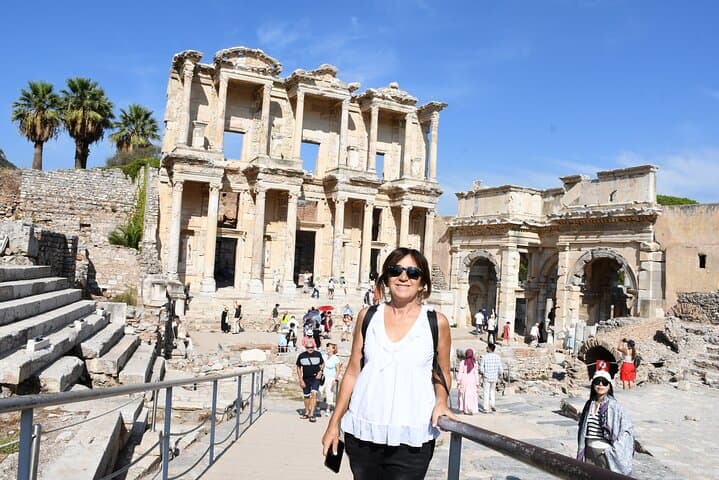
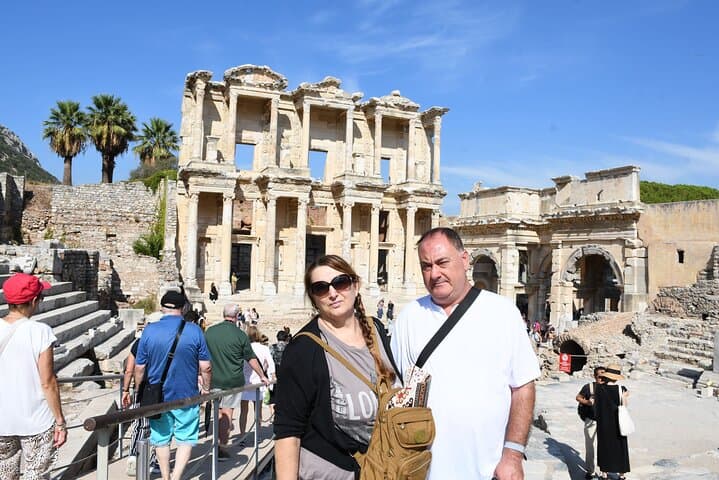
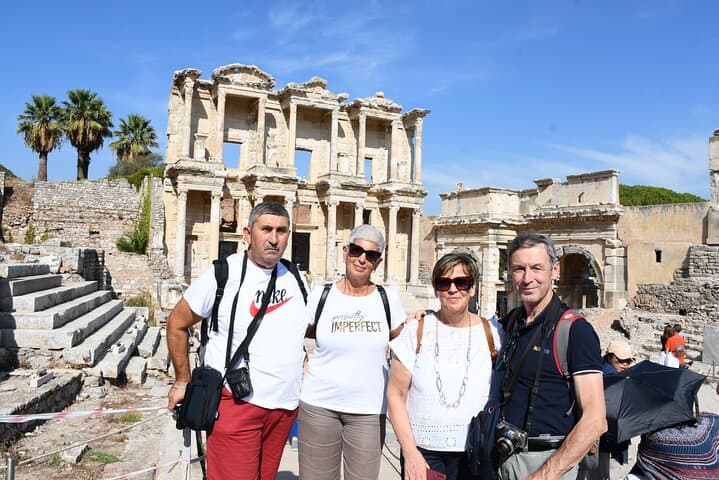
Walk the same flagstones where traders and orators once moved. The Great Theater looms, its tiers still holding the shape of crowds; the Library of Celsus stands like a carved manifesto to learning. Across town, the House of the Virgin Mary offers a quieter, more recent layer of faith and pilgrimage, while the nearby footprint of the Temple of Artemis reminds you this landscape hosted one of the ancient world’s wonders. Selçuk’s Ottoman-era İsa Bey Mosque and the local carpet-weaving school add living culture to the archaeological script.
Practically: expect 4–6 hours door-to-door with a maximum of ten guests, private transport, and a guided walk of roughly 2–3 km across uneven, often sun-baked stone. Elevation change is minimal but surfaces are irregular; sturdy, closed shoes matter. Midday in summer brings strong sun — water, sunscreen and a hat are non-negotiable. The itinerary includes a sit-down lunch at a local restaurant attached to a weaving school and timed return to Kuşadası port well before ship departure.
This outing pairs big-name ruins with compact logistics: you get context-rich interpretation without the crush of mass tours, but plan for limited shade, dust, and historic-site rules that require respectful, low-impact behavior.
easy.
4–6 hours.
Suitable for travelers who can walk 2–3 km over uneven stone surfaces and manage several flights of steps; not strenuous.
Entrance fees are typically not included in this listing; check your booking details and bring local currency or card as required.
Yes — the itinerary is designed to return you to Kuşadası cruise port well before your ship’s scheduled departure; confirm pickup time when booking.
The route includes uneven stone streets and steps; it’s not recommended for guests with serious mobility limitations or spinal problems.
This particular offering includes a private English-speaking guide; confirm if other languages are required at booking.
Ephesus was a major Greco-Roman port and commercial center; its Library of Celsus and Great Theater reflect civic and cultural life from the Hellenistic through Roman periods.
High visitor numbers strain exposed masonry and mosaics; stick to marked paths, avoid climbing on ruins, and support local conservation initiatives when available.
Goodman Tours operates guided outdoor trips and adventures with an emphasis on safety, stewardship, and memorable experiences.
You step off the gangway into the bright Aegean light and the guide is waiting — a compact van idles by the quay, a small group of travelers sorting maps and cameras. The road to Selçuk slides past olive groves; the ruins of Ephesus rise like a city paused in motion, white marble streets catching the sun.
You step off the gangway into the bright Aegean light and the guide is waiting — a compact van idles by the quay, a small group of travelers sorting maps and cameras. The road to Selçuk slides past olive groves; the ruins of Ephesus rise like a city paused in motion, white marble streets catching the sun.
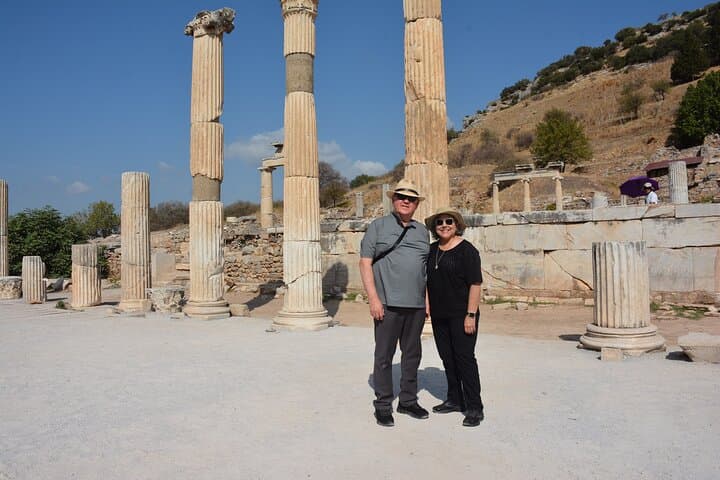
Walk the same flagstones where traders and orators once moved. The Great Theater looms, its tiers still holding the shape of crowds; the Library of Celsus stands like a carved manifesto to learning. Across town, the House of the Virgin Mary offers a quieter, more recent layer of faith and pilgrimage, while the nearby footprint of the Temple of Artemis reminds you this landscape hosted one of the ancient world’s wonders. Selçuk’s Ottoman-era İsa Bey Mosque and the local carpet-weaving school add living culture to the archaeological script.
Practically: expect 4–6 hours door-to-door with a maximum of ten guests, private transport, and a guided walk of roughly 2–3 km across uneven, often sun-baked stone. Elevation change is minimal but surfaces are irregular; sturdy, closed shoes matter. Midday in summer brings strong sun — water, sunscreen and a hat are non-negotiable. The itinerary includes a sit-down lunch at a local restaurant attached to a weaving school and timed return to Kuşadası port well before ship departure.
This outing pairs big-name ruins with compact logistics: you get context-rich interpretation without the crush of mass tours, but plan for limited shade, dust, and historic-site rules that require respectful, low-impact behavior.