THE ADVENTURE COLLECTIVE® · Independent discovery and booking for outdoor travel

Explore Ephesus at your own pace with an audio guide and map. Walk marble streets past the Library of Celsus, grand theater and Trajan Fountain while learning the layered history of a Roman metropolis.
Explore Ephesus at your own pace with an audio guide and map. Walk marble streets past the Library of Celsus, grand theater and Trajan Fountain while learning the layered history of a Roman metropolis.
You step through a stone gate and the Aegean breeze nudges you along marble streets worn smooth by centuries of sandals and carts. Columns rise like memory markers; voices from your iPod® sketch scenes of markets, orators and processions as you move at your own pace.
Verified experiences and guided adventures in the surrounding area.
Operated by Deren Koray Tourism · Selçuk, Izmir
You step through a stone gate and the Aegean breeze nudges you along marble streets worn smooth by centuries of sandals and carts. Columns rise like memory markers; voices from your iPod® sketch scenes of markets, orators and processions as you move at your own pace.
Ephesus was once a major port and the Roman world’s commercial hub, its layers of occupation visible in masonry and reused blocks. Geologically the site sits on alluvial plains that slowly reclaimed the ancient harbor, leaving the city inland; the marble and volcanic stone used in public buildings betray regional quarrying and Roman engineering. Culturally this was Artemis’s city—the temple once here ranked among the ancient wonders—and later an important early Christian center, leaving inscriptions, baths and a grand theater that still shapes the valley’s acoustics.
Local insights: arrive early to avoid mid-day crowds and follow the arcadian Republic axis from the Magnesia Gate to the Library of Celsus for the clearest narrative. Note the directional signage and your map; several side alleys lead to well-preserved mosaics and quieter viewpoints.
Practical guidance: the tour is three hours on mostly level but uneven stone and packed-earth paths—bring sturdy shoes, a refillable water bottle and sun protection. The audio guide and map let you skip guided schedules; admission is typically included with this package, and many routes are wheelchair-accessible though some stepped entrances are steep. Plan logistics around peak heat (late morning or late afternoon) and allow time to visit the on-site museum in Selçuk afterward.
moderate.
3 hours.
Moderate fitness: able to walk 2–4 miles on uneven surfaces and negotiate occasional steps.
This tour description indicates admission is included; confirm at booking and bring your mobile ticket for entry.
Many main routes are wheelchair-accessible and transportation options are listed as accessible, but some steps and uneven sections may require assistance.
Yes—the iPod®-style audio and map let you stop, skip sections and explore side alleys at your own pace.
Basic facilities and vendors are available near the entrance and in nearby Selçuk; plan to use facilities before starting the walking route.
Ephesus was a major Ionian and later Roman city, famed for the Temple of Artemis—one of the ancient world’s wonders—and for its Celsus Library, built in the 2nd century CE as a monumental tomb and reading room.
Ephesus is managed to balance tourism and preservation; stay on marked paths to protect exposed mosaics and avoid touching carved surfaces to limit erosion.
Deren Koray Tourism operates guided outdoor trips and adventures with an emphasis on safety, stewardship, and memorable experiences.
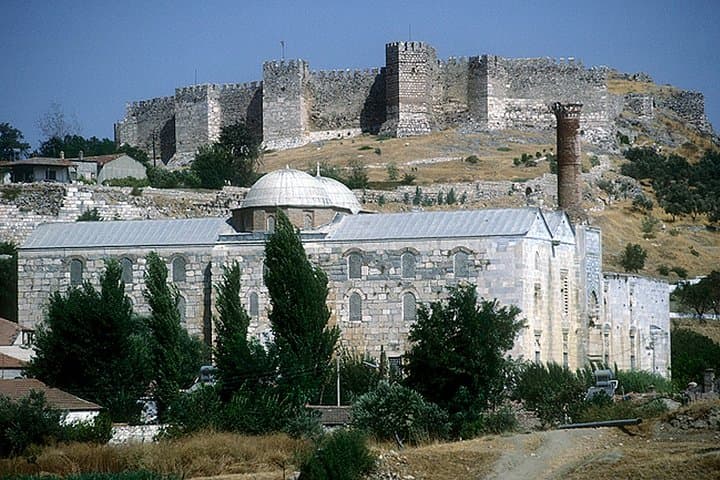


You step through a stone gate and the Aegean breeze nudges you along marble streets worn smooth by centuries of sandals and carts. Columns rise like memory markers; voices from your iPod® sketch scenes of markets, orators and processions as you move at your own pace.
You step through a stone gate and the Aegean breeze nudges you along marble streets worn smooth by centuries of sandals and carts. Columns rise like memory markers; voices from your iPod® sketch scenes of markets, orators and processions as you move at your own pace.
Ephesus was once a major port and the Roman world’s commercial hub, its layers of occupation visible in masonry and reused blocks. Geologically the site sits on alluvial plains that slowly reclaimed the ancient harbor, leaving the city inland; the marble and volcanic stone used in public buildings betray regional quarrying and Roman engineering. Culturally this was Artemis’s city—the temple once here ranked among the ancient wonders—and later an important early Christian center, leaving inscriptions, baths and a grand theater that still shapes the valley’s acoustics.
Local insights: arrive early to avoid mid-day crowds and follow the arcadian Republic axis from the Magnesia Gate to the Library of Celsus for the clearest narrative. Note the directional signage and your map; several side alleys lead to well-preserved mosaics and quieter viewpoints.
Practical guidance: the tour is three hours on mostly level but uneven stone and packed-earth paths—bring sturdy shoes, a refillable water bottle and sun protection. The audio guide and map let you skip guided schedules; admission is typically included with this package, and many routes are wheelchair-accessible though some stepped entrances are steep. Plan logistics around peak heat (late morning or late afternoon) and allow time to visit the on-site museum in Selçuk afterward.