THE ADVENTURE COLLECTIVE® · Independent discovery and booking for outdoor travel

Walk where Romans once traded and pilgrims prayed: a private shore excursion from Kusadasi that pairs the UNESCO site of Ephesus with the legendary Temple of Artemis and local cultural stops. Expect guided history, uneven marble streets, and hilltop views back to the Aegean.
Walk where Romans once traded and pilgrims prayed: a private shore excursion from Kusadasi that pairs the UNESCO site of Ephesus with the legendary Temple of Artemis and local cultural stops. Expect guided history, uneven marble streets, and hilltop views back to the Aegean.
You step off the gangway and into Aegean light: white stone cliffs, distant gull calls, and a guide holding a placard with your name. A short coastal drive moves inland across the alluvial plain, and the ruins of Ephesus appear like a city that refused to vanish—marble steps worn smooth by centuries of feet and a theater that holds the hush of past crowds.
Verified experiences and guided adventures in the surrounding area.
Operated by Turkey Experiences · Selcuk, Izmir
You step off the gangway and into Aegean light: white stone cliffs, distant gull calls, and a guide holding a placard with your name. A short coastal drive moves inland across the alluvial plain, and the ruins of Ephesus appear like a city that refused to vanish—marble steps worn smooth by centuries of feet and a theater that holds the hush of past crowds.
Ephesus was a major Ionian harbor and later a Roman metropolis; its marble façades and grid streets reflect Greek urban planning and Roman prosperity. The Temple of Artemis, once on the local floodplain, was counted among the Seven Wonders of the Ancient World—only fragments remain, but the site's reputation still commands attention. Geologically, the area sits on rich sediments from the Küçük Menderes river, which shifted the coastline over millennia and moved Ephesus inland.
Culturally the route threads through Selçuk—home to a compact archaeology museum and the House of the Virgin Mary on the slopes of the Aladag. Local guides fold myth, scripture and excavation updates into the narrative, making the stones speak of trade, religion and daily life.
Practical guidance: this private shore tour runs about 4–5 hours with 1–2 miles of walking on uneven, cobbled surfaces; wear sturdy shoes and bring sun protection and water. Entrance fees are usually paid to the guide on the day; carry a small amount of cash or card. Mornings are cooler and less crowded; afternoons bring harsher sun and more cruise-ship traffic. If you have mobility issues, ask about reduced walking options—parts of the site have stairs and narrow lanes. Follow posted paths to help preserve fragile mosaics and fresco fragments—these ruins are fragile and demand respectful tread.
moderate.
4–5 hours.
Moderate fitness—able to walk 1–2 miles on uneven, sometimes stepped terrain and stand during explanations.
The guide typically holds pre-paid tickets to speed entry, but you may be asked to reimburse entrance fees to the guide on the day by cash or card.
From Kusadasi port it’s roughly a 20–30 minute drive; from Izmir it can take 1–1.5 hours depending on traffic and docking location.
Yes—this itinerary usually includes a stop at the House of the Virgin Mary and the Selcuk Archaeology Museum as part of the full excursion.
The operator advises moderate fitness; because the route includes stairs and uneven ground, it’s not recommended for travelers with serious back or cardiovascular issues—consult your doctor and inform the operator ahead of booking.
Ephesus was a major Ionian port and Roman provincial capital; the Temple of Artemis, once nearby, was famed throughout antiquity as one of the Seven Wonders.
The site is vulnerable to erosion and visitor wear—stay on marked paths, avoid touching frescoes or mosaics, and follow local guide instructions to minimize impact.
Turkey Experiences operates guided outdoor trips and adventures with an emphasis on safety, stewardship, and memorable experiences.
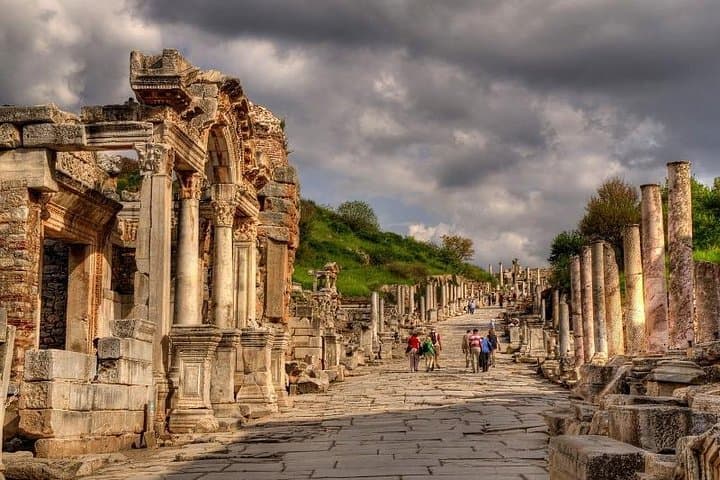
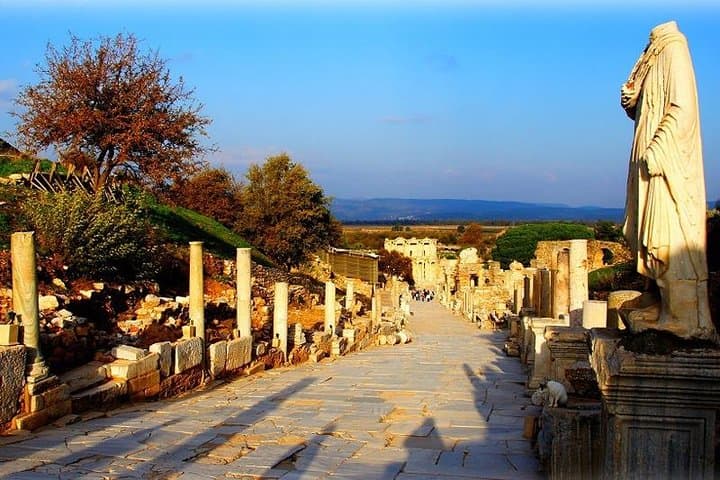
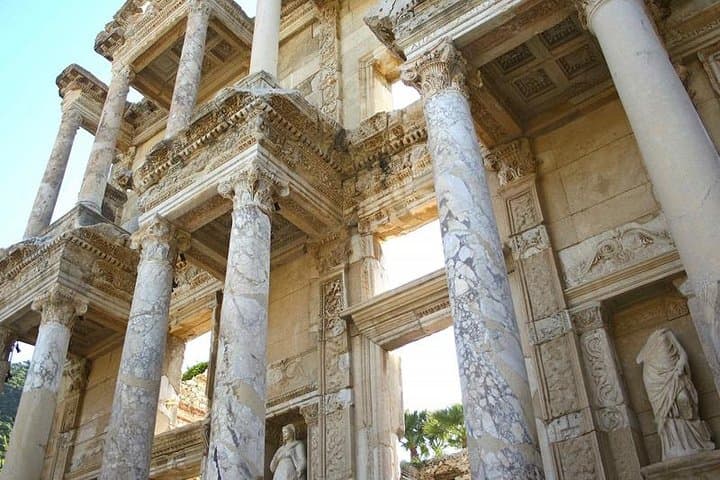
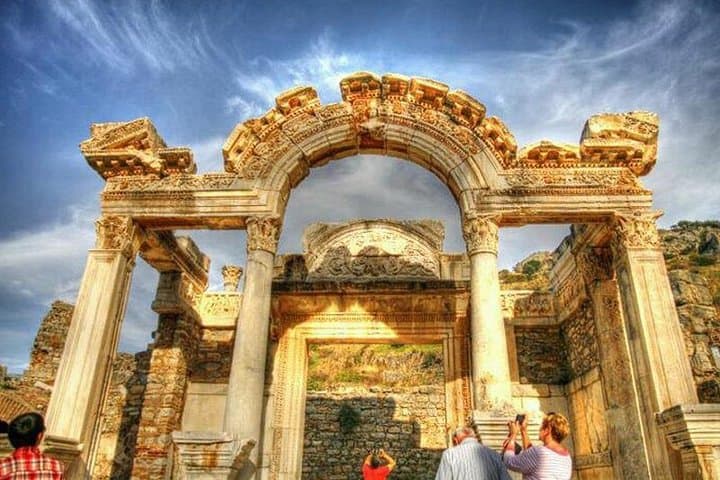
You step off the gangway and into Aegean light: white stone cliffs, distant gull calls, and a guide holding a placard with your name. A short coastal drive moves inland across the alluvial plain, and the ruins of Ephesus appear like a city that refused to vanish—marble steps worn smooth by centuries of feet and a theater that holds the hush of past crowds.
You step off the gangway and into Aegean light: white stone cliffs, distant gull calls, and a guide holding a placard with your name. A short coastal drive moves inland across the alluvial plain, and the ruins of Ephesus appear like a city that refused to vanish—marble steps worn smooth by centuries of feet and a theater that holds the hush of past crowds.
Ephesus was a major Ionian harbor and later a Roman metropolis; its marble façades and grid streets reflect Greek urban planning and Roman prosperity. The Temple of Artemis, once on the local floodplain, was counted among the Seven Wonders of the Ancient World—only fragments remain, but the site's reputation still commands attention. Geologically, the area sits on rich sediments from the Küçük Menderes river, which shifted the coastline over millennia and moved Ephesus inland.
Culturally the route threads through Selçuk—home to a compact archaeology museum and the House of the Virgin Mary on the slopes of the Aladag. Local guides fold myth, scripture and excavation updates into the narrative, making the stones speak of trade, religion and daily life.
Practical guidance: this private shore tour runs about 4–5 hours with 1–2 miles of walking on uneven, cobbled surfaces; wear sturdy shoes and bring sun protection and water. Entrance fees are usually paid to the guide on the day; carry a small amount of cash or card. Mornings are cooler and less crowded; afternoons bring harsher sun and more cruise-ship traffic. If you have mobility issues, ask about reduced walking options—parts of the site have stairs and narrow lanes. Follow posted paths to help preserve fragile mosaics and fresco fragments—these ruins are fragile and demand respectful tread.