THE ADVENTURE COLLECTIVE® · Independent discovery and booking for outdoor travel

Two compact days travel from Istanbul to two of western Turkey’s headline sites: the marble avenues of Ephesus and the white travertines of Pamukkale. This guided tour pairs archaeology, thermal geology and a seaside overnight in Kuşadası.
Two compact days travel from Istanbul to two of western Turkey’s headline sites: the marble avenues of Ephesus and the white travertines of Pamukkale. This guided tour pairs archaeology, thermal geology and a seaside overnight in Kuşadası.
A pre-dawn pickup in Istanbul gives way to a short flight and the soft Aegean light on arrival — you step from the airport into Selçuk’s low-slung streets and a guide who lays out two days of layered history and limestone. In Ephesus the city slopes downhill, a Roman avenue that opens past the Odeon to the Celsus Library and a theater that still holds the shape of crowds long gone; stone steps underfoot remind you this was once a center of trade and faith.
Verified experiences and guided adventures in the surrounding area.
Operated by Tours Packages · Selçuk, İzmir
A pre-dawn pickup in Istanbul gives way to a short flight and the soft Aegean light on arrival — you step from the airport into Selçuk’s low-slung streets and a guide who lays out two days of layered history and limestone. In Ephesus the city slopes downhill, a Roman avenue that opens past the Odeon to the Celsus Library and a theater that still holds the shape of crowds long gone; stone steps underfoot remind you this was once a center of trade and faith.
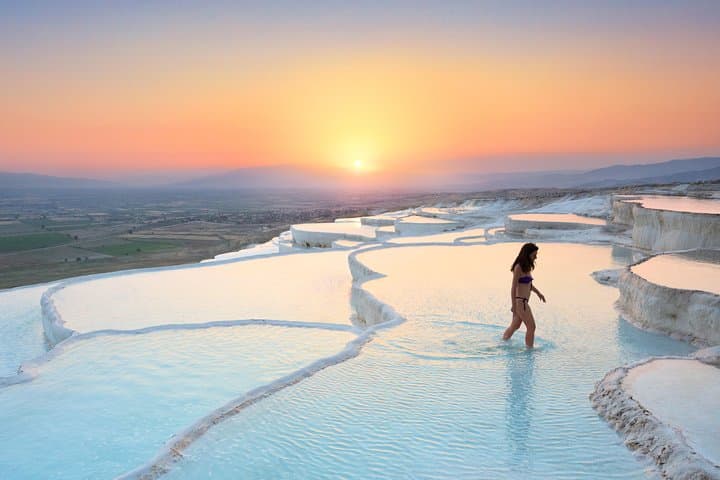
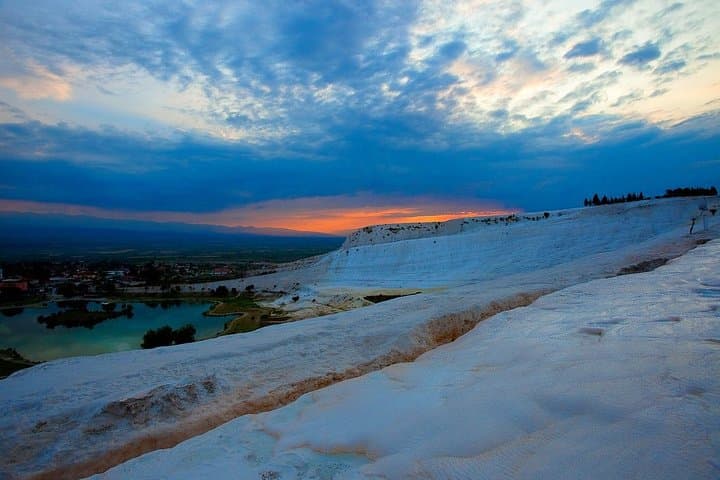
Not far away, Hierapolis and Pamukkale reverse the script: thermal waters have built terraces of white travertine over millennia. Geology here is active and readable — dissolved calcium carbonate precipitates into pools and shelves, forming surfaces you’re asked to tread barefoot to preserve. Cultural threads run through both sites: a House of the Virgin Mary revered by pilgrims, the near-ruin of the Temple of Artemis once counted among the ancient wonders, and the Greek village of Şirince with its small, living traditions.
Practical notes follow the scene: expect several hours of walking each day (Ephesus explores roughly 1–2 km through ruins; Pamukkale asks for about 0.5 miles over the terraces). Bring sun protection, a swimsuit for Cleopatra’s Pool, and shoes that are easy to shed. The tour moves by coach between sites with an overnight in Kuşadası; travel windows include a short domestic flight each way. For travelers who want archaeology, thermal geology, and compact cultural immersion in two days, this itinerary delivers a high-impact, well-paced experience.
moderate.
2 days (approx. 48 hours).
Light-to-moderate fitness; able to walk several hours over uneven ground and climb steps without assistance.
Yes—management requires shoes off on the natural travertine terraces to prevent damage; you can wear thin socks afterward but avoid sunscreen-soaked skin on the pools.
The tour is family-friendly but involves uneven surfaces, steps and some walking—those with limited mobility should check specific site access and inform the operator ahead of booking.
Cleopatra’s Pool is a restored thermal pool with submerged Roman columns; it’s commercially managed and generally safe, but check water temperature and any medical advisories before entering.
Expect about a 3-hour coach transfer each way from Kuşadası to Pamukkale, depending on traffic and stops en route.
Ephesus was a major Roman port and civic center; the Celsus Library and Great Theater are late-Hellenistic to Roman-era highlights, while Hierapolis grew as a thermal spa town in antiquity.
Pamukkale’s fragile calcite terraces require barefoot access and visitor limits to protect ongoing mineral deposition; avoid soaps and lotions in thermal waters to reduce contamination.
Tours Packages operates guided outdoor trips and adventures with an emphasis on safety, stewardship, and memorable experiences.
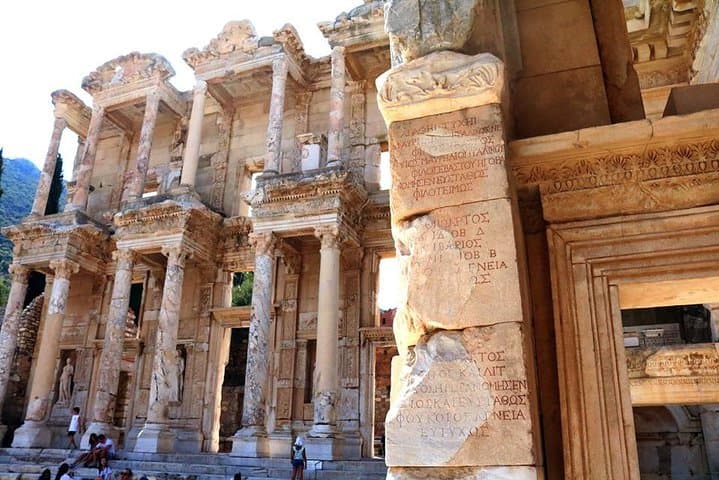
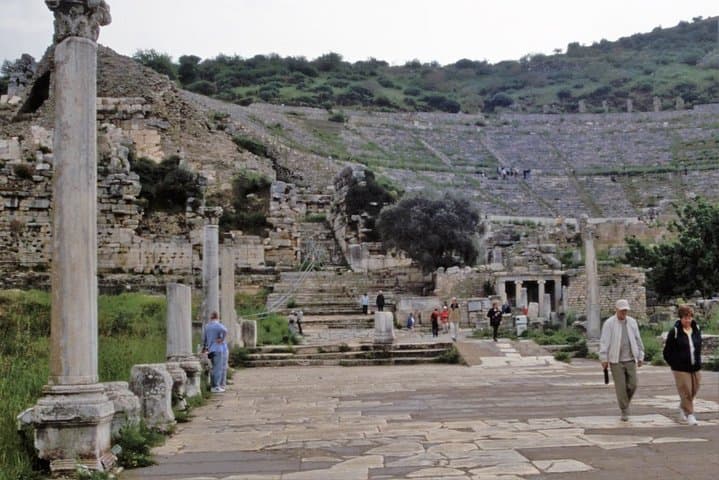
A pre-dawn pickup in Istanbul gives way to a short flight and the soft Aegean light on arrival — you step from the airport into Selçuk’s low-slung streets and a guide who lays out two days of layered history and limestone. In Ephesus the city slopes downhill, a Roman avenue that opens past the Odeon to the Celsus Library and a theater that still holds the shape of crowds long gone; stone steps underfoot remind you this was once a center of trade and faith.
A pre-dawn pickup in Istanbul gives way to a short flight and the soft Aegean light on arrival — you step from the airport into Selçuk’s low-slung streets and a guide who lays out two days of layered history and limestone. In Ephesus the city slopes downhill, a Roman avenue that opens past the Odeon to the Celsus Library and a theater that still holds the shape of crowds long gone; stone steps underfoot remind you this was once a center of trade and faith.
Not far away, Hierapolis and Pamukkale reverse the script: thermal waters have built terraces of white travertine over millennia. Geology here is active and readable — dissolved calcium carbonate precipitates into pools and shelves, forming surfaces you’re asked to tread barefoot to preserve. Cultural threads run through both sites: a House of the Virgin Mary revered by pilgrims, the near-ruin of the Temple of Artemis once counted among the ancient wonders, and the Greek village of Şirince with its small, living traditions.
Practical notes follow the scene: expect several hours of walking each day (Ephesus explores roughly 1–2 km through ruins; Pamukkale asks for about 0.5 miles over the terraces). Bring sun protection, a swimsuit for Cleopatra’s Pool, and shoes that are easy to shed. The tour moves by coach between sites with an overnight in Kuşadası; travel windows include a short domestic flight each way. For travelers who want archaeology, thermal geology, and compact cultural immersion in two days, this itinerary delivers a high-impact, well-paced experience.