THE ADVENTURE COLLECTIVE® · Independent discovery and booking for outdoor travel

Fly from Istanbul for a compact two-day journey through Ephesus’s marble streets and Pamukkale’s calcium terraces. This guided tour pairs archaeology with thermal geology for a focused Aegean experience.
Fly from Istanbul for a compact two-day journey through Ephesus’s marble streets and Pamukkale’s calcium terraces. This guided tour pairs archaeology with thermal geology for a focused Aegean experience.
You step off the short flight into Aegean light and the morning smells of olives and sea salt, bound for ruins and white terraces that read like two different eras of the same country.
Verified experiences and guided adventures in the surrounding area.
Operated by Before Travel Agency · Selçuk, İzmir Province
You step off the short flight into Aegean light and the morning smells of olives and sea salt, bound for ruins and white terraces that read like two different eras of the same country.
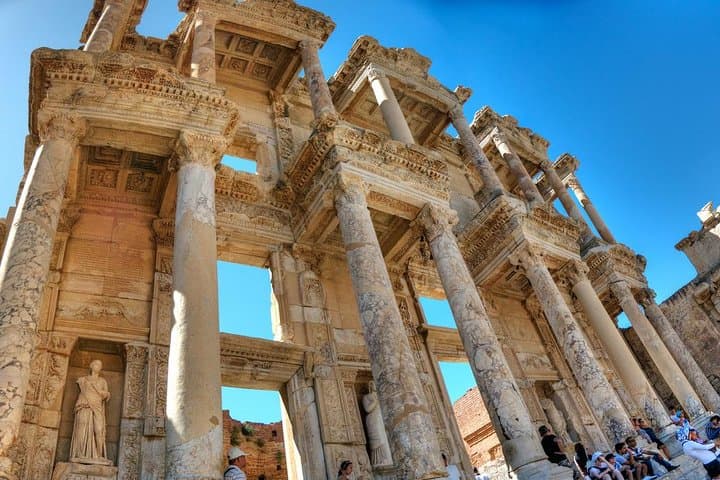
Day one walks you through Ephesus: marble streets polished by centuries of sandals, the Celsus façade towering like a chapter headline, and the great theater where orators once pushed crowds to hush. The site sits on Roman planning layered over Hellenistic foundations; every column and mosaic is a footnote to trade, law and urban life in antiquity.
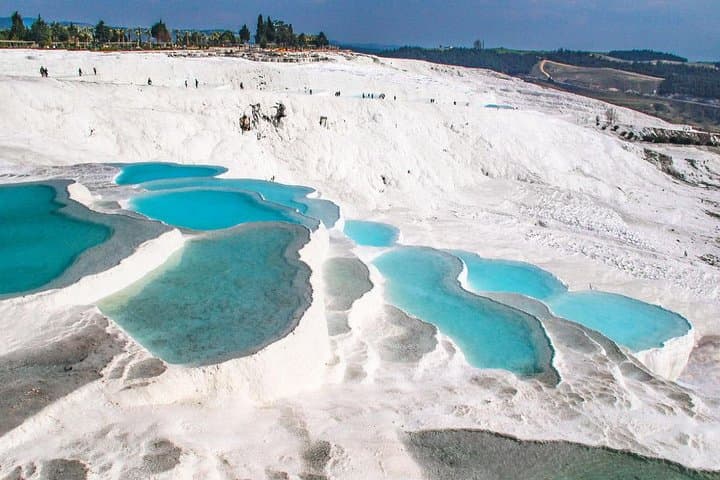
On day two the landscape flips. Pamukkale’s travertine cascades look engineered — snow-white calcium shelves holding warm pools — but they’re the work of hot springs pressing minerals outward over millennia. Above, Hierapolis offers a funerary cityscape of sarcophagi and a Roman bath complex that tells a parallel story of health, ritual and commerce.
Culture here is hands-on: local guides point out inscriptions, regional cuisine leans on lamb, figs and olive oil, and small towns such as Kusadası and Selçuk keep the rhythms of market life alive.
Practical guidance: tours are full days with lots of walking on uneven stone and hot terraces, so plan for sturdy shoes, sun protection and timed entry windows. Bring a refillable water bottle, and allow quiet time at the thermal pools — rules protect their fragile calcite skin. Morning or late-afternoon visits reduce crowds and midday heat. With a short flight between Istanbul and the Aegean, this pair feels efficient yet expansive: two distinct histories within a single, compact itinerary.
easy.
2 days.
Suitable for most fitness levels; you'll walk several hours each day on uneven ground and some uphill sections.
Most organized tours include entrance fees to Ephesus and Hierapolis/Pamukkale; confirm on booking and keep your voucher handy.
Expect several hours of walking each day on uneven paved streets and stone steps; comfortable footwear and moderate mobility are required.
Public access to travertine terraces is restricted to protect the formations; designated thermal pools (like Cleopatra Pool) may allow swimming for a separate fee.
Spring (April–June) and fall (September–October) offer cooler temperatures and thinner crowds; mornings and late afternoons are best in summer.
Ephesus was a major Roman port and cultural center; Hierapolis grew as a thermal spa and necropolis above Pamukkale’s mineral springs.
Both sites are managed with strict conservation measures: visits are timed and areas are restricted to preserve ancient stone and delicate travertine formations.
Before Travel Agency operates guided outdoor trips and adventures with an emphasis on safety, stewardship, and memorable experiences.
You step off the short flight into Aegean light and the morning smells of olives and sea salt, bound for ruins and white terraces that read like two different eras of the same country.
You step off the short flight into Aegean light and the morning smells of olives and sea salt, bound for ruins and white terraces that read like two different eras of the same country.
Day one walks you through Ephesus: marble streets polished by centuries of sandals, the Celsus façade towering like a chapter headline, and the great theater where orators once pushed crowds to hush. The site sits on Roman planning layered over Hellenistic foundations; every column and mosaic is a footnote to trade, law and urban life in antiquity.
On day two the landscape flips. Pamukkale’s travertine cascades look engineered — snow-white calcium shelves holding warm pools — but they’re the work of hot springs pressing minerals outward over millennia. Above, Hierapolis offers a funerary cityscape of sarcophagi and a Roman bath complex that tells a parallel story of health, ritual and commerce.
Culture here is hands-on: local guides point out inscriptions, regional cuisine leans on lamb, figs and olive oil, and small towns such as Kusadası and Selçuk keep the rhythms of market life alive.
Practical guidance: tours are full days with lots of walking on uneven stone and hot terraces, so plan for sturdy shoes, sun protection and timed entry windows. Bring a refillable water bottle, and allow quiet time at the thermal pools — rules protect their fragile calcite skin. Morning or late-afternoon visits reduce crowds and midday heat. With a short flight between Istanbul and the Aegean, this pair feels efficient yet expansive: two distinct histories within a single, compact itinerary.