THE ADVENTURE COLLECTIVE® · Independent discovery and booking for outdoor travel

See two UNESCO sites in a single, compact itinerary: roam Ephesus’s marble avenues and walk Pamukkale’s living terraces. This overnight tour from Istanbul includes flights, guides, and key entrance fees—ideal for travelers who want concentrated history and geology in 48 hours.
See two UNESCO sites in a single, compact itinerary: roam Ephesus’s marble avenues and walk Pamukkale’s living terraces. This overnight tour from Istanbul includes flights, guides, and key entrance fees—ideal for travelers who want concentrated history and geology in 48 hours.
You step out before dawn into Istanbul’s hush and are shepherded to the airport—by midmorning the Aegean light has already softened the ruins of Ephesus into long shadows that cut across marble streets.
Verified experiences and guided adventures in the surrounding area.
Operated by We Go Turkiye Travel · Kuşadası, Aydın
You step out before dawn into Istanbul’s hush and are shepherded to the airport—by midmorning the Aegean light has already softened the ruins of Ephesus into long shadows that cut across marble streets.
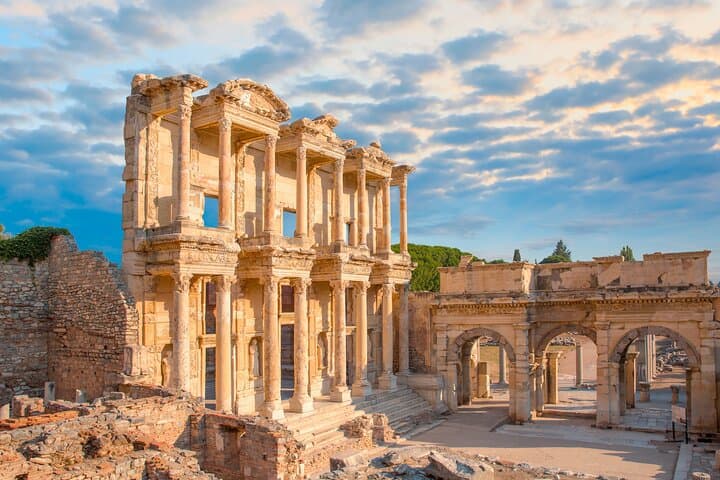
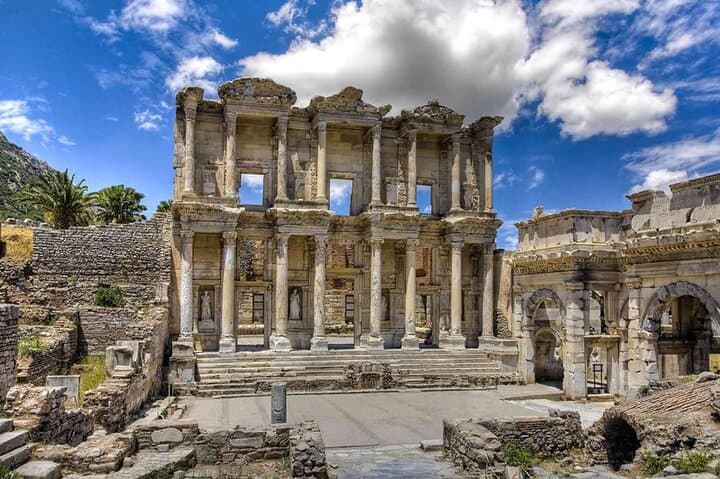
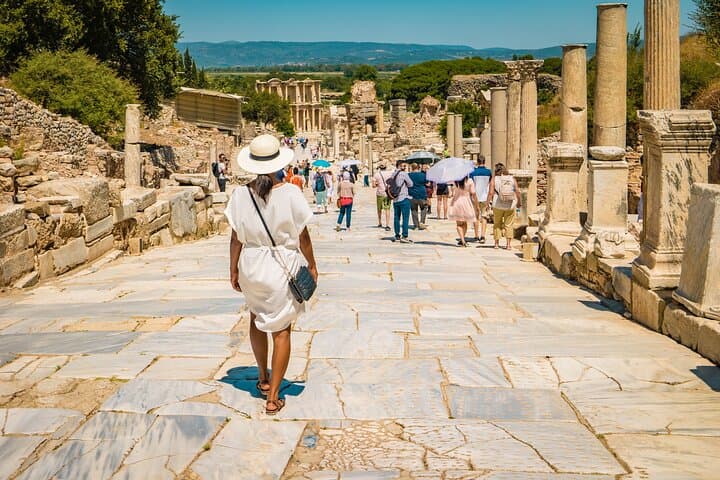
Walk the Marble Street past the reconstructed façade of the Celsus Library where chiseled stone still holds the echo of ancient crowds; climb the amphitheatre terraces that once held 25,000 spectators. Later the landscape shifts: a scalloped slope of bright white travertine at Pamukkale, mineral-rich water daring you toward warm, shallow pools.
Ephesus was a Greco‑Roman port and an early Christian hub; the House of the Virgin Mary and the Temple of Artemis (one of the ancient wonders) sit nearby. Geologically, Pamukkale’s terraces are living travertine — calcium carbonate deposited by thermal springs over millennia — and Hierapolis grew as a Roman spa town beside them from the 2nd century BC.
Expect uneven, often cobbled terrain at Ephesus and slippery, protected terraces at Pamukkale (shoes are removed on the travertines). The tour includes domestic flights, licensed guides, one night in Kuşadası, and entrance fees; allow 2–3 hours for Ephesus and 1–2 hours on the terraces plus time to swim in the Cleopatra pool (extra fee). Bring a compact daypack, sun protection, sturdy walking shoes, and a swimsuit if you plan to pay for the antique pool. Passport is required for domestic flights; start early and keep a flexible pace — the route is equal parts history and a landscape that still moves under water and stone.
moderate.
2 days.
Suitable for travelers who can manage several hours of walking on uneven ground and some stair climbing; not strenuous but requires balance and stamina.
Yes—this package includes scheduled domestic flights between Istanbul and Izmir (for Ephesus) and Denizli (Pamukkale) as outlined in the itinerary.
Visitors may walk on designated travertine paths barefoot to protect the formations; follow guide instructions and use provided paths only.
No—the Antique Pool usually has a separate entrance fee paid on site; availability and price may change seasonally so bring small cash or card.
The tour is labeled easy to moderate but involves uneven ground and stairs; infants must sit on laps for flights—contact the operator about mobility accommodations.
Ephesus was a major Roman port and early Christian center; Hierapolis developed as a healing spa town in the Hellenistic period and thrived under Rome from the 2nd century BC.
Travertine terraces are fragile; rules like barefoot access and designated paths protect the deposits—support local conservation by following guide instructions and avoiding soaps or lotions in natural springs.
We Go Turkiye Travel operates guided outdoor trips and adventures with an emphasis on safety, stewardship, and memorable experiences.
You step out before dawn into Istanbul’s hush and are shepherded to the airport—by midmorning the Aegean light has already softened the ruins of Ephesus into long shadows that cut across marble streets.
You step out before dawn into Istanbul’s hush and are shepherded to the airport—by midmorning the Aegean light has already softened the ruins of Ephesus into long shadows that cut across marble streets.
Walk the Marble Street past the reconstructed façade of the Celsus Library where chiseled stone still holds the echo of ancient crowds; climb the amphitheatre terraces that once held 25,000 spectators. Later the landscape shifts: a scalloped slope of bright white travertine at Pamukkale, mineral-rich water daring you toward warm, shallow pools.
Ephesus was a Greco‑Roman port and an early Christian hub; the House of the Virgin Mary and the Temple of Artemis (one of the ancient wonders) sit nearby. Geologically, Pamukkale’s terraces are living travertine — calcium carbonate deposited by thermal springs over millennia — and Hierapolis grew as a Roman spa town beside them from the 2nd century BC.
Expect uneven, often cobbled terrain at Ephesus and slippery, protected terraces at Pamukkale (shoes are removed on the travertines). The tour includes domestic flights, licensed guides, one night in Kuşadası, and entrance fees; allow 2–3 hours for Ephesus and 1–2 hours on the terraces plus time to swim in the Cleopatra pool (extra fee). Bring a compact daypack, sun protection, sturdy walking shoes, and a swimsuit if you plan to pay for the antique pool. Passport is required for domestic flights; start early and keep a flexible pace — the route is equal parts history and a landscape that still moves under water and stone.