THE ADVENTURE COLLECTIVE® · Independent discovery and booking for outdoor travel

Cycle past UNESCO-listed vineyards, visit Hautvillers—the birthplace of Champagne—and finish with a cellar tour and lunch at a family domaine. This full-day e-bike tour blends rolling country roads with cultural stops and tasting notes.
Cycle past UNESCO-listed vineyards, visit Hautvillers—the birthplace of Champagne—and finish with a cellar tour and lunch at a family domaine. This full-day e-bike tour blends rolling country roads with cultural stops and tasting notes.
The morning begins at the Epernay Tourist Office, where the Avenue de Champagne opens like a straight line of cellars and gilded signs. You mount a sturdy electric-assist bike and the town loosens behind you as lanes thread into the patchwork of Premier and Grand Cru vineyards. The vines seem to lean toward the Marne, the chalk beneath them bright and cool; the landscape pushes you forward with soft climbs and wide valley views.
Verified experiences and guided adventures in the surrounding area.
Operated by À La Française · Épernay, Grand Est
The morning begins at the Epernay Tourist Office, where the Avenue de Champagne opens like a straight line of cellars and gilded signs. You mount a sturdy electric-assist bike and the town loosens behind you as lanes thread into the patchwork of Premier and Grand Cru vineyards. The vines seem to lean toward the Marne, the chalk beneath them bright and cool; the landscape pushes you forward with soft climbs and wide valley views.
This route follows the history of Champagne production—chalky soils carved in the Cretaceous period that give the region its signature minerality—and threads villages where cellars are family-run and centuries old. Hautvillers appears on a ridge: the abbey church, Dom Pérignon’s grave, and a view that explains why sparkling wine was born here.
Practically speaking, expect a full-day outing of roughly 25–40 km on rolling country roads, with cumulative elevation gains of a few hundred meters; e-bikes smooth the climbs but are heavier to handle. The tour ends at a family domaine for a cellar visit, four tastings and a traditional lunch—dietary needs accommodated. Guides will point out terroir, grape varieties and cellar techniques while keeping pace realistic for confident cyclists.
Bring a refillable bottle, layered clothing for wind and sun, and ID for the tasting. In bad weather the operator switches to a minibus, and trains to Epernay should be reserved in advance. This is a day that mixes aerobic effort with slow, sensory rewards: vineyard light, cool cellars and the effervescence of place.
challenging.
5–6 hours.
Good aerobic fitness and confident bike-handling skills; ability to sustain several hours of pedaling over rolling terrain.
Yes—electric-assist bikes and helmets are provided; guides will give a basic orientation, but riders should be comfortable on a heavier bike.
Expect rolling country roads of roughly 25–40 km total with several moderate climbs; fitness is required and the pace suits confident cyclists.
In case of bad weather the operator may run the tour by minibus instead of cycling; cancellation and refund rules follow the stated policy.
Yes—the tour includes a cellar visit, four tastings (two champagnes, one red wine, one ratafia) and a traditional lunch at a family domaine; dietary needs are accommodated.
Champagne’s chalk soils and monastic winemaking—Dom Pérignon at Hautvillers—shaped the region’s sparkling-wine techniques from the 17th century onward.
Vineyard stewardship focuses on soil care and reduced pesticide use in many domaines; stick to public lanes, respect private property and carry out any waste.
À La Française operates guided outdoor trips and adventures with an emphasis on safety, stewardship, and memorable experiences.
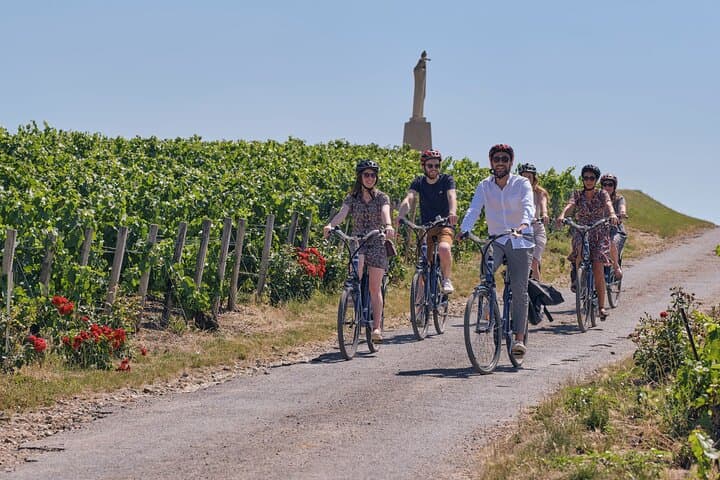
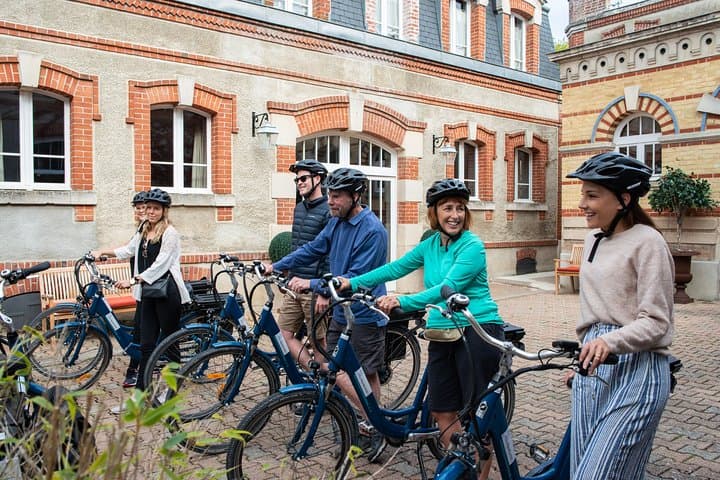
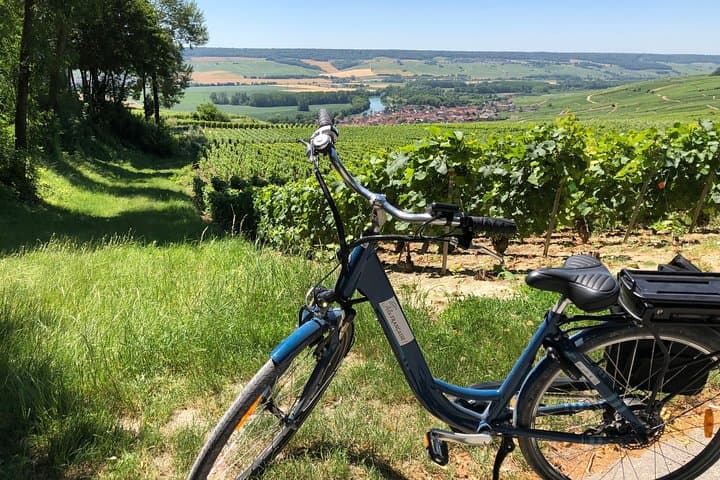
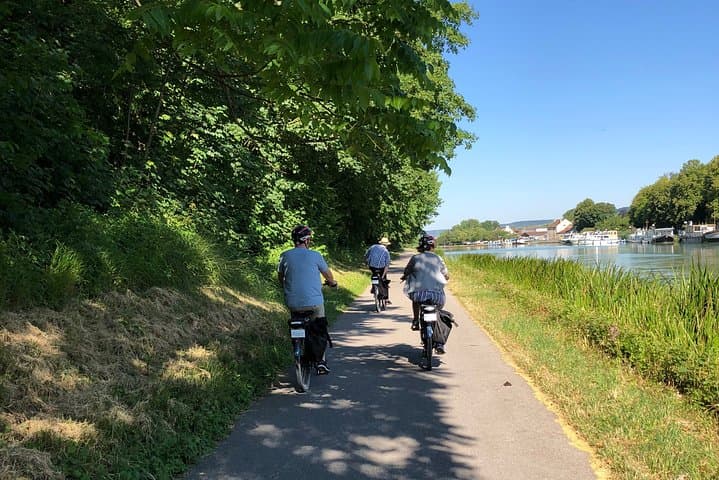
The morning begins at the Epernay Tourist Office, where the Avenue de Champagne opens like a straight line of cellars and gilded signs. You mount a sturdy electric-assist bike and the town loosens behind you as lanes thread into the patchwork of Premier and Grand Cru vineyards. The vines seem to lean toward the Marne, the chalk beneath them bright and cool; the landscape pushes you forward with soft climbs and wide valley views.
The morning begins at the Epernay Tourist Office, where the Avenue de Champagne opens like a straight line of cellars and gilded signs. You mount a sturdy electric-assist bike and the town loosens behind you as lanes thread into the patchwork of Premier and Grand Cru vineyards. The vines seem to lean toward the Marne, the chalk beneath them bright and cool; the landscape pushes you forward with soft climbs and wide valley views.
This route follows the history of Champagne production—chalky soils carved in the Cretaceous period that give the region its signature minerality—and threads villages where cellars are family-run and centuries old. Hautvillers appears on a ridge: the abbey church, Dom Pérignon’s grave, and a view that explains why sparkling wine was born here.
Practically speaking, expect a full-day outing of roughly 25–40 km on rolling country roads, with cumulative elevation gains of a few hundred meters; e-bikes smooth the climbs but are heavier to handle. The tour ends at a family domaine for a cellar visit, four tastings and a traditional lunch—dietary needs accommodated. Guides will point out terroir, grape varieties and cellar techniques while keeping pace realistic for confident cyclists.
Bring a refillable bottle, layered clothing for wind and sun, and ID for the tasting. In bad weather the operator switches to a minibus, and trains to Epernay should be reserved in advance. This is a day that mixes aerobic effort with slow, sensory rewards: vineyard light, cool cellars and the effervescence of place.