THE ADVENTURE COLLECTIVE® · Independent discovery and booking for outdoor travel

Watch pre-dawn sumo practice from the front row, try basic rikishi movements if you wish, and share chanko-nabe with wrestlers in a real stable near Kawasaki. This guided visit pairs history and hands-on participation in a compact morning experience.
Watch pre-dawn sumo practice from the front row, try basic rikishi movements if you wish, and share chanko-nabe with wrestlers in a real stable near Kawasaki. This guided visit pairs history and hands-on participation in a compact morning experience.
You step through a low wooden lintel and the city noise thins—tatami, the hushed shuffle of feet, the hollow thud of practice in the bara (practice area). Morning light slices across the dohyo as rikishi run drills that have been repeated since the Samurai era; heat from the cooking pot fogs the room where a long table waits for chanko-nabe.
Verified experiences and guided adventures in the surrounding area.
Operated by MagicalTrip Inc. · Kawasaki, Kanagawa
You step through a low wooden lintel and the city noise thins—tatami, the hushed shuffle of feet, the hollow thud of practice in the bara (practice area). Morning light slices across the dohyo as rikishi run drills that have been repeated since the Samurai era; heat from the cooking pot fogs the room where a long table waits for chanko-nabe.
Sumo began as ritual and court spectacle tied to Shinto offerings; modern stables preserve those gestures alongside a regimented training schedule. This stable in Kawasaki/greater Tokyo keeps the old rhythms—pre-dawn practice, communal meals, and strict etiquette—while sitting minutes from busy stations.
The experience blends history and hands-on culture: a guided tour of the living quarters, a front-row view of the ring, optional participation in basic movements, then making and sharing chicken chanko-nabe around the actual sumo table. It’s as much about posture, respect, and routine as it is about physical exertion.
Practical guidance: arrive on time (meet at Shin-Kawasaki Station), wear modest, easy-to-remove footwear, and follow the stable’s rules—no flash photos during practice and listen to the guide. Summer humidity can make the practice steamy; hydrate and dress in breathable fabrics. If you plan to join the demo match, be prepared for short, intense bursts of effort and accept instructions from staff. Let hosts know dietary restrictions at least a day ahead. The tour is intimate—expect crowds of no more than 15—and offers a rare, direct look at a cultural system still living by centuries-old discipline.
easy.
4 hours.
Suitable for most fitness levels; participation in practice requires short bursts of strength and balance but is optional
Yes—this experience allows women and children to learn basic rikishi movements and try a friendly match if they wish, following the stable’s safety instructions.
Wear modest, comfortable clothing you can move in; many guests wear long pants and bring a light layer for cooler mornings. Avoid overly revealing attire out of respect.
Organizers request dietary needs at least one day in advance and will try to accommodate them, but substitutions can be limited by the facility’s kitchen setup.
Meet at Shin-Kawasaki Station, about 20–30 minutes by train from central Tokyo stations like Tokyo and Shinjuku, and roughly 10 minutes from Yokohama by rapid services.
Sumo has roots in Shinto ritual and was formalized during the Edo and Samurai periods; stables preserve training methods passed down through generations.
Stables are cultural assets; visitors should minimize noise, avoid flash photography, and respect facility rules to help preserve these living traditions.
MagicalTrip Inc. operates guided outdoor trips and adventures with an emphasis on safety, stewardship, and memorable experiences.
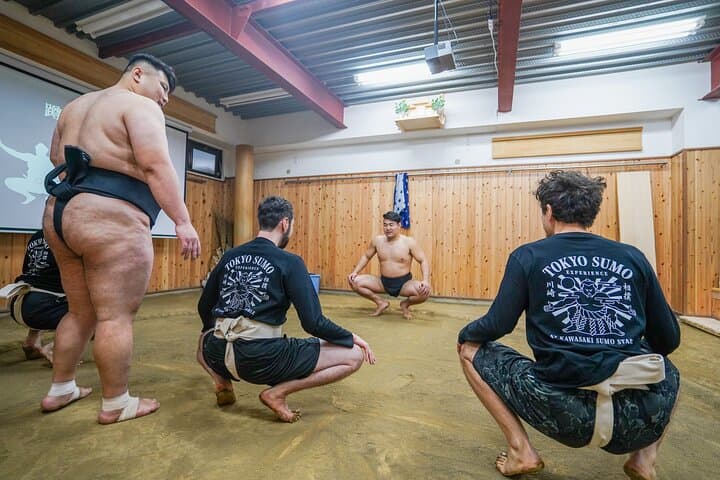
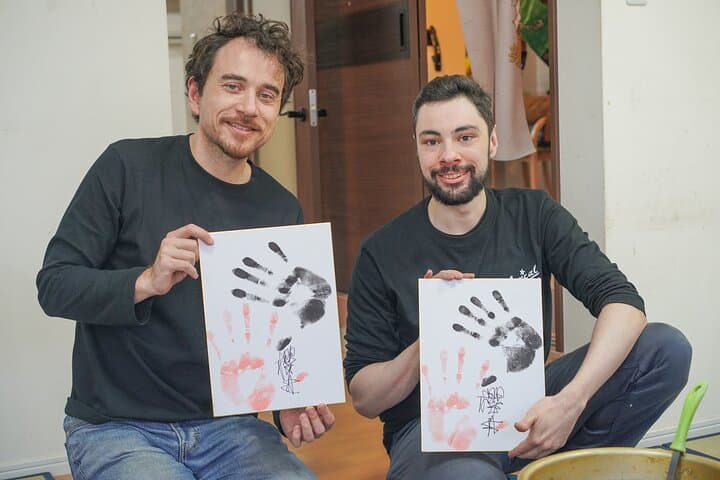
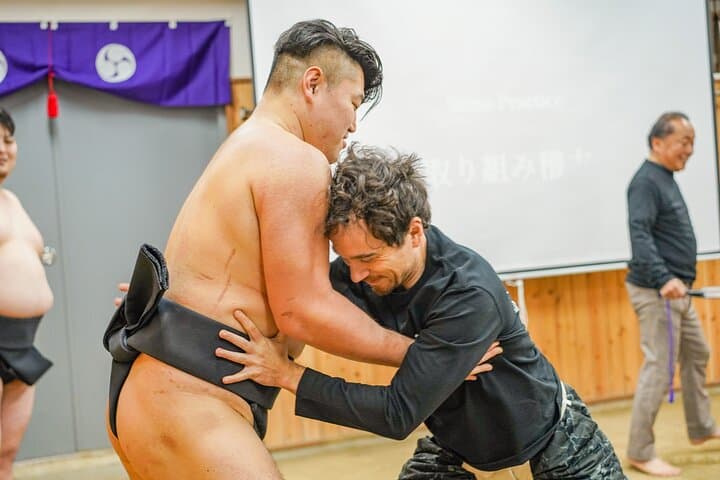
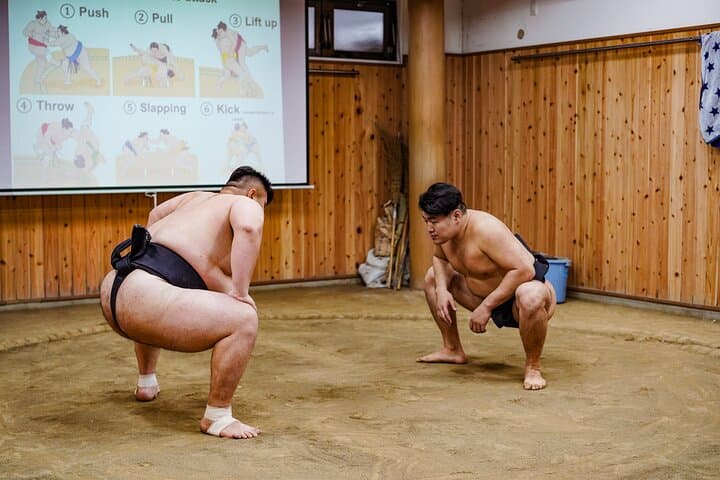
You step through a low wooden lintel and the city noise thins—tatami, the hushed shuffle of feet, the hollow thud of practice in the bara (practice area). Morning light slices across the dohyo as rikishi run drills that have been repeated since the Samurai era; heat from the cooking pot fogs the room where a long table waits for chanko-nabe.
You step through a low wooden lintel and the city noise thins—tatami, the hushed shuffle of feet, the hollow thud of practice in the bara (practice area). Morning light slices across the dohyo as rikishi run drills that have been repeated since the Samurai era; heat from the cooking pot fogs the room where a long table waits for chanko-nabe.
Sumo began as ritual and court spectacle tied to Shinto offerings; modern stables preserve those gestures alongside a regimented training schedule. This stable in Kawasaki/greater Tokyo keeps the old rhythms—pre-dawn practice, communal meals, and strict etiquette—while sitting minutes from busy stations.
The experience blends history and hands-on culture: a guided tour of the living quarters, a front-row view of the ring, optional participation in basic movements, then making and sharing chicken chanko-nabe around the actual sumo table. It’s as much about posture, respect, and routine as it is about physical exertion.
Practical guidance: arrive on time (meet at Shin-Kawasaki Station), wear modest, easy-to-remove footwear, and follow the stable’s rules—no flash photos during practice and listen to the guide. Summer humidity can make the practice steamy; hydrate and dress in breathable fabrics. If you plan to join the demo match, be prepared for short, intense bursts of effort and accept instructions from staff. Let hosts know dietary restrictions at least a day ahead. The tour is intimate—expect crowds of no more than 15—and offers a rare, direct look at a cultural system still living by centuries-old discipline.