THE ADVENTURE COLLECTIVE® · Independent discovery and booking for outdoor travel

Walk streets frozen in ash and explore temples, homes and frescoed villas with timed, self-guided entry. This guide outlines what to expect, how to prepare, and practical tips for getting the most from a visit to Pompeii.
Walk streets frozen in ash and explore temples, homes and frescoed villas with timed, self-guided entry. This guide outlines what to expect, how to prepare, and practical tips for getting the most from a visit to Pompeii.
A visitor steps through a low stone gate and the sound of modern traffic falls away, replaced by the rasp of gravel underfoot and the particular dry smell of sun-heated tufa.
Verified experiences and guided adventures in the surrounding area.
A visitor steps through a low stone gate and the sound of modern traffic falls away, replaced by the rasp of gravel underfoot and the particular dry smell of sun-heated tufa.
Pompeii’s streets run straight and pragmatic, cut across by cart ruts and framed by rows of shopfronts and atriums. The ruined forum opens like a public stage; frescoed walls and tiled floors survive where lives were interrupted by Vesuvius in 79 AD. Geology is obvious here — pumice and ash layers lie like pages in the ground, and the volcano that buried the city remains visible on the skyline, a volcanic presence that shaped everything that follows.
Culturally, Pompeii reveals ordinary Roman life: bakeries with millstones, street graffiti, temples and suburban villas with bright, preserved frescoes. The site’s archaeology has informed modern understanding of urban planning, domestic rituals, and Roman trade networks.
Practical guidance: timed-entry tickets control crowding and make it possible to move deliberately through the main monuments. Paths are uneven and long; plan 2–4 hours for a focused visit and more if you linger in the Villa of the Mysteries or the House of the Faun. Wear sturdy shoes, bring water, and pick a morning slot in summer to avoid heat. Respect conservation rules — do not touch frescoes or climb walls — and use marked routes to reduce wear on fragile areas.
Seeing Pompeii is a blend of open-air archaeology and hard walking: bring curiosity, sunscreen, and enough time to let the ruins speak.
moderate.
1–4 hours.
Suitable for visitors who can handle several kilometers of walking on uneven ground and stand for periods; moderate stamina recommended.
Most operators accept mobile tickets, but carry a digital or printed copy and valid ID in case verification is required.
A focused visit can be 1–2 hours, but 3–4 hours lets you see major sites like the forum, Stabian Baths, and Villa of the Mysteries at a relaxed pace.
Some paths are flat and accessible, but many areas have uneven stone and steps; check accessibility services and plan routes in advance.
Guided tours add historical context and highlight lesser-known features, but self-guided visits with a good map or audio guide are sufficient for independent travelers.
Pompeii was buried in ash and pumice by Mount Vesuvius in 79 AD, preserving buildings and everyday objects that illuminate Roman urban life.
Ongoing conservation projects balance public access with preservation; visitors should stay on marked paths and avoid touching fragile surfaces to reduce wear.
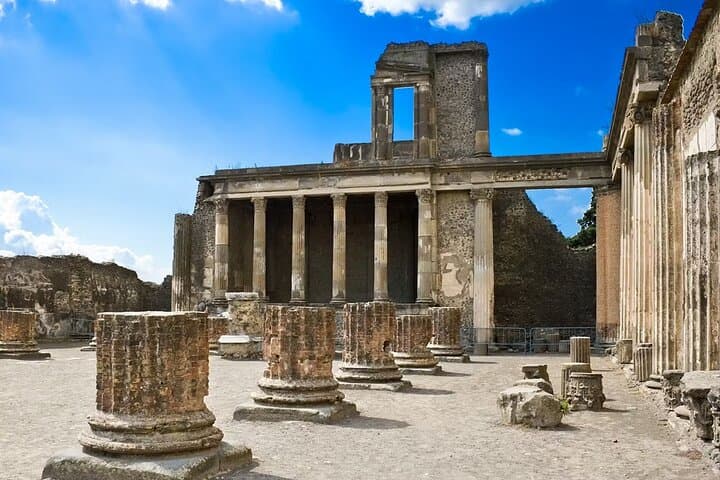
A visitor steps through a low stone gate and the sound of modern traffic falls away, replaced by the rasp of gravel underfoot and the particular dry smell of sun-heated tufa.
A visitor steps through a low stone gate and the sound of modern traffic falls away, replaced by the rasp of gravel underfoot and the particular dry smell of sun-heated tufa.
Pompeii’s streets run straight and pragmatic, cut across by cart ruts and framed by rows of shopfronts and atriums. The ruined forum opens like a public stage; frescoed walls and tiled floors survive where lives were interrupted by Vesuvius in 79 AD. Geology is obvious here — pumice and ash layers lie like pages in the ground, and the volcano that buried the city remains visible on the skyline, a volcanic presence that shaped everything that follows.
Culturally, Pompeii reveals ordinary Roman life: bakeries with millstones, street graffiti, temples and suburban villas with bright, preserved frescoes. The site’s archaeology has informed modern understanding of urban planning, domestic rituals, and Roman trade networks.
Practical guidance: timed-entry tickets control crowding and make it possible to move deliberately through the main monuments. Paths are uneven and long; plan 2–4 hours for a focused visit and more if you linger in the Villa of the Mysteries or the House of the Faun. Wear sturdy shoes, bring water, and pick a morning slot in summer to avoid heat. Respect conservation rules — do not touch frescoes or climb walls — and use marked routes to reduce wear on fragile areas.
Seeing Pompeii is a blend of open-air archaeology and hard walking: bring curiosity, sunscreen, and enough time to let the ruins speak.