THE ADVENTURE COLLECTIVE® · Independent discovery and booking for outdoor travel

Follow the Lech and solve city puzzles with a self-guided app that leads you through Augsburg’s fountains, river channels and hidden courtyards. This 2-hour urban quest mixes local history, engineered waterways and compact adventures at your own pace.
Follow the Lech and solve city puzzles with a self-guided app that leads you through Augsburg’s fountains, river channels and hidden courtyards. This 2-hour urban quest mixes local history, engineered waterways and compact adventures at your own pace.
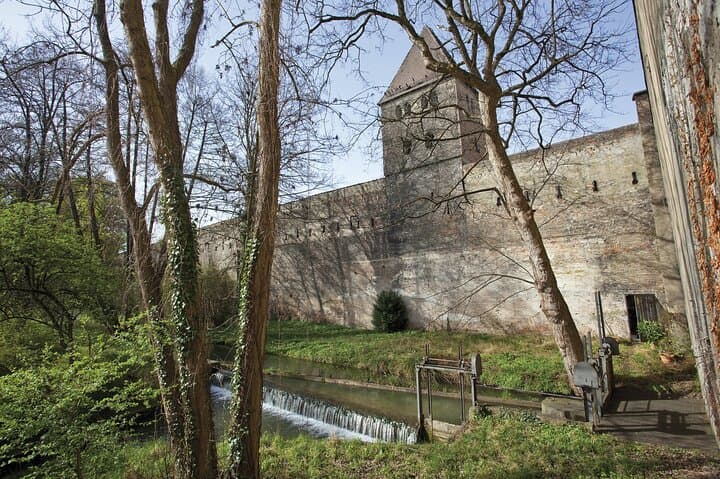
The cobbles hum beneath your boots and the Lech threads silver through the city like a map that keeps changing. You tap the Questo app, and the first riddle unfurls: follow the water’s edge, cross the old millrace, find the fountain that remembers princes. Augsburg’s canals dare you to read their currents and the city answers with stone stairs, narrow alleys and unexpected courtyards.
Verified experiences and guided adventures in the surrounding area.
Operated by Questo · Augsburg, Bavaria
The cobbles hum beneath your boots and the Lech threads silver through the city like a map that keeps changing. You tap the Questo app, and the first riddle unfurls: follow the water’s edge, cross the old millrace, find the fountain that remembers princes. Augsburg’s canals dare you to read their currents and the city answers with stone stairs, narrow alleys and unexpected courtyards.
Augsburg was founded as the Roman outpost Augusta Vindelicorum and later became a booming medieval trade hub; the canals and waterworks you’ll trace were engineered to power textile mills and cool dye houses. Geologically, the Lech is a post-glacial river, its channels carved and managed for centuries—today those same channels shape neighborhoods and hidden views.
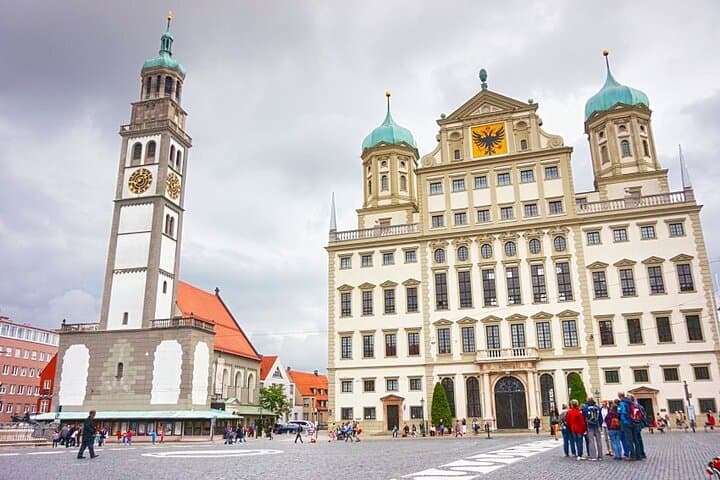
Culturally the route moves between civic showpieces—Rathausplatz and Hercules’ Fountain—and quieter, lived-in corners: the Fuggerei’s gated courtyards and low-arched bridges. The experience is story-driven and self-guided: each solved puzzle reveals the next waypoint on your phone, letting history and local color unfold at your pace.
Practical guidance: download the Questo app and create an account before you arrive, carry a charged smartphone and a battery pack, and wear grippy walking shoes—the route covers paved squares and uneven riverbanks. Start in daylight to read plaques and public art; allow about two hours to explore, pause, and photograph. The game is private and flexible—start anytime, move at your rhythm and keep to public paths near the water. Above all, tread lightly: these are living neighborhoods and managed waterways that invite careful, curious exploration.
easy.
2–2 hours.
Suitable for most fitness levels; requires walking on paved and uneven surfaces for about two hours.
No—this is a private, self-guided experience available 24/7; start whenever suits you, though daylight is recommended.
The supplier notes service animals are allowed; general pet policies vary by location—keep pets at home unless confirmed otherwise.
No—challenges give step-by-step directions in the app; basic smartphone familiarity is sufficient.
The app and 24/7 customer care provide hints and support so you can continue or pause and return later.
Augsburg began as the Roman settlement Augusta Vindelicorum (15 BCE) and later flourished as a medieval trade and textile center, shaping its canals and civic architecture.
The city manages its historic waterways for flood control and urban ecology; stay on public paths, avoid disturbing riparian vegetation and pack out any litter.
Questo operates guided outdoor trips and adventures with an emphasis on safety, stewardship, and memorable experiences.
The cobbles hum beneath your boots and the Lech threads silver through the city like a map that keeps changing. You tap the Questo app, and the first riddle unfurls: follow the water’s edge, cross the old millrace, find the fountain that remembers princes. Augsburg’s canals dare you to read their currents and the city answers with stone stairs, narrow alleys and unexpected courtyards.
The cobbles hum beneath your boots and the Lech threads silver through the city like a map that keeps changing. You tap the Questo app, and the first riddle unfurls: follow the water’s edge, cross the old millrace, find the fountain that remembers princes. Augsburg’s canals dare you to read their currents and the city answers with stone stairs, narrow alleys and unexpected courtyards.
Augsburg was founded as the Roman outpost Augusta Vindelicorum and later became a booming medieval trade hub; the canals and waterworks you’ll trace were engineered to power textile mills and cool dye houses. Geologically, the Lech is a post-glacial river, its channels carved and managed for centuries—today those same channels shape neighborhoods and hidden views.
Culturally the route moves between civic showpieces—Rathausplatz and Hercules’ Fountain—and quieter, lived-in corners: the Fuggerei’s gated courtyards and low-arched bridges. The experience is story-driven and self-guided: each solved puzzle reveals the next waypoint on your phone, letting history and local color unfold at your pace.
Practical guidance: download the Questo app and create an account before you arrive, carry a charged smartphone and a battery pack, and wear grippy walking shoes—the route covers paved squares and uneven riverbanks. Start in daylight to read plaques and public art; allow about two hours to explore, pause, and photograph. The game is private and flexible—start anytime, move at your rhythm and keep to public paths near the water. Above all, tread lightly: these are living neighborhoods and managed waterways that invite careful, curious exploration.